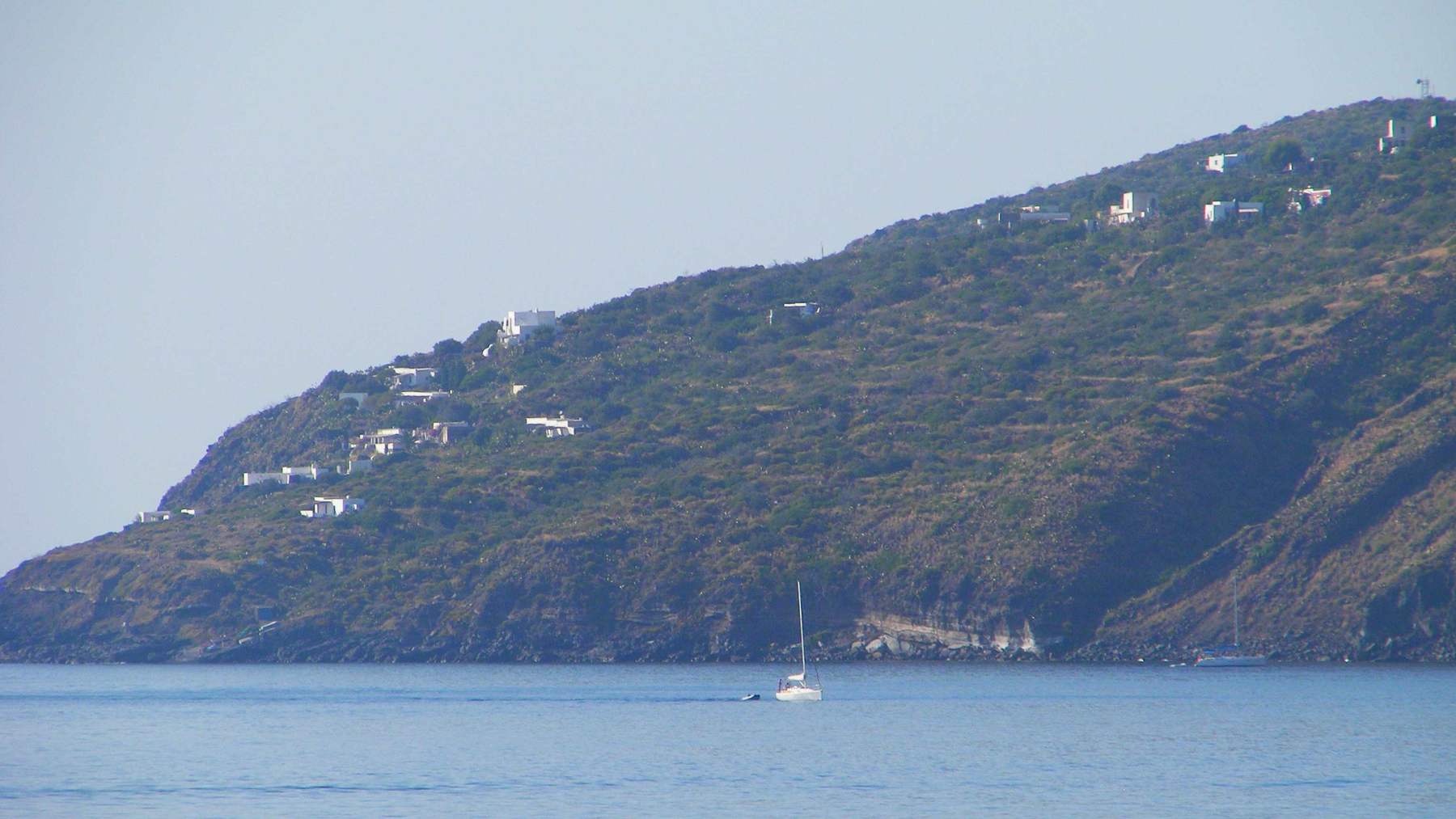
On September 10, 2026, a 6-year-old named Aysha went off to her first day of school in Ginostra, a tiny hamlet on the side of the Stromboli volcano, with a pink backpack on her shoulders and a cone of sweets in her hands, the kind kids get when they start school, and she’s the only pupil in what Italian media call the smallest school in Europe, where the bell hadn’t rung in more than 20 years.
Italian news agency ANSA said she was visibly moved as her parents walked her in to meet her teacher, Laura Mongi, who’d come down from the outskirts of Milan, according to Le Monde.
“If they hadn’t reopened the school, we would have had to move, and that would have meant splitting up the family, because my husband works here all year and I’d have been the one who had to leave,” her mother, Monica Abbate, told the Italian news site Open in January.
Talking to the magazine Vita in February, she said, “It was neither easy nor a given, but we made it. A victory for our whole community, which has followed this adventure of ours from the very beginning.”
An island inside an island
Ginostra is part of the town of Lipari, in Sicily’s Aeolian Islands. “The town of Lipari is spread across six different islands, Lipari, Vulcano, Stromboli, Panarea, Filicudi and Alicudi, plus the hamlet of Ginostra, which is an island in the island: even though it’s on Stromboli, it’s connected only by sea,” Abbate, who’s the town’s delegate there, told Vita.
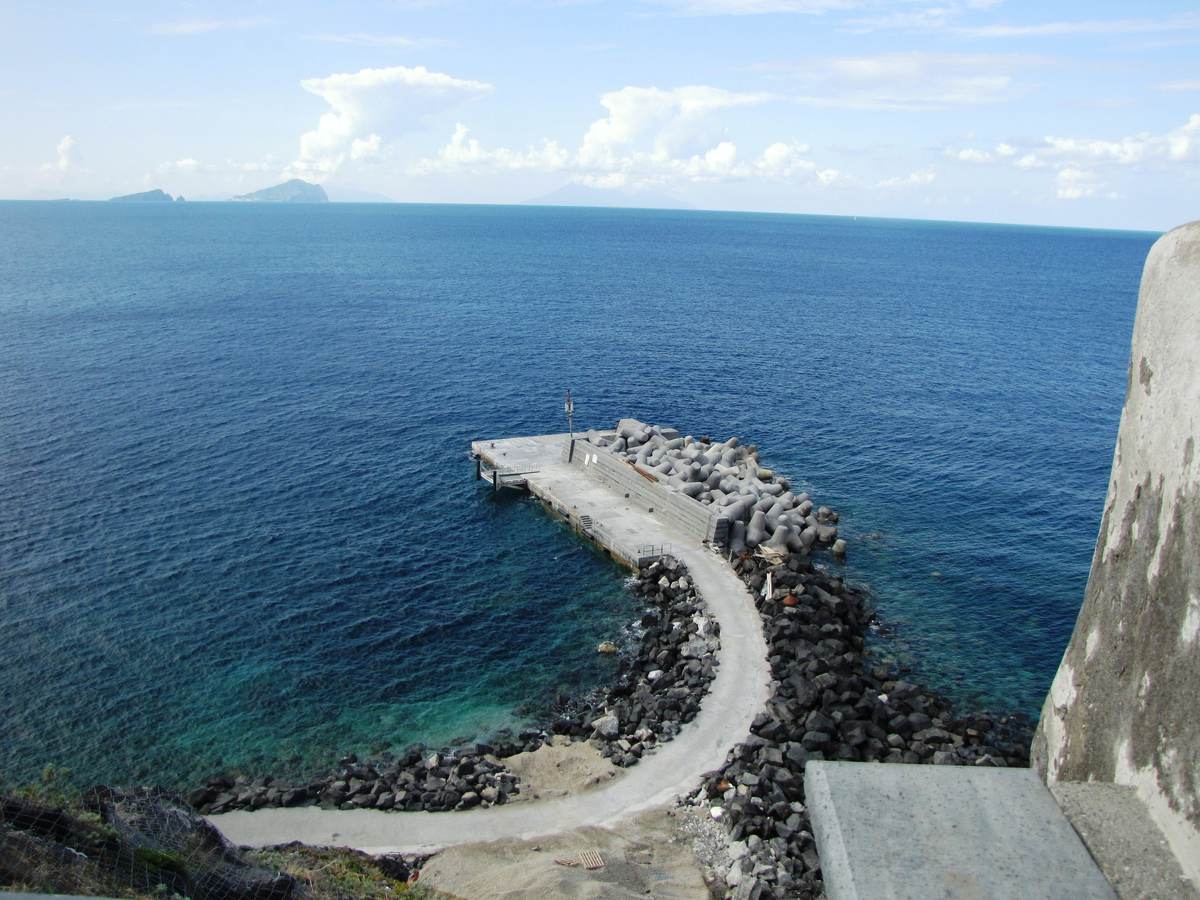
Le Monde noted there aren’t any cars, a donkey takes care of the logistics and water comes in by tanker. Only a few dozen people stick around through the winter, about 30 by the count of Le Monde and Il Post and about 40 according to La Sicilia.
“Stromboli is out of the question because the hydrofoil timetable cannot be reconciled with the lessons, Lipari would have been very difficult to reach, especially in winter, when connections by sea are patchy,” Abbate told the Sicilian daily La Sicilia in January, in an interview Il Sole 24 Ore also ran in English, “and we would have been forced to split up. My husband, who has a small construction company, would have had to stay here, me and the child would have had to move.”
A day later she told Open what the Lipari option would really have looked like. “To get to Lipari we had to get up at dawn, take the hydrofoil and come back in the afternoon. But in winter it often happens that we stay stuck because of storm surges, so school attendance wasn’t guaranteed.”
She isn’t planning on going anywhere, though. “It’s a bare-bones life. You don’t have the comforts of the city: we have just one grocery store that’s open all year,” she told Open. “But here you figure out what the real priorities are, and everything gets freer, less driven by consumerism. My daughter is growing up close to nature, here you always get around on foot. I’d never change my life.”
The letter, and a yes in January
So Abbate and her husband, Raffa Bazine, who was born and raised in Mazara del Vallo in western Sicily and has lived in Ginostra for 16 years according to Vita, wrote to the mayor, to the head of the Lipari comprehensive school, Patrizia Muscolino, and to the provincial school office in Messina. “Everything started when we wrote a letter explaining all the hardships we have on the island and how impossible it was to get to the other schools,” Abbate told Open. “I’d already talked about it several times in the years before, I was very determined about this choice.”
Lipari’s town government filed the formal request on January 8, and the regional school office for Sicily said yes on January 19, according to the education site Orizzonte Scuola. Italian law normally asks for at least 15 pupils to open a primary class, Il Post explains, though exceptions are allowed in places at risk of depopulation.
“We have been thinking about our daughter’s education ever since Monica was pregnant,” Bazine told La Sicilia. “My wife taught her to read and write fearing that she would have to do homeschooling, and we let her study English, but we knew that school was a knot we had to untie seriously.”
Abbate’s version, to Open, was shorter, as she said that “we breathed a big sigh of relief,” and that homeschooling had been the other option on the table, “but school is something else,” a point that carries weight in Italy since a family raising three children off the grid in an Italian forest ended up before a juvenile court.
A room from the church and a teacher for the year
The classroom is one of the recently renovated rooms of the San Vincenzo Ferreri church, which Archbishop Giovanni Accolla made available free of charge, ANSA reported, and the parish priest, Father Nino Pirrotta, told Orizzonte Scuola that “school is not only a place of learning, but an outpost of community and legality.”
Lipari’s mayor, Riccardo Gullo, called it “a sign of concrete closeness to the most isolated communities and a right guaranteed to those who live in these areas,” and La Sicilia reported that Mongi was given an appointment for the whole year so that Aysha would not have to deal with the turnover that has long plagued hard-to-reach schools.
On the first morning she was walked to her desk by her parents, her maternal grandparents, the German neighbors Karola and Ulli, the Carabinieri marshal from Stromboli and one of the five officers who serve on the island, according to the education site NewsIstruzione.
“We are like one big family”
Abbate told Vita that everyone in Ginostra had been waiting for September, “but that’s normal because we are like one big family. Until the island fills up with tourists, we live in a special dimension, one you can only understand if you live it. When you feel like seeing someone you go down to the village and you always find someone to chat with. If you feel like being alone, you stay home or go up to the higher parts of the island.”
She also pushed back on the idea that her daughter is missing out, saying that “it’s wrong to think that living in Ginostra deprives our daughter of a lot of things. When we go away for something off the island, she can’t wait to get back as soon as possible. Here she gets to spend time with some German kids her age who live next to us for whole months at a time. And then there are the people of Ginostra, who adore her.”
According to her mother, Aysha loves kneading bread in the kitchen “and waiting to see it come out of the oven piping hot,” and she has her own camera, which she uses to take pictures all day long, while back in January the girl herself told La Sicilia, “I can’t wait to go to school.”
“Emergencies? We’ve had plenty of them with the floods of recent years,” Abbate told Vita. “And then we’re under an active volcano, so for us it’s always staying on alert. Do I think it’s dangerous? I think there are many more dangers in the city.” On Etna, Sicily’s other famous volcano, skiers kept carving turns in December 2025 even as ash and smoke rose behind the ridge line.
Italy is losing pupils every year
Le Monde pointed out that, with Italy’s population in decline, this hardly looks like the moment to be opening new classes. ISTAT, the national statistics institute, counted 355,000 births in 2025, according to provisional data, which is 3.9 percent fewer than the year before, and women had 1.14 children on average, down from 1.18 in 2024.
Kids up to 14 now make up 11.6 percent of the people living in Italy, while 25.1 percent are 65 or older, and about 24,700 people in the country have hit 100, which is why scientists keep studying the genes of Italian centenarians.
“The decline will be slow, but inexorable,” Il Sole 24 Ore wrote in 2025, looking at a government technical report that has the number of pupils dropping from 6.91 million to 5.90 million by 2034. “Between 2026 and 2030 they will drop by 110,000 per year; between 2031 and 2034 by 100,000,” the paper added, and forecasts circulating in the government talk about “about 5 thousand school complexes destined, sadly, to be emptied (out of about 40 thousand overall).”
Bazine, speaking to La Sicilia in January, said it’s happening in his own village too. “Families also tend to leave the village because of the problem of their children’s studies,” he said. “Who knows if, knowing the great achievement we have achieved, there will be a reversal of the trend.”
What one pupil cannot fix
“The family decided to stay and live in Ginostra, and they want the little girl to go to first grade at the elementary school in Ginostra,” Gullo told NewsIstruzione, calling it “an important but particular signal.” “We wanted to meet a need of the family, but it’s not a general model,” he said. “But obviously the socializing that’s important in a little girl’s development is missing.”
“We thought about it for a long time, but Ginostra is a tourist spot and in summer lots of children and foreign families come, so there are always chances to socialize,” Abbate told Open. “If further on we run into problems with socializing, then we will consider other solutions. But we hope this reopening can encourage other families to move here or enroll their children.” Orizzonte Scuola noted that a full primary cycle will depend on the number of pupils holding steady in the years ahead.
The same morning on nearby Filicudi, a 10-year-old girl who’d written to Prime Minister Giorgia Meloni, “I don’t want to leave. I want to stay with my grandparents, with my friends and with my mom, who works here on my island,” couldn’t start middle school because her tutor teacher was absent and the substitute never showed up, La Sicilia reported, and her mother wrote to the principal that her daughter “will not go to school until her teacher is there.”
ANSA reported Aysha’s first day on September 10, 2026, and the population numbers come from the ISTAT demographic indicators report for 2025, published on March 31, 2026. Quotes from Italian-language outlets have been translated into English.
“On our streets, for example, there are no lights, so we have to do everything before evening falls,” Abbate told Vita. “Here the days aren’t set by the clock or office life, the eight-hour workday, but by the sun, whether the weather’s good or bad.”
Photo: Benreis / Wikimedia Commons (CC BY-SA 3.0)