Comet 2P/Encke, a body about 2.98 miles (4.8 kilometers) across, feeds the Taurid meteor shower now crossing the night sky. Its two branches peak this year around November 5 and November 12. According to NASA’s profile of the comet, the shower is known for fireballs as bright as the planet Venus.
Behind that yearly display sits an older question about where all this debris came from. A telescope search led by Jasmine Li, then a student at Poolesville High School in Maryland, has now put a size limit on the comet that may have started it.
Two peaks, nearly three months
The American Meteor Society’s 2026 calendar puts the Southern Taurids’ peak on the night of November 4 to 5. The Northern Taurids follow on November 11 to 12. The southern branch runs from September 20 to November 20, and the northern one from October 20 to December 10.
Moonlight should not get in the way much this year. On the first peak night the moon will be a 25 percent crescent, the society says. On the second, only 4 percent of its disk will be lit.
The International Meteor Organization (IMO) points to the new moon on November 9 in its 2026 calendar. That dark window falls right between the two maxima. Past counts also suggest northern rates can hold steady for about 10 days in early to mid November.
When both branches overlap in late October and early November, fireball reports sometimes rise, the AMS notes. NASA says the shower often throws them around Halloween, hence the nickname Halloween Fireballs.
Encke’s record-short loop
Encke needs only 3.3 years to orbit the sun, the shortest period of any known comet, according to NASA. Its solid nucleus is about a third the size of the object thought to have doomed the dinosaurs.
Pierre Méchain first spotted the comet on January 17, 1786. Other astronomers saw it on later passes without linking the sightings. That changed when Johann Franz Encke worked out its orbit, so the comet carries his name.
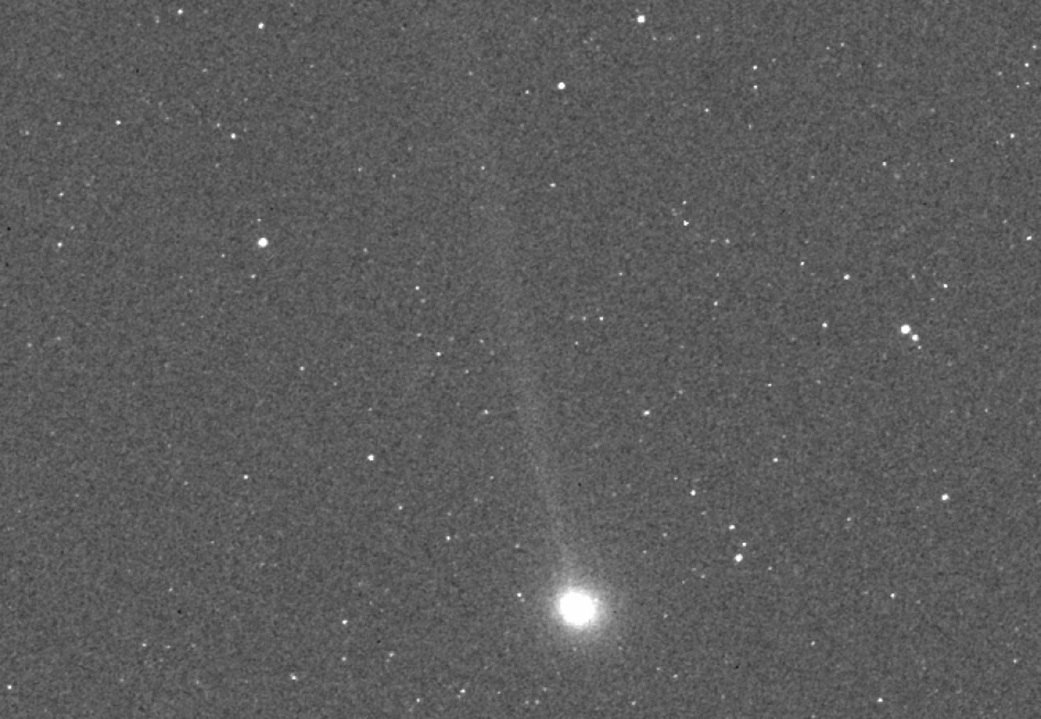
In 2013, Encke neared the sun at the same time as the much-watched comet ISON. NASA’s MESSENGER spacecraft photographed it on November 17, 2013, during the comet’s closest approach to Mercury.
Gravel strewn along the orbit
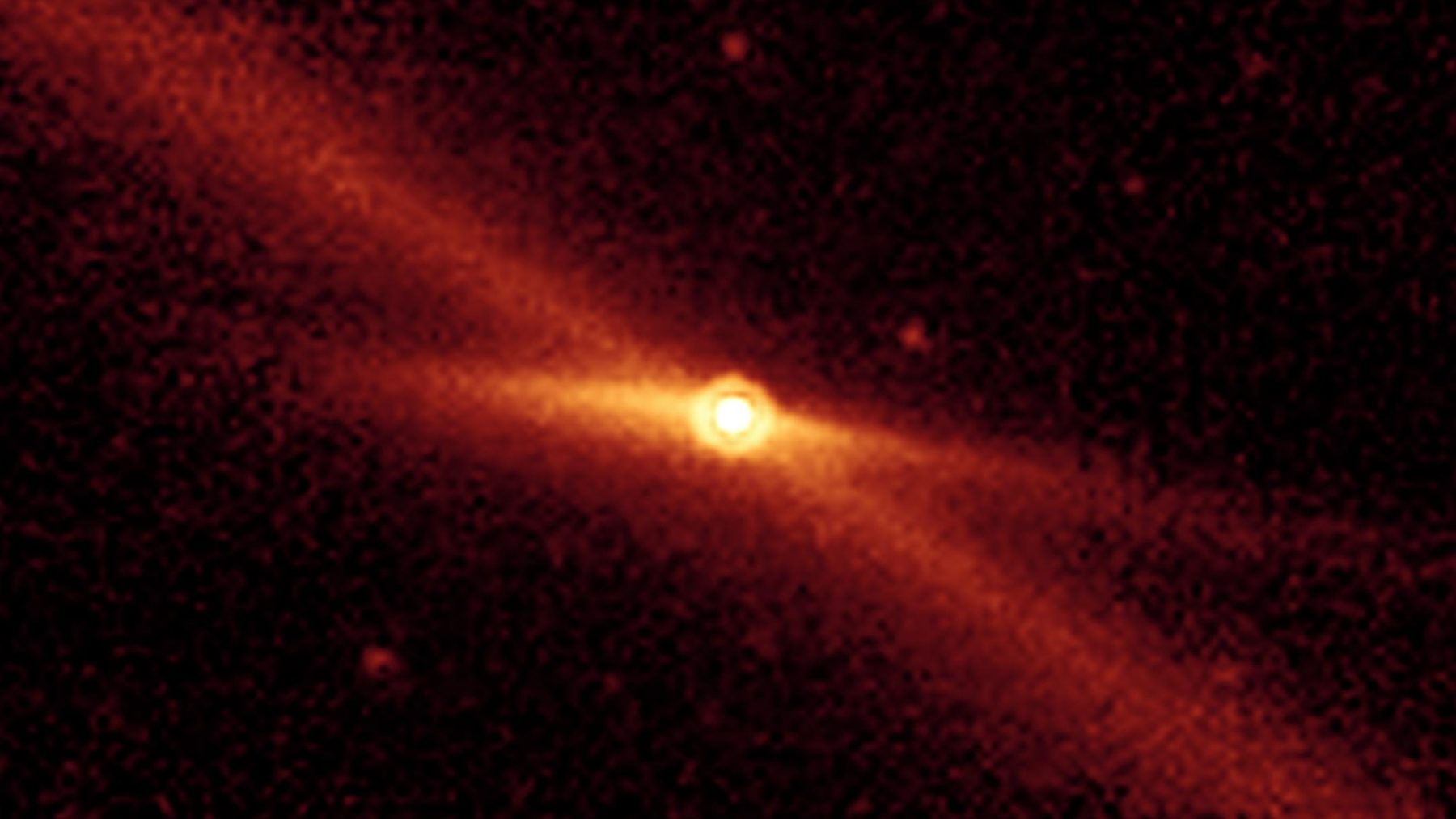
So why does a 3.3-year comet produce a shower every year? Earth crosses the debris Encke has left along its whole path. An infrared image from NASA’s Spitzer Space Telescope shows the comet riding along that trail.
Having used up its fine particles, Encke now leaves “a long trail of larger more gravel-like debris, about one millimeter in size or greater,” NASA wrote. That is about 0.04 inch per grain.
Each grain burns up as it slams into the upper air, and that streak of light is the meteor. Larger chunks do the same thing on a bigger scale, like the meteor that broke apart over Massachusetts and New Hampshire on May 30.
Slow meteors, bright fireballs
According to IMO tables, Taurids strike at about 17 miles (27 kilometers) per second in the south and 18 miles (29 kilometers) per second in the north. That is roughly 60,000 to 65,000 mph, which the IMO still counts as slow for a meteor.
Under ideal skies the southern peak gives 5 to 10 meteors an hour and the northern one about 5. The IMO calls the Taurids “excellent subjects for newcomers to practice their visual plotting techniques.”
Bright, slow streaks can still catch people off guard, as a fireball over Alabama and Georgia showed. The AMS tells observers to “treat published rates as a guide, not a promise.”
Its guide suggests a dark site away from streetlights and 20 to 30 minutes for the eyes to adjust. Binoculars only shrink the patch of sky you can watch. Bring a reclining chair or a sleeping bag, dress warm, and leave the phone screen off.
A high schooler’s swarm search
Encke belongs to the Taurid Complex, which also holds several meteor streams and possibly some near-Earth asteroids. The complex is so large that some scientists have suggested a much larger comet once broke apart.
Computer models from the 1990s showed that Jupiter could pen some of that debris into one crowded stretch of the orbit, now called the Taurid swarm. A 2019 attempt to search it, the paper notes, “fell victim to the weather and technical issues.” In 2022 Earth came near the swarm again, and on October 29 and 31 Li’s team pointed the Zwicky Transient Facility camera at Palomar Observatory, in California, at it.
About 25,000 streaks per night came out of the software, and the team looked at the thumbnails by eye. Nearly all were false positives or satellite glints. One was a real asteroid, 2022 UL16, but its tilt and orbit did not match the Taurids, so it was ruled out.
Finding nothing still told them something: the swarm can hold no more than 9 to 14 objects at least 330 feet (100 meters) wide. The parent comet was “probably not much larger than ~10 km in size,” they wrote. That is about 6 miles, far below the 62-mile (100-kilometer) body proposed in 1984.
Darker rocks could slip through
Two nights of data is not a census. The camera only caught objects brighter than a set threshold, so smaller or darker rocks could slip through. And the 100-meter figure rests on the rocks being as dark as a typical comet, reflecting about 4 percent of the light that hits them.
Li led the work with co-authors including Quanzhi Ye of the University of Maryland, with NASA support. The full study was published in The Planetary Science Journal.
Shower rates also shift from year to year. In the end, how many fireballs anyone sees this month will depend as much on clouds and local darkness as on Encke’s gravel.
Image: NASA/JPL-Caltech/Univ. of Minn.