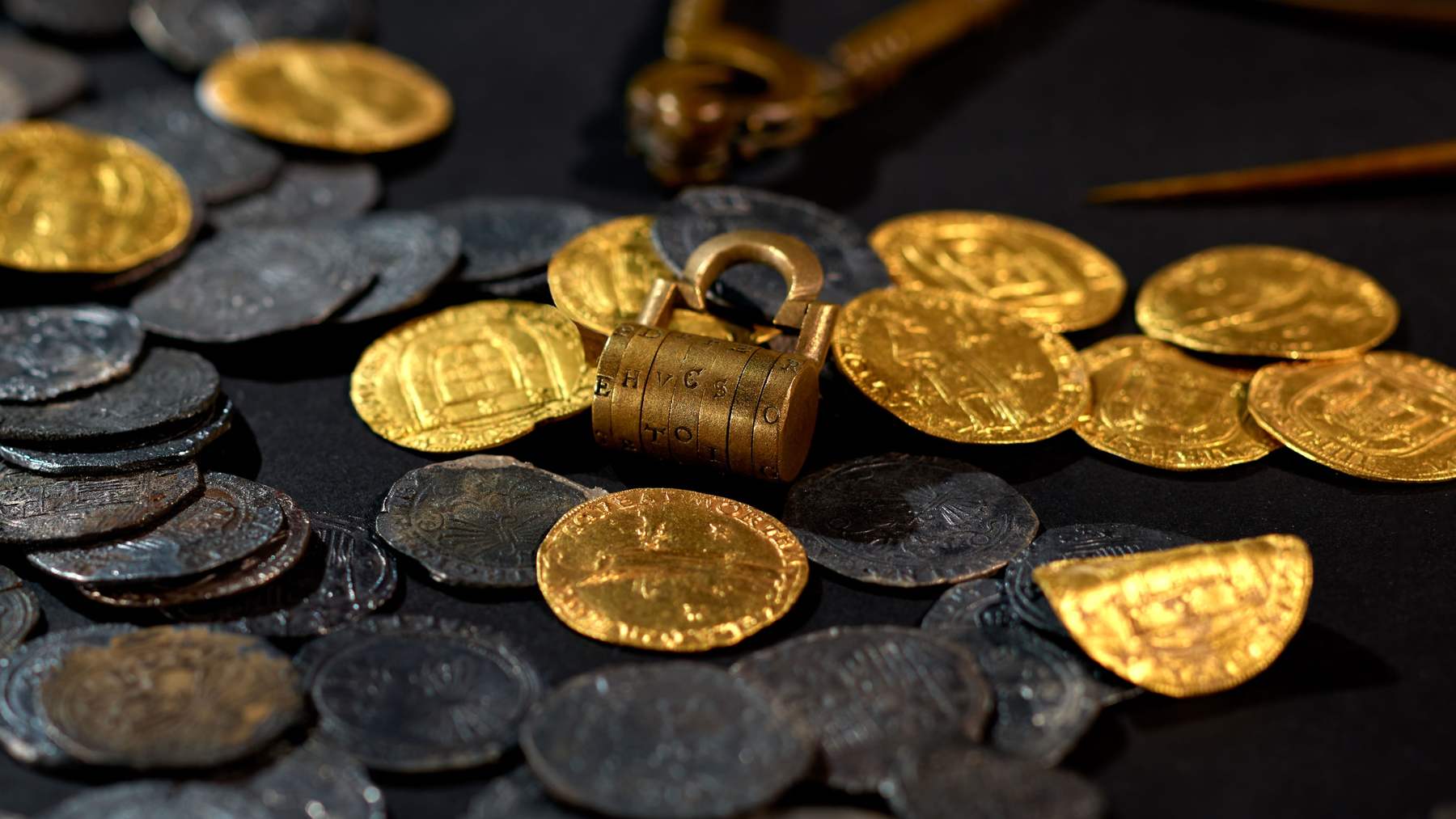
Experts at Amgueddfa Cymru, also known as Museum Wales, and Cardiff University have opened a 400-year-old padlock from the wreck of the Ann Francis. The merchant ship went down on Margam Beach, near Port Talbot, in 1583. CT scans revealed the four-letter code, ANCE, and the museum announced the result on November 4, 2026.
According to the museum, the brass lock had stayed firmly shut since the wreck. Visitors can now see it in Tides of Treasure, a free display at Swansea’s National Waterfront Museum. It runs until June 2027.
Four rings and 34 letters
The museum’s catalog record lists a copper alloy lock 1.25 inches (31.8 millimeters) tall. It weighs about 1 ounce (28.5 grams). Four rotating rings carry 24 engraved capital letters, and the two fixed end plates add 10 more.
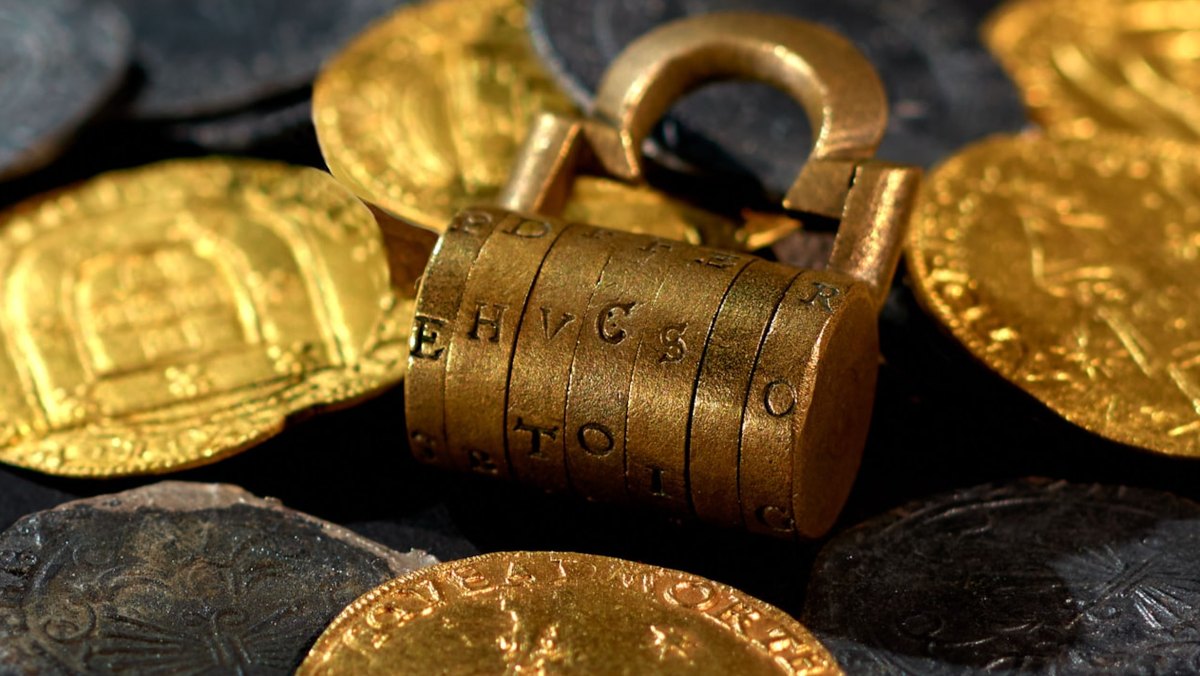
Locks of this kind are sometimes called Nuremberg locks, the record notes. Similar examples from the 16th century have reached the Portable Antiquities Scheme, which logs finds made by the public. One from the Suffolk coast no longer rotates, and a British Museum specimen opens with the word MARCI.
Alastair Willis is senior curator for numismatics, the study of coins, and the Welsh economy at Amgueddfa Cymru. He said Elizabethan combination locks are known in Britain. This one, he said, “is in exceptionally good condition and is associated with a dated wreck, making it a unique find.”
Micro-CT scans read the notches
The imaging fell to David Williams of Cardiff University’s School of Engineering. He is a research associate at its Musculoskeletal Biomechanics Research Facility. Micro-CT scanning let him look inside the lock without damaging it.
“By creating a detailed 3D image of the internal mechanism, I could see how the notches lined up with the letters and identify the exact combination,” Williams said in the museum’s release.
His facility normally uses the technique on bones and other biological structures, so he called the padlock “certainly a first for us.” CT has served archaeology before, as with an Egyptian mummy and what its embalmers left inside.
Later that evening, the museum team tried his combination on the lock itself. Williams had to wait for their message, which confirmed that the code was right.
Smugglers, wheat and Spanish silver
Francis Shaxton, the ship’s owner, belonged to a King’s Lynn merchant family of notorious smugglers, the museum says. He claimed the Ann Francis had sailed to Hartlepool. In fact, the museum’s account of the wreck says it left for the Iberian Peninsula that October with wheat.
At the time, Spain paid for imported grain with gold and silver from the Americas. The crew was carrying that payment home when a storm struck on the evening of December 28, 1583. On the Gregorian calendar we use today, that was January 7, 1584.
A navigational error or strong southerly winds may have led the captain into the wrong channel. He entered the Bristol Channel instead of the English Channel, according to the museum.
Star Chamber court records show the wreck soon became a legal fight. Sir Edward Mansell, a local lord, accused George Williams, the Steward of Afan, and 100 others of armed plunder.
Mansell’s inventory of impounded goods listed cannon, anchors, cloves and marmalade. It also listed three chests with their locks broken. In Norfolk, a parish register recorded 14 sailors lost on the west coast that December, and it blamed a King’s Lynn woman named Mother Gabley for bewitching them.
Two decades on Margam Beach
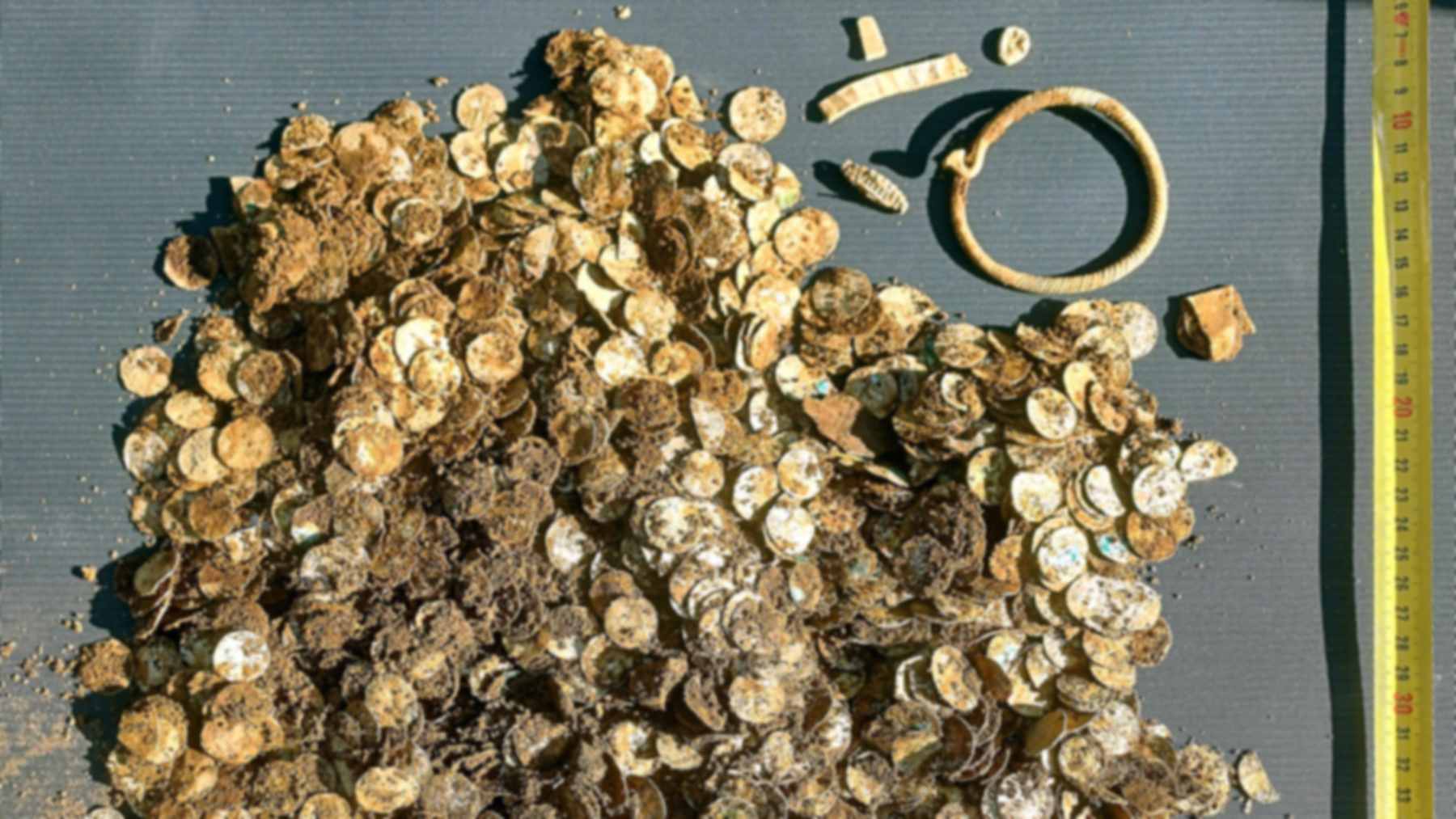
Metal detectorist Peter Hughes found most of the hoard between 1996 and 2017. Dredging and storms had stripped layers of sand from the beach. The collection includes about 870 gold and silver coins, plus personal belongings, ship’s equipment and kitchen utensils.
When Hughes found the lock, its workmanship astonished him. Its ring dials, he said, “turned with ease after over 400 years beneath the sands.” The Welsh government supported the purchase, which the catalog dates to May 6, 2025.
Among the finds are more than 120 Mexican silver coins, and one was struck in Mexico City in 1536 or 1537. Coins from nine countries also turned up in the Marblehead hoard under a Massachusetts kitchen.
Metal detectorists also started the count on Norway’s largest Viking coin hoard, now at 5,550 coins. Elsewhere in Wales, a drought over parched fields exposed sites nobody had recorded.
Why ANCE remains unexplained
Nothing the museum has published explains the four letters. Its exhibition page calls the combination a secret word, but the release offers no translation. Willis left the question open: “now we’ve solved it, we are left wondering if the code meant something to its owner.”
What the lock protected is also unknown. It lay near Spanish silver coins and two coin weights, according to the museum. It may have guarded those objects, or a small chest of documents or textiles that did not survive.
Mansell’s inventory offers one more lead, since the museum says the lock could belong to one of the coffers listed there. That remains a possibility. The release cites no peer-reviewed paper and includes no scan data.
The findings were announced in a news release from Amgueddfa Cymru dated November 4, 2026.
Photo: Amgueddfa Cymru – Museum Wales