A dam removal on California’s Neefus Gulch reopened a stream where salmon had been unable to spawn for more than 70 years. Fish showed up above the old site within months.
Trout Unlimited took out the 18-foot (5.5-meter) earthen dam in the summer of 2024 with NOAA funding. One of its teams spotted a juvenile steelhead upstream that December 6.
By January 2026, the group’s biologists had counted eight spawning nests in the reopened habitat, NOAA Fisheries reported. Neefus Gulch is a small tributary of the North Fork Navarro River, on the Mendocino Coast.
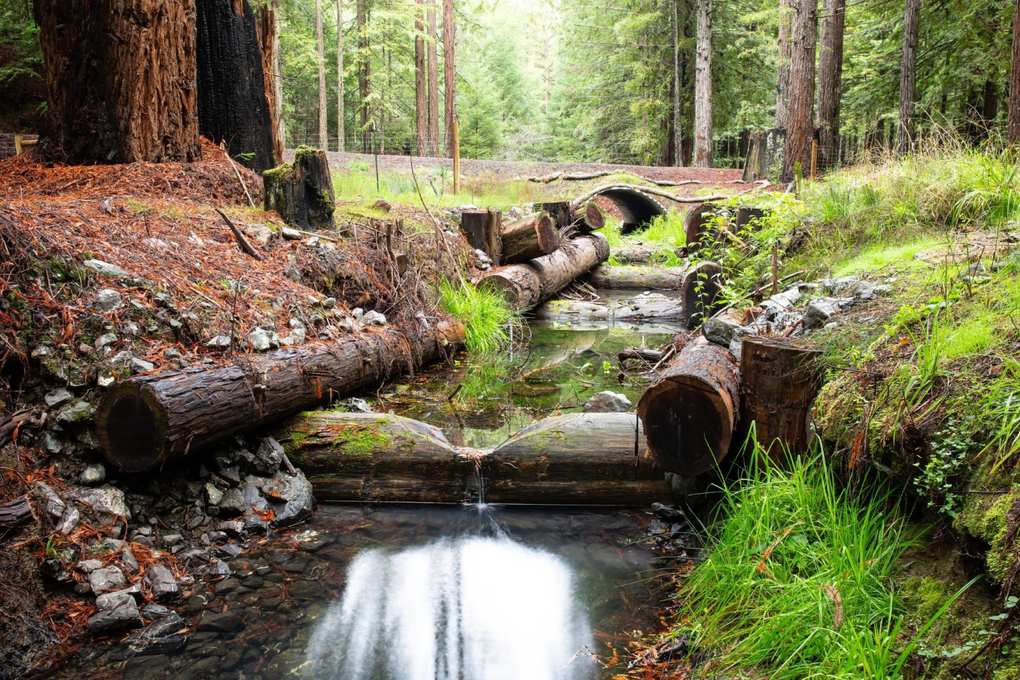
A stock pond across the creek
For decades the dam held back a stock pond of about 1.13 acres (0.46 hectares), NOAA’s project records show. The pond drowned more than 550 feet (168 meters) of stream and blocked salmon and steelhead completely.
NOAA lists May 30, 2024, as the construction start. A project plan filed in California’s environmental database told crews to remove the berm and spillway and dig out trapped sediment. They also had to rebuild about 1,600 feet (490 meters) of channel with large wood.
That plan described a pond believed to harbor numerous nonnative fishes, plus many amphibians, including bullfrogs. A project biologist had to relocate native animals and remove nonnative ones before the water came out.
Trout Unlimited had cleared another barrier on the creek in 2021. Together, NOAA says, the two jobs opened 1.3 miles (2.1 kilometers) of habitat for coho and steelhead.
Other rivers are getting different fixes, from a dam coming out in Indianapolis to a fish elevator in Maine.
A steelhead, then a coho
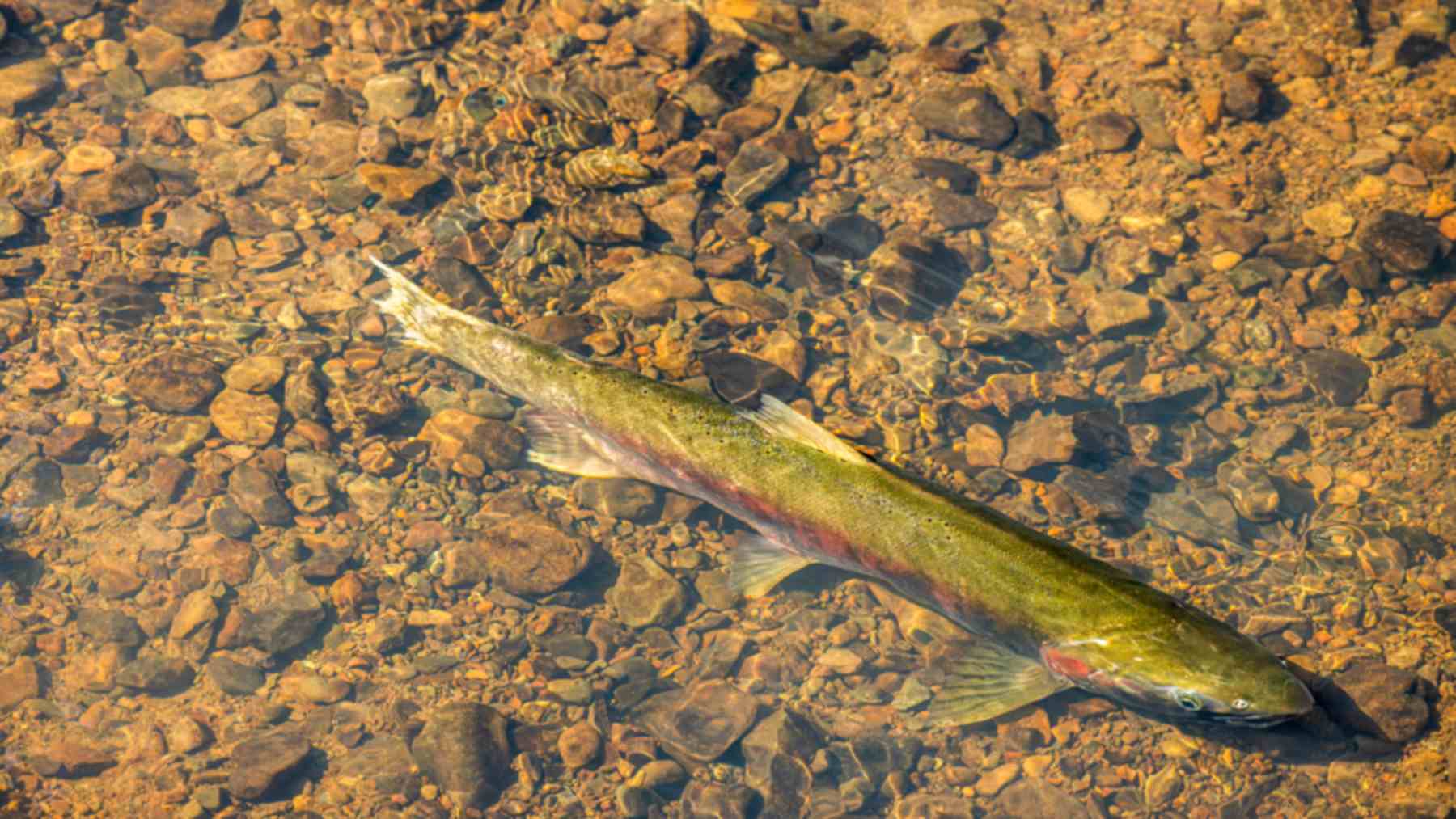
That December fish was the first one a Trout Unlimited team saw using the habitat above the old dam. Steelhead are rainbow trout that go to sea, like those that returned to Oregon’s Deschutes River in a record season.
On January 6, 2025, a Trout Unlimited project manager saw a female coho in the restored channel. The team then surveyed the creek and found 17 salmon nests, four of them above the project area.
Joe Pecharich, a NOAA habitat specialist with 20 years of work in the region, visited after construction. He told the agency “there were so many juvenile coho above the former dam.”
Eight redds above old barriers
Surveyors returned in January 2026 and recorded 10 coho redds and two steelhead redds in Neefus Gulch. Redds are the gravel nests that spawning females build.
Eight of those 12 nests sat in restored habitat above the former barriers, said Anna Halligan, who directs Trout Unlimited’s North Coast Coho Project. “Salmon have not had the ability to spawn in this area for more than 70 years,” she said.
NOAA does not break those eight nests down by species. The figure is twice the four found a year earlier, but the reports do not say both surveys covered the same ground.
30,000 coho on the coast
Neefus Gulch sits inside a much larger rebound among endangered Central California Coast coho. Monitoring teams estimated that more than 30,000 adults reached Mendocino Coast rivers in 2024-2025.
That total doubled the previous season’s record of 15,000 fish. In the past decade, as few as 3,000 came back in a year.
Crews led by the California Department of Fish and Wildlife cover roughly 500 miles (805 kilometers) of habitat. They walk randomly chosen stream sections every two weeks in spawning season, counting adults and redds.
David Ulrich, a senior scientist at Mendocino Redwood Company, surveys the North Fork Navarro, which Neefus Gulch feeds. “Last year we were seeing 50 to 100 fish a day during the height of the spawning season,” he told NOAA.
Winter shelter for young coho
According to NOAA, young coho stay in fresh water for more than a year, sometimes two. They need cold, clean streams, plus side channels and floodplains where they can feed and hide.
At Dry Dock Gulch, off the lower Big River, a 10-foot-wide (3-meter) culvert replaced two undersized road culverts. Teams caught 315 juvenile coho at that site in 2023-2024, and some tagged fish grew through the winter.
The Nature Conservancy has been reconnecting floodplains and building log jams on the Ten Mile River. Its project manager, Peter van de Burgt, told NOAA that “only 5 percent of the historic winter habitat for salmon is still available.”
Redd counts stop short of survival
Nests prove that adults reached Neefus Gulch and spawned, but they cannot show how many offspring will live. Coho follow a three-year cycle, so young from the January 2026 nests would return around the winter of 2028-2029.
NOAA calls pinpointing the exact causes of the coastal surge extremely difficult. Its report lists good rains, conservative ocean management and new forest practice rules.
Marine survival also helped, reaching about 8 percent at Pudding Creek, where it usually sits at 2 percent or lower. So the regional count cannot be credited to one dam.
Joshua Fuller, a NOAA branch supervisor, said the numbers “demonstrate that recovery is possible when management, habitat, ocean, and hydrologic conditions are aligned.” The species remains endangered, and drought and intense winter storms still threaten it.
The main report was published by NOAA Fisheries on March 26, 2026.
Photo: Christie Hemm Klok / Trout Unlimited, via NOAA Fisheries