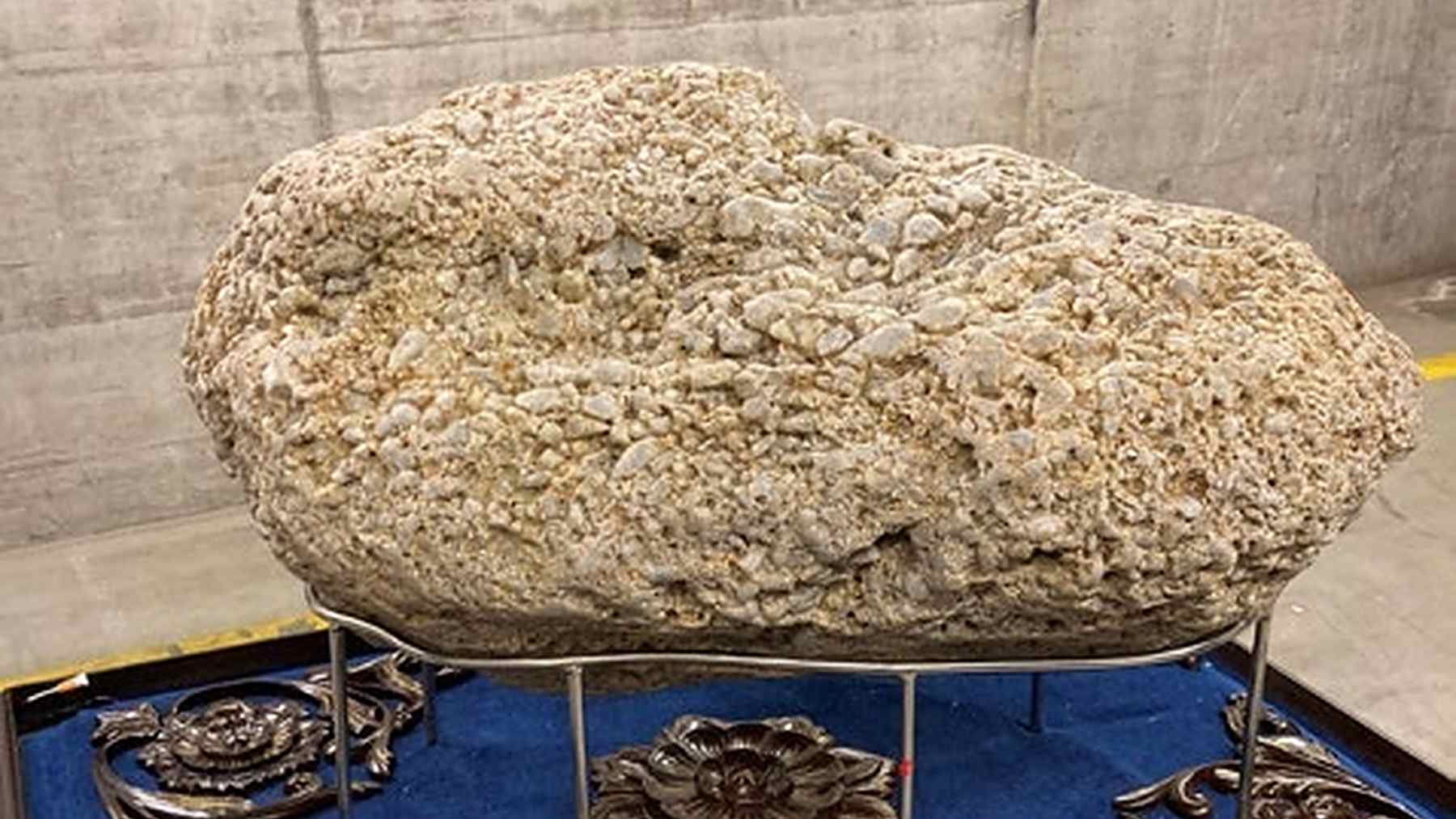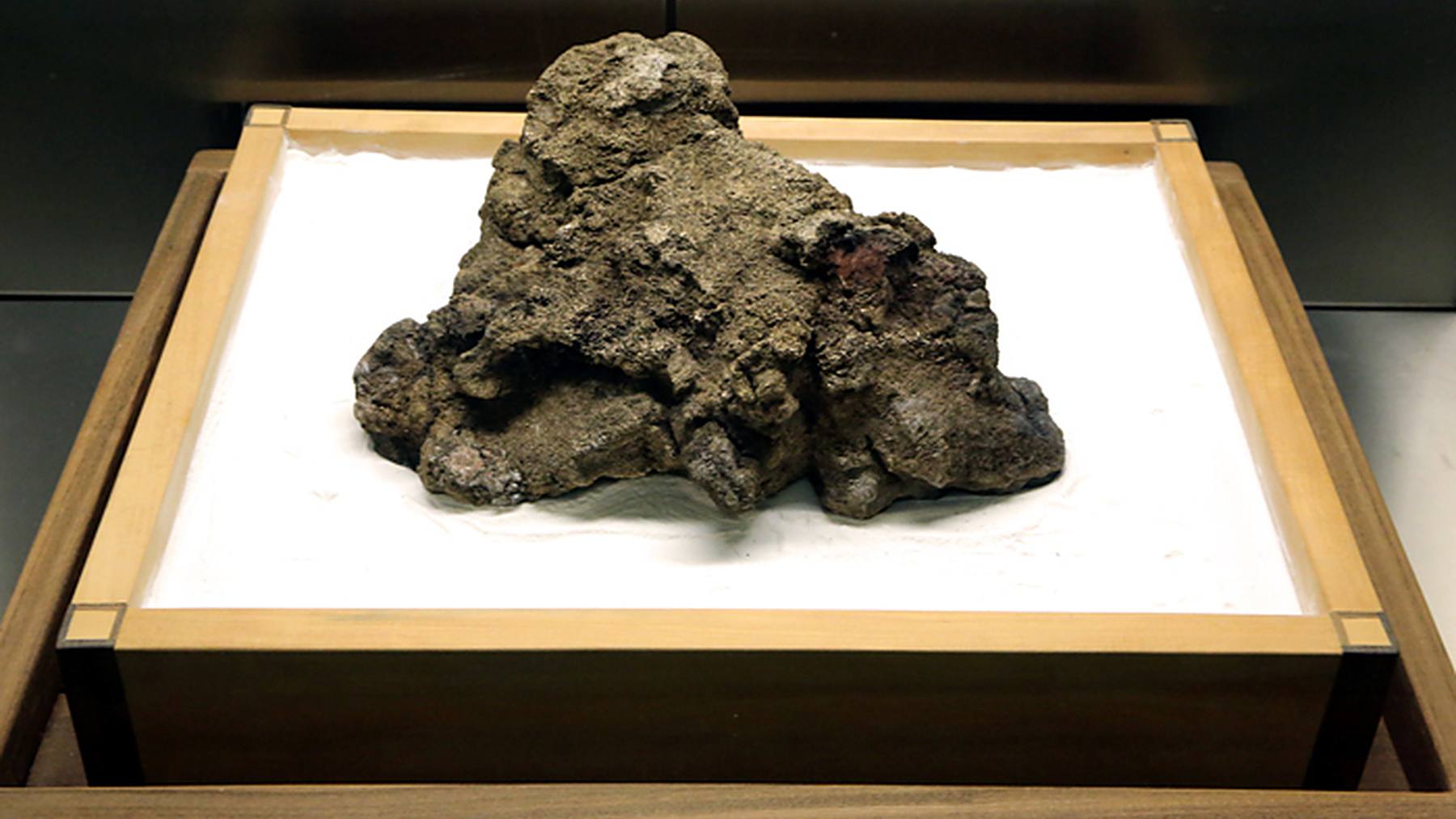
Brazil’s central bank owns a 134-pound gold nugget known as Canaã. Miner Júlio de Deus Filho pulled it from Serra Pelada, in the state of Pará, on September 13, 1983, and the bank acquired it in 1984 for its Museu de Valores in Brasília.
Official descriptions agree on the weight to within a fraction of a pound. On the gold inside, they split: two documents state totals, a third gives only percentages, and the highest total sits about 9 pounds above the lowest.
Malvina pit, September 1983
According to the museum’s display panel, De Deus Filho found the nugget at the Malvina digging in Serra Pelada. The bank’s official museum guide calls him a garimpeiro, the Portuguese word for an independent small-scale miner.
Pará’s state legislature says a new gold rush began there in 1980. An average of 25,000 men worked day and night, and up to one metric ton of gold came out in a month.
Brazil’s Chamber of Deputies puts the official output at 30 metric tons. President Fernando Collor’s government shut the site in 1992. Single nuggets still draw outsized attention, as the $750,000 sale of Alaska’s largest gold nugget showed.
Steel-wool gold broke apart
Visitors to the gold room could read a detail that rarely travels with the nugget’s weight. The panel beside the case calls Canaã the largest part of a stone of about 150 kilograms, roughly 330 pounds. That stone split into several pieces as it came out of the ground.
The panel blames the metal itself, which it labels “bombril” gold and describes as easily fractured. Bombril is also a household brand of steel wool in Brazil.
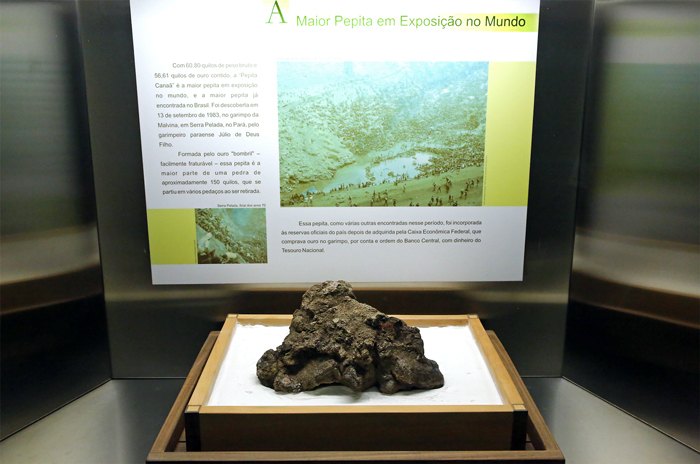
By weight, the surviving piece accounts for about 40 percent of that estimated stone. The panel does not say where the other fragments went. How any single mass like this forms is a separate debate, and one line of research points to earthquakes acting on quartz.
56.61, 54.7 or 52.332 kilograms
That panel gives a gross weight of 60.80 kilograms and 56.61 kilograms of contained gold, about 124.8 pounds. A central bank article from March 2024 rounds those numbers to 61 and 57 kilograms.
The printed guide takes another route. It lists 60.820 kilograms gross, with 90.01 percent gold, 8.65 percent palladium and 1.34 percent other elements. That gold share works out to about 54.7 kilograms, or 120.7 pounds.
An older English page from the bank goes lower still. Its museum collections section lists “52.332 kg of contained gold,” close to 115.4 pounds.
Gross weight counts everything in the specimen, so none of these numbers contradicts the 134 pounds on the scale. If the guide’s percentages hold, palladium adds roughly 11.6 pounds to the object.
Caixa bought on the site
Canaã reached the state through a purchasing system built for the rush. According to the panel, the federal bank Caixa Econômica Federal bought gold at the digging. It acted on behalf of the central bank and paid with National Treasury money.
Like several other nuggets of that period, Canaã entered Brazil’s official reserves through that channel. The guide shows it still in its raw form, with a rough, dark surface.
A planning document for the museum renovation names Canaã as the main attraction among roughly 135,000 items. The collection also holds coins, banknotes, medals and objects tied to making money. Only about 2,000 pieces, or 1.5 percent, were on display when that document was written.
Closed doors in Brasília
Anyone hoping to see the nugget in person will have to wait. The museum’s official page currently says the Brasília site is closed for renovation. It sends visitors to a virtual tour, launched in March 2021 with 360-degree images.
The bank plans to reopen it as South America’s first economics museum, with more than 2,000 square meters (about 21,500 square feet) of exhibits. Its four sections will cover economics, financial education, sustainability and payment history. The March 2024 article expected an opening in 2025, yet the page still lists the museum as closed.
Museum head Karla Valente used a bank livestream to preview the centerpiece, the Numisfera. She described it as a kind of super display case. It will hold coins, banknotes, checks, credit cards and material on Pix, Brazil’s instant payment system.
The 9-pound gap stays unexplained
None of these bank documents explains how it reached its gold figure, or which one reflects the latest assay. Method, rounding or date could each play a part.
Claims about rank also need care. The panel says largest on display in the world and largest found in Brazil. The 2024 article loosely calls it the largest ever found, despite heavier historical masses such as the man-sized nugget from Australia in 1869.
The composition figures appear in the museum guide published by Banco Central do Brasil.
Photo: Banco Central do Brasil