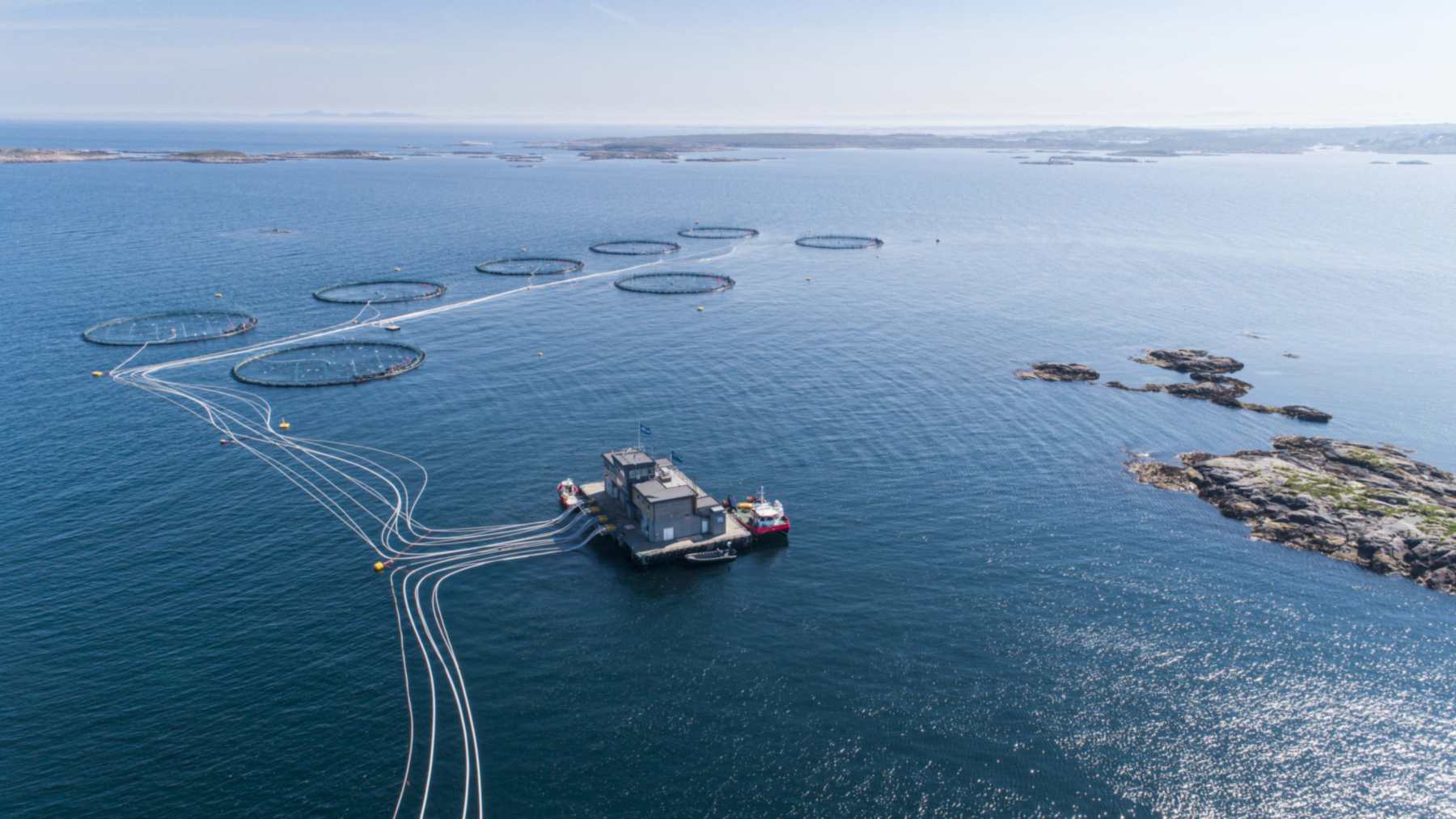
Poultry by-products entered the salmon feed of Norway’s Lerøy Seafood Group in spring 2025. The company reports that they made up 2 percent of its feed that year. Its February 2025 announcement said the change could cut the feed’s carbon footprint by up to 16 percent.
Lerøy says the material comes from European poultry production and “would otherwise not be used for human food.” Its 2025 data paints a more mixed picture. Feed emissions fell, while wild forage fish took a larger share of the marine ingredients.
Four countries supply the poultry
According to Lerøy’s 2025 fish feed disclosure, the poultry came from Belgium, Finland, the United Kingdom and Spain. A 2024 project with its feed partner set out to lower emissions and steady the ingredient supply. That project named poultry by-products “the only suitable raw material.”
Anne Hilde Midttveit, Lerøy’s head of ESG and quality, linked the decision to a 46 percent emissions target for 2030. “We are proud to be early adopters of this large-scale initiative in Norway,” she said in the announcement.
Cargill, which makes EWOS feed, had already used these ingredients in other countries, Lerøy said. Mowi’s 2025 industry handbook also lists poultry by-products among salmon feed ingredients in Chile and Canada.
Two percent of 284,608 tons
Lerøy used 284,608 metric tons (about 313,700 U.S. tons) of feed in 2025. A 2 percent share would be roughly 5,700 metric tons (about 6,300 U.S. tons). That estimate rests on the company’s rounded percentage.
Rapeseed oil remained the largest ingredient at 18 percent, ahead of fish meal at 17 percent and soy at 11 percent. Lerøy says poultry replaces some soy protein concentrate and fish meal. The company adds that it will still need both.
Soy shares the emissions credit
Lerøy’s average feed emissions were 1.93 kilograms of CO2 equivalent per kilogram of feed in 2023. The figure dropped to 1.62 in 2024 and 1.47 in 2025. About two-thirds of that fall came before poultry entered the recipe.
For 2025, Lerøy credits greener soy farming practices and the poultry by-products as the main causes. It does not say how much each one contributed. Land use remains a live issue for export-driven soy farming in South America.
Across the whole industry, Lerøy estimated that poultry by-products could avoid up to 600,000 tons of CO2 by 2030. Joakim Hauge of the environmental foundation Bellona called the investment “a significant step” in the same company release.
Wild forage fish gained ground
Marine ingredients shrank from 31 percent of Lerøy’s feed in 2023 to 26 percent in 2025. Within that smaller slice, forage fish rose from 60 percent to 74 percent. Fish trimmings dropped from 40 percent to 26 percent.
Forage fish are small schooling species, like the round sardinella of West Africa, that are often ground into meal and oil. Trimmings are the leftovers from fish already processed for food.
In Norway, Lerøy’s fishmeal dependency ratio rose from 0.64 in 2024 to 0.74 in 2025. It estimates the industrial fish used in meal per kilogram of salmon. The matching fish oil ratio improved, from 1.52 to 1.37.
Mowi’s feed arm joins Nofima
Norwegian research institute Nofima is studying chicken residues in salmon feed through September 2027. The project is led by senior scientist Bjarne Hatlen and funded by the Norwegian Seafood Research Fund. Its partners include Mowi Feed AS and Nutrimar AS.
Nofima says feed causes about 85 percent of emissions from Norwegian farmed salmon up to slaughter. The institute also names two obstacles to wider use. Protein digestibility is often low and variable, and European shoppers and supermarkets may resist.
Researchers plan to process chicken residues at small scale in Bergen and compare them with commercial meal. A sea-cage trial will then measure growth, gut health and fillet quality in one of Europe’s most commercially important farmed fish.
Allocation math clouds the savings
The climate advantage depends partly on how emissions are divided between a bird’s meat and its leftovers. Lerøy’s climate disclosure says the by-products can have lower emissions “depending on sourcing and allocation assumptions.” The 16 percent figure was also a forecast made before the rollout.
Lerøy says its tests showed good results for fish health and product quality, but the announcement included no trial data. Nofima’s long-term sea-cage results are still pending. Its consumer surveys should show whether shoppers accept salmon raised this way.
The main sources are Lerøy’s announcement of February 6, 2025, and its 2025 sustainability library.
Photo: Lerøy Seafood Group