Blueberry seeds recovered from wolf scat in northern Minnesota sprouted at a rate of 96 percent in controlled trials. Seeds taken directly from the fruit reached 69 percent, according to a study published August 26, 2026, in Biology Letters.
Researchers from the University of Minnesota and Hope College in Michigan worked in the Greater Voyageurs Ecosystem. Wolves there forage heavily on blueberries each summer. The team concludes that wolves are “likely effective long-distance dispersers of blueberry seeds.”
Blueberries on a predator’s menu
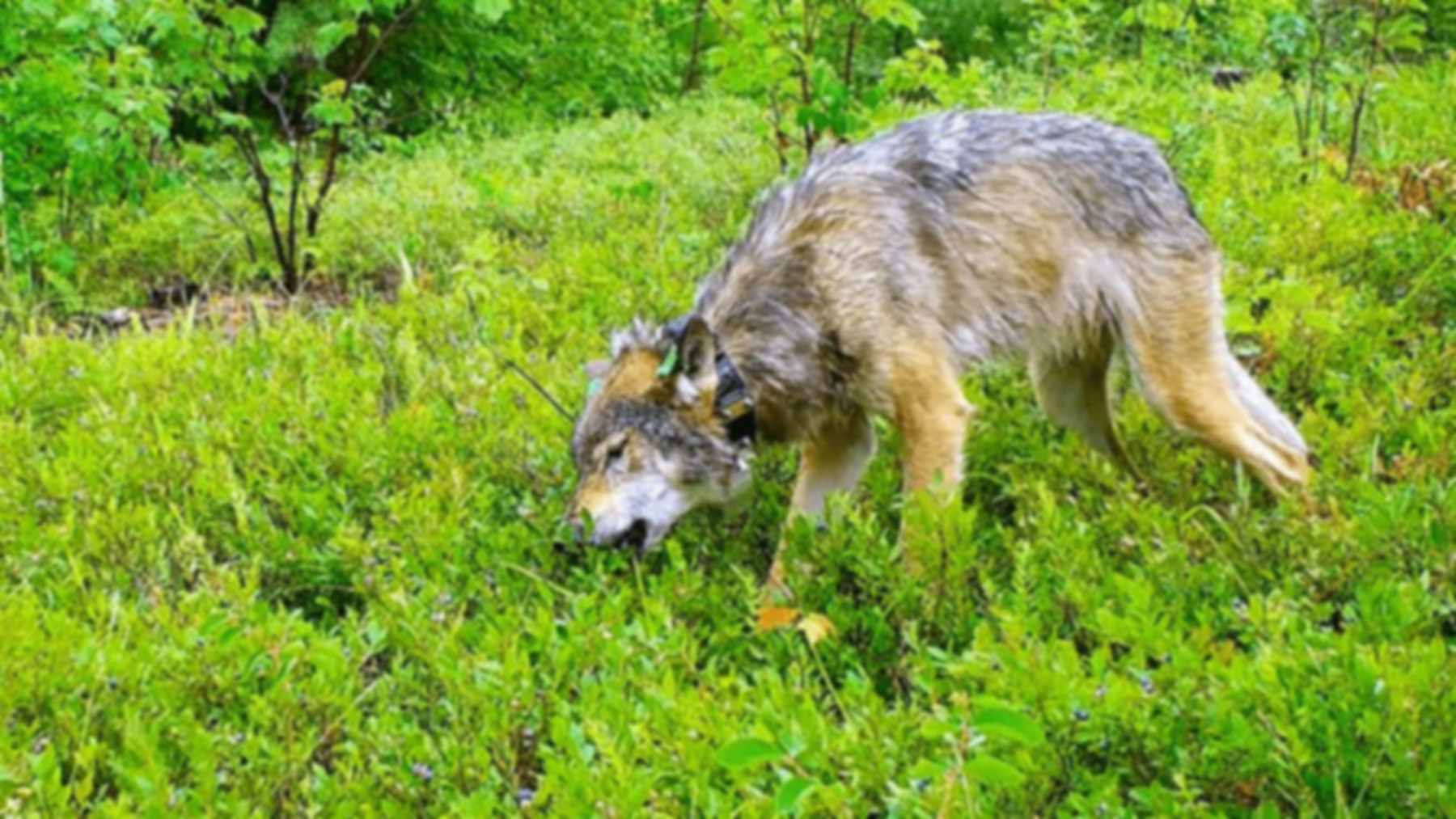
Wolves hunt for most of their food, yet Northern Michigan University reports that wild blueberries make up a large portion of their summer diet. A 2024 paper in Ecosphere used cameras placed in berry patches around Voyageurs. Those cameras recorded wolves of all ages and social ranks eating the fruit.
In August 2017, the same group watched an adult wolf regurgitate wild blueberries for pups. The authors called it the only known observation of its kind in Wildlife Society Bulletin. Adults normally feed pups with carcass remains.
Berry meals can also be large, judging by an earlier analysis of 10 wolf scats from in and near Voyageurs National Park. It estimated that one all-berry scat represents about 1 pound (0.468 kilogram) of fruit.
Five scats, 802 seeds
Much of the fieldwork follows GPS collars, which send technicians from the Voyageurs Wolf Project to clusters of location points after the animals move on. In midsummer those points often lead to a foraged blueberry patch, Northern Michigan University said in October.
Alex Gross, a biology graduate student at Northern Michigan, joined the project in 2024 and turned samples gathered since 2017 into the published paper. The dataset the team deposited at the University of Minnesota lists seeds from five scats, three from 2017 and two from 2018. Trials began in February 2018, February 2019 and August 2020.
Of the 802 seeds taken from scat, 766 germinated. The comparison group, picked from wild plants, reached 335 of 484. Even the weakest scat batch came in at about 90 percent.
Sprouting a week sooner
Speed separated the two groups as well, with half of the scat seeds sprouted by day 19 of the trials. Seeds from fruit needed until day 26.
By day 14, about 18 percent of the scat seeds had germinated. Fewer than 3 percent of the fruit seeds had reached that point. The earliest sprouts in the records appeared on day 6 for scat seeds and day 12 for fruit seeds.
“This highlights an underappreciated role of wolves and connects them to larger ecological processes in boreal ecosystems that are often overlooked,” Gross said in the university’s account.
One fruit batch reached 91 percent
Those pooled figures hide a wide spread among the fruit seeds. The 2017 batch germinated at 42.5 percent and the 2018 batch at 91 percent, while a 2019 batch reached 81 percent in a trial that stopped at day 40. The team’s code excludes a second 2019 tray because of heavy fungal growth.
Comparing by harvest year changes the picture, because scat seeds from 2017 reached about 95 percent against 42.5 percent for that year’s fruit. For 2018, the figures were about 97.5 percent and 91 percent.
The authors tested that tougher comparison too, and against the best fruit batch the margin shrinks to under 5 points. Half of those seeds had sprouted by day 23, four days behind the scat seeds.
Carried off the patch
Dispersal reduces competition, parasitism and predation while promoting gene flow, the authors write. Other large animals do this work too, as with the oryx linked to acacia seeds in Israel’s Negev.
Wolves can also shape plants from the other direction. Deer and boar now threaten Doñana’s Iberian pear trees in Spain. That study’s release says their rise probably follows the local decline of predators such as the wolf.
Long-term monitoring helps with questions like these, and researchers have followed the rebuilt wolves of Isle Royale closely in a separate Great Lakes project.
Forest-floor sprouting remains untested
Every germination figure here comes from controlled conditions, and the deposited records track no seeds on open ground. A seedling in a real forest still has to survive shade, frost and competing plants.
Distance is also an inference, since the dataset holds no measure of how long seeds stay inside a wolf or how far they travel. For that reason, the authors’ wording stops at “likely.”
Sample size adds a further caution, because five scats supplied all of the treated seeds, and the files do not say which wolves produced them.
The full study was published in Biology Letters.
Seed counts and analysis code sit in the University of Minnesota’s data repository, so other researchers can rerun the comparisons.
Photo: Northern Michigan University