Einstein predicted a faster-than-light engine: NASA wants to build it

· 3 min read
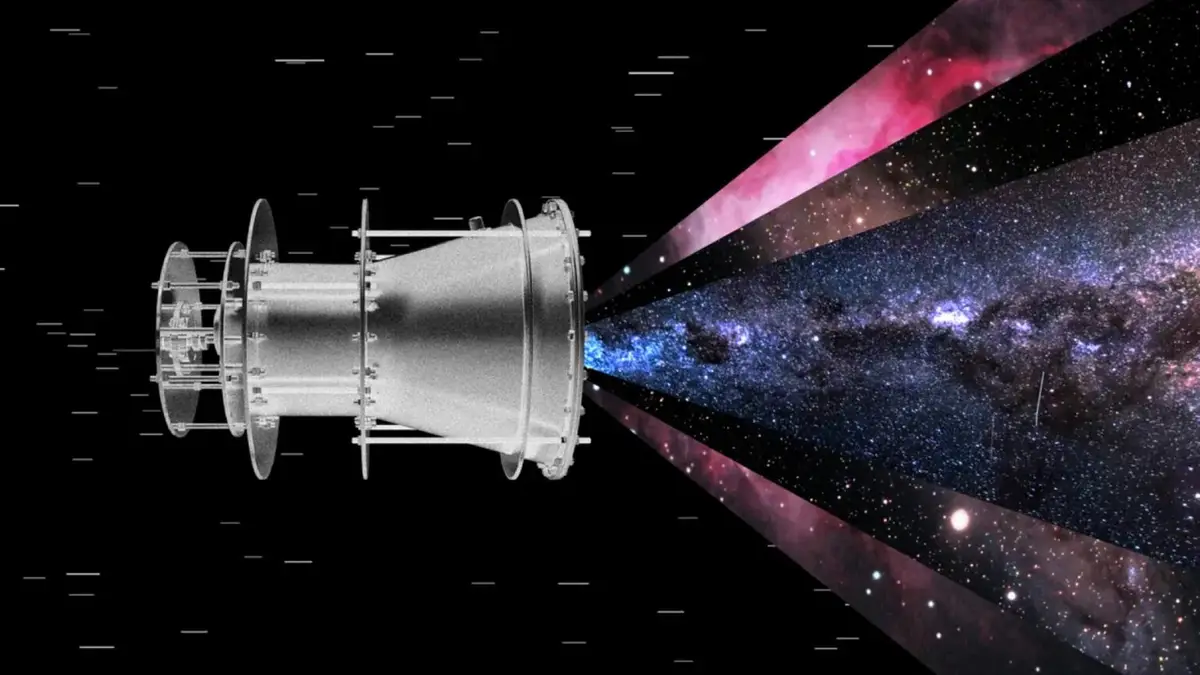
With outstanding astronomical accomplishments, like landing on the moon or exploring the solar system, it is natural that FTL issue, faster than light travel, emerges. Because of these advances, what was once only imaginations of science fiction writers seems to come true (or that’s what NASA is studying).
Revolutionizing technology: A warp drive design that does not require exotic matter, according to NASA
1994 was the year when Mexican physicist Miguel Alcubierre proposed warp drives with the potential to revolutionize space travel. He claimed that light-speed is not the ultimate speed limit, spacecraft crew can use space-time around the ship to travel faster by compressing space in front of a ship and expanding at the rear.
Nevertheless, this radical notion had its share of problems, the first was the absence of exotic matter with negative energy density which made the idea somewhat far-fetched in an optimistic sense. Lately, work out of the University of Alabama in Huntsville has taken the Lewis and Cuddihy paper one step farther. The team has constructed a warp drive design with no need for exotic matter.
It uses old and new forms of gravity, to generate a warp bubble which enables motion faster than the speed of light in a way that does not violate known physics. This is a major turning point in warp drives history indicating that FTL travel may not be as distant a dream as it has always been.
Warp drives: Progressing towards tangibility but with remaining obstacles
Recent studies highlight the exciting possibilities of warp drives, all while understanding the serious remaining issues. The new model proposed by the scientists has a stable matter shell and a specific distribution of gravitational shifts which just might allow for high but subluminal speeds to be achieved.
While this is certainly not a development that will promote the ability to instantly travel to any galaxy or anywhere within it, it definitely does allow for expanding the range of possibilities that are related to intergalactic travel.

On the other hand, no one is raising their hopes too high. First author Jared Fuchs admits that this model changes the debate, but that even the spacecraft it predicts is a long way from being built. In other words, the authors state that this research is just one of the first steps in a long process of developing technologies for interstellar travel.
Even if they decide go one way, imitators will never be ale to forget the meaning of the saying: these ideas are very firm to be able to express contempt for the practical outcome of these ideas for quite some time if not forever.
A new era of exploration: Advancements in warp drive systems technology
With the concept of warp age drawing closer, the ramifications of such expectations are profound. In fact, if the principles suggested by Alcubierre and other contemporary creators of space travel withstand criticism, we might extend the frontiers of space travel reaching even those far-off stars that once existed as mere fantasies.
Thus, more enterprises and scientific research institutes are beginning to allocate resources for the development of warp drive systems. While work is in progress, the resolve to overcome the obstacles emphasizes the human desire to explore the cosmos.
Such progress brings us nearer to inter-galactic knowledge as well as encourages space exploration, stepping further than the Earth into the galaxies.The study of warp drives is a game changer when it comes to space exploration. While it may be a while before humanity goes from one star to another, recent advances in research indicate that travelling faster than the speed of light may soon be achievable.
ECOnews Newsroom
Writer at ECOnewsA team of journalists specializing in socio-environmental news, sustainability, climate change, the environment, responsible consumption, and innovation. At EcoNews, we provide clear, reliable, and relevant coverage of the environmental and social challenges shaping our era.
More from ECOnews NewsroomComments · 0
Rules ›No comments yet. Be the first to share your view.