Physics
We have some very strange stories in physics. Very large particle accelerators on the border of France and Switzerland, proposed probes that could reach a different star in the future, and materials that claim to defy the laws of physics (they don’t). We will clarify what we can learn from these experiments.
69 stories · since 2024 · latest, November 6, 2026
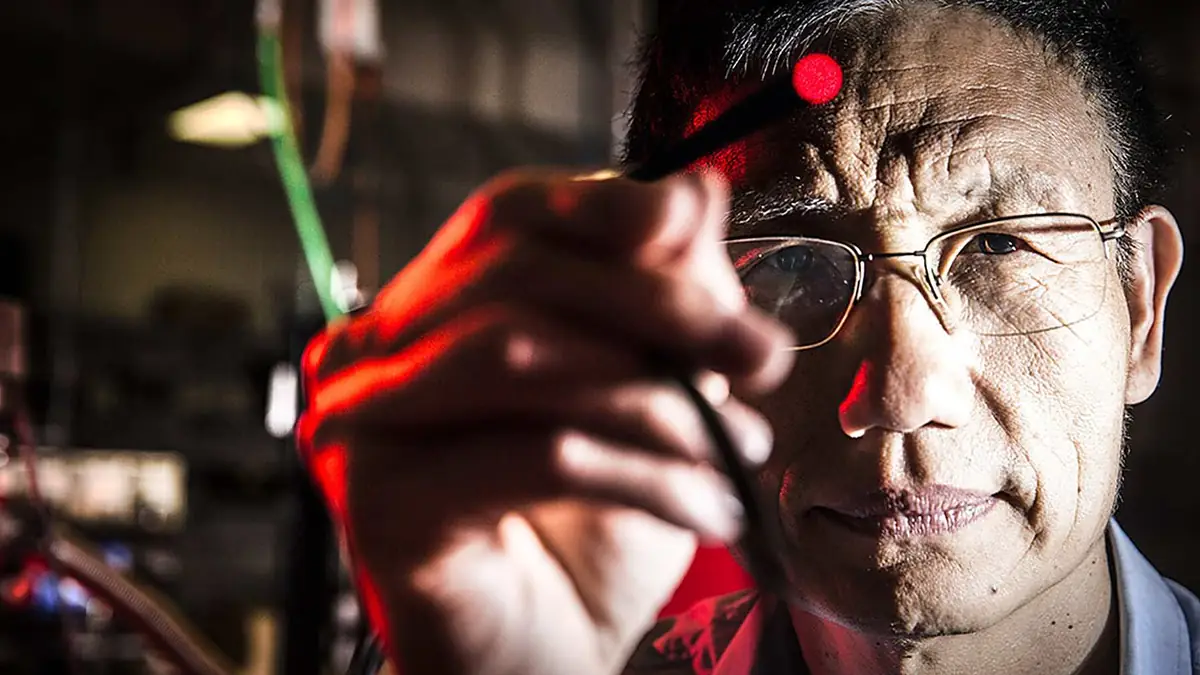
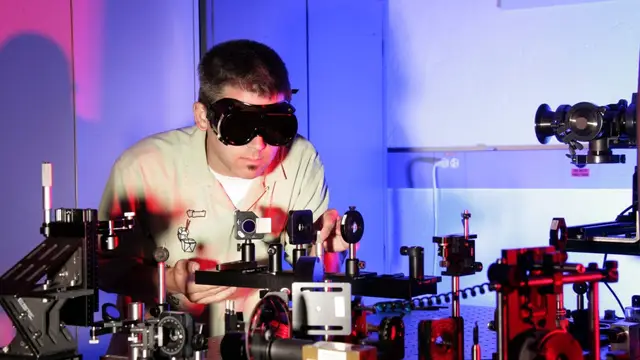
A physicist rode campus elevators with a 6.2-mile spool of optical fiber to test whether gravity changes the speed of light, and the effect he reports is far too big for Einstein’s own formula
A physicist in Australia says gravity changes how fast laser pulses move through optical fiber, a claim that touches the speed of light itself. Enbang Li,…

Two University of Alberta physicists traced millisecond swings in Earth’s length of day to the inner core’s gravitational tug on the mantle, and their model suggests the solid core deforms in about 10 years
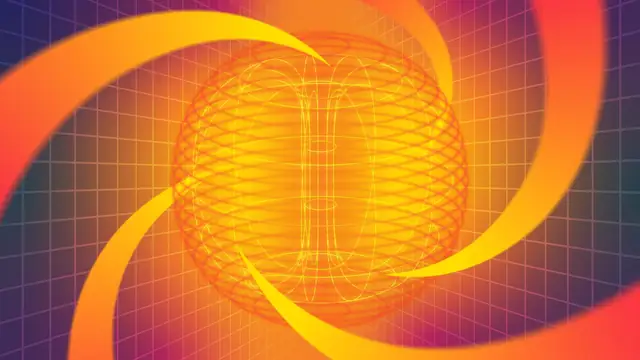
Princeton physicists reworked a 70-year-old fusion rule and calculated heating plasma first is the lowest-energy path to fusion ignition, while a trace of tungsten can roughly double the pressure
Physicists fired a laser at the plastic used in drink bottles and recovered nanodiamonds just 3 nanometers wide, after each shot hurled about 10 trillion of them at more than 22,000 mph into a soft gel
“The idea is quite cool. You take water bottle plastic; you zap it with a laser to make diamond. How practical it is, I don’t know,” Marius Millot, a…
ECOnews Newsroom · October 6, 2026
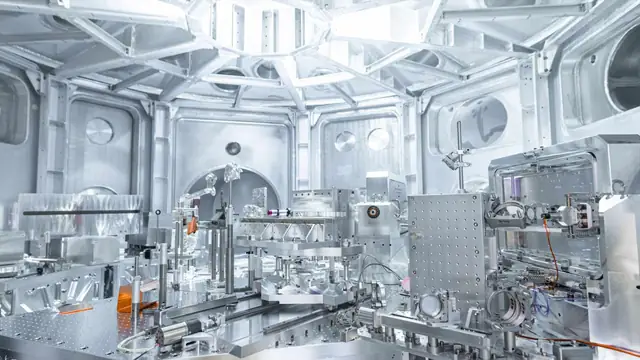
Scientists built the first all-optical photonic time crystal by making a material change its optical properties every trillionth of a second, and the strange experiment cut losses in light-and-electron oscillations by more than 50% while opening a possible path toward new terahertz lasers
Scientists have demonstrated what they describe as the first all-optical photonic time crystal, a material whose optical properties change in a repeating…
Adrian Villellas · September 22, 2026
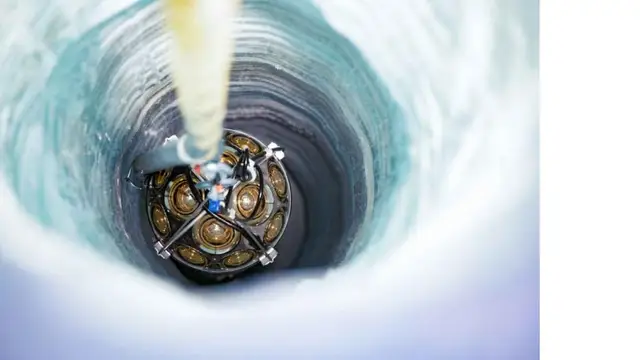
IceCube’s detector spreads 5,160 light sensors across a cubic kilometer of Antarctic ice between 1,450 and 2,450 meters deep, using Earth itself as a shield to catch neutrinos arriving upward from the northern sky
At the geographic South Pole, astronomers are looking straight down to map the stars. By suspending 5,160 light sensors across 86 strings frozen between…
ECOnews Newsroom · August 20, 2026
The search for room-temperature superconductors just got a huge boost from artificial intelligence, help that could speed up one of physics’ hardest dreams
Artificial intelligence has helped scientists identify two superconductors in a rare end-to-end success that began with computer screening and ended with…
ECOnews Newsroom · July 28, 2026
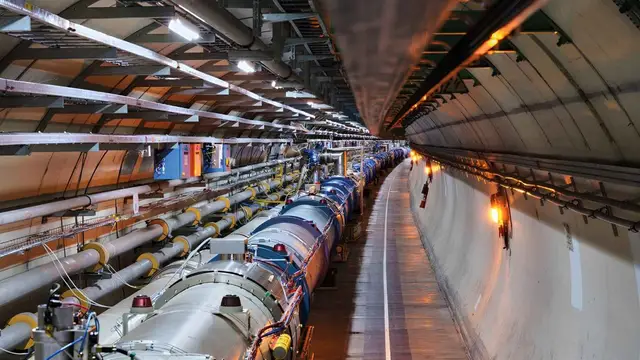
CERN has shut down the Large Hadron Collider for 4 years to rebuild it from the inside, and when it returns in 2030 it will not be faster, but far more luminous
CERN has switched off the Large Hadron Collider for an overhaul expected to last about four years. The world’s most powerful particle accelerator entered…
ECOnews Newsroom · July 23, 2026
The new space race no longer seems like an idyllic adventure toward the stars, because in 2026, Blue Origin is rebuilding a destroyed launch pad, Relativity has its sights set on Mars, and a Chinese rocket is leaving more debris floating above Earth
The space industry is moving fast again, and not always smoothly. Blue Origin has begun rebuilding its damaged Florida launch pad after a New Glenn rocket…
ECOnews Newsroom · July 9, 2026

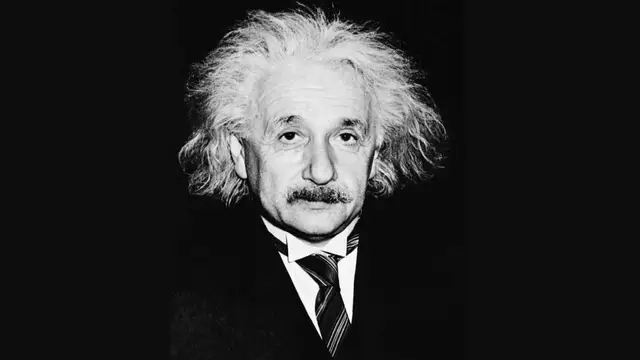
For decades, Einstein had been mulling over an unsettling idea—that the most fundamental laws of the universe should not depend on arbitrary numbers—and now a study published in Physical Review Letters has just given it a rather compelling mathematical boost
Can nature’s deepest laws really contain numbers that sit outside the theory, waiting to be chosen by hand? A new study led by researchers connected to…
ECOnews Newsroom · July 8, 2026
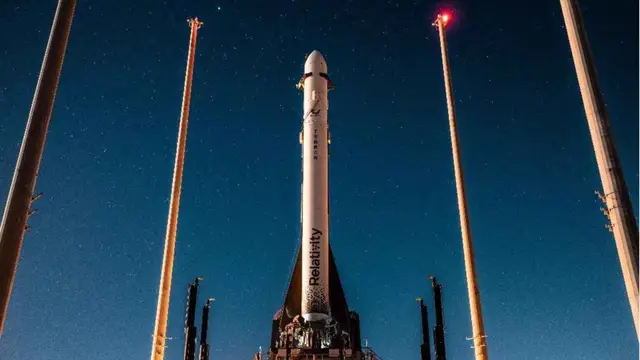
NASA is teaming up with Relativity Space, a newbie in the space exploration field, and not Space X, for a project mapping the violent seasons on Mars due to take off in 2028
NASA has confirmed a new private partner for its next Mars science mission, and this time the company is not SpaceX. California-based Relativity Space…
ECOnews Newsroom · July 3, 2026
MIT’s new method promises to speed up the search for alloys for rockets, chips, and clean energy by analyzing invisible “neighborhoods” between atoms
Finding a better metal is not as simple as mixing ingredients and hoping for a stronger result. For companies building rockets, cleaner energy systems, or…
ECOnews Newsroom · July 2, 2026
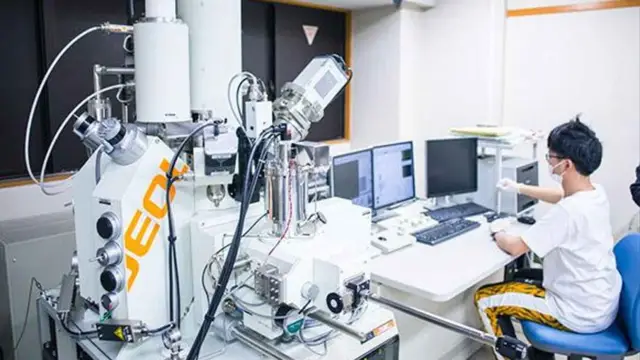
A chip material only three atoms thick was hit with plasma, and a tiny chemical trick changed what happened next
Computer chips may be heading toward a new kind of precision, one measured not in wires or circuits, but in single layers of atoms. A research team has…
ECOnews Newsroom · June 29, 2026
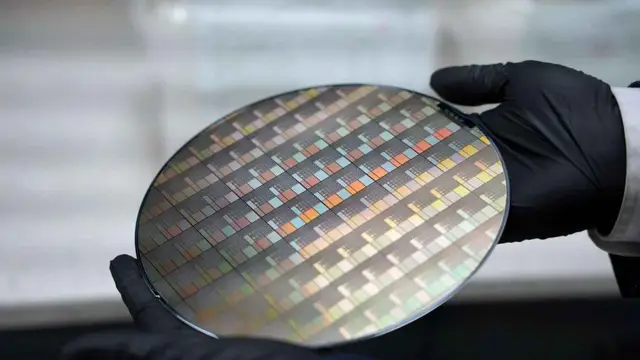
It all began with a material thousands of times thinner than a human hair; now scientists believe they have found an unexpected way to manufacture much more efficient superconductors
A tiny redesign beneath an ultrathin superconductor may point toward a new generation of far more efficient electronics. Researchers in Sweden found that…
ECOnews Newsroom · June 29, 2026
The Space Station’s quantum lab just went colder, edging scientists closer to physics so weird it makes gravity blush
Astronauts aboard the International Space Station have switched on a newly upgraded NASA Cold Atom Lab, a minifridge-sized quantum physics facility…
ECOnews Newsroom · June 27, 2026