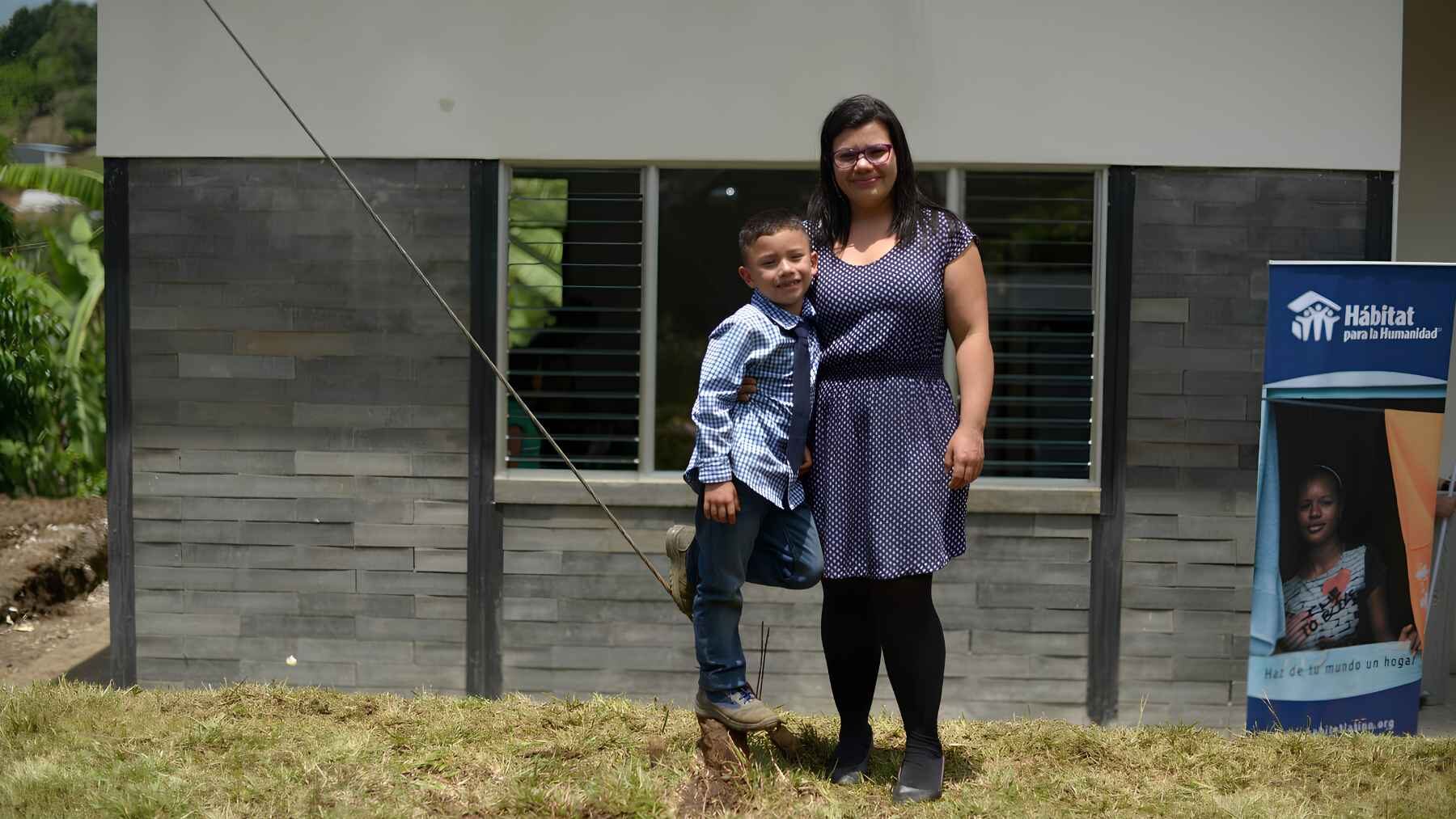
An uplifting Central American story about 850 recycled-plastic blocks and 800 volunteers has returned to news feeds, but it requires some clarification. The home was delivered in Alajuelita on May 26, 2018, and records indicate more than 800 hours of volunteer labor, not 800 individual volunteers.
Cindy Mora had spent nine years saving to secure a small plot of land where she hoped to live with her six-year-old son, Fabrizio. A partnership involving Procter & Gamble, Urbarium, Habitat for Humanity, and Ekojunto then used upwards of seven tons of discarded plastic to build the walls of a fixed home structure.
A home with a history
Contemporary reports describe Mora as a working single mother and head of household in the Lámparas neighborhood of Alajuelita, near San José. She already had a lot waiting to build on, obtained through savings and financing, but not the money to turn it into a home.
Her family was selected based on socioeconomic criteria and the site’s technical suitability. She was handed the keys on May 26, 2018, so presenting it as a new 2026 construction would be misinformation.
Volunteer TIME, not 800 people
One of the most repeated headlines says that 800 volunteers pitched in. The more accurate figure is more than 800 combined hours donated by P&G employees, and the reports reviewed here never provide an exact head count.
That distinction changes the story, but not the accomplishment. Groups of volunteers worked alongside the companies and housing groups that supplied funding, materials, technical coordination, and selection support.
How discarded plastic became a wall
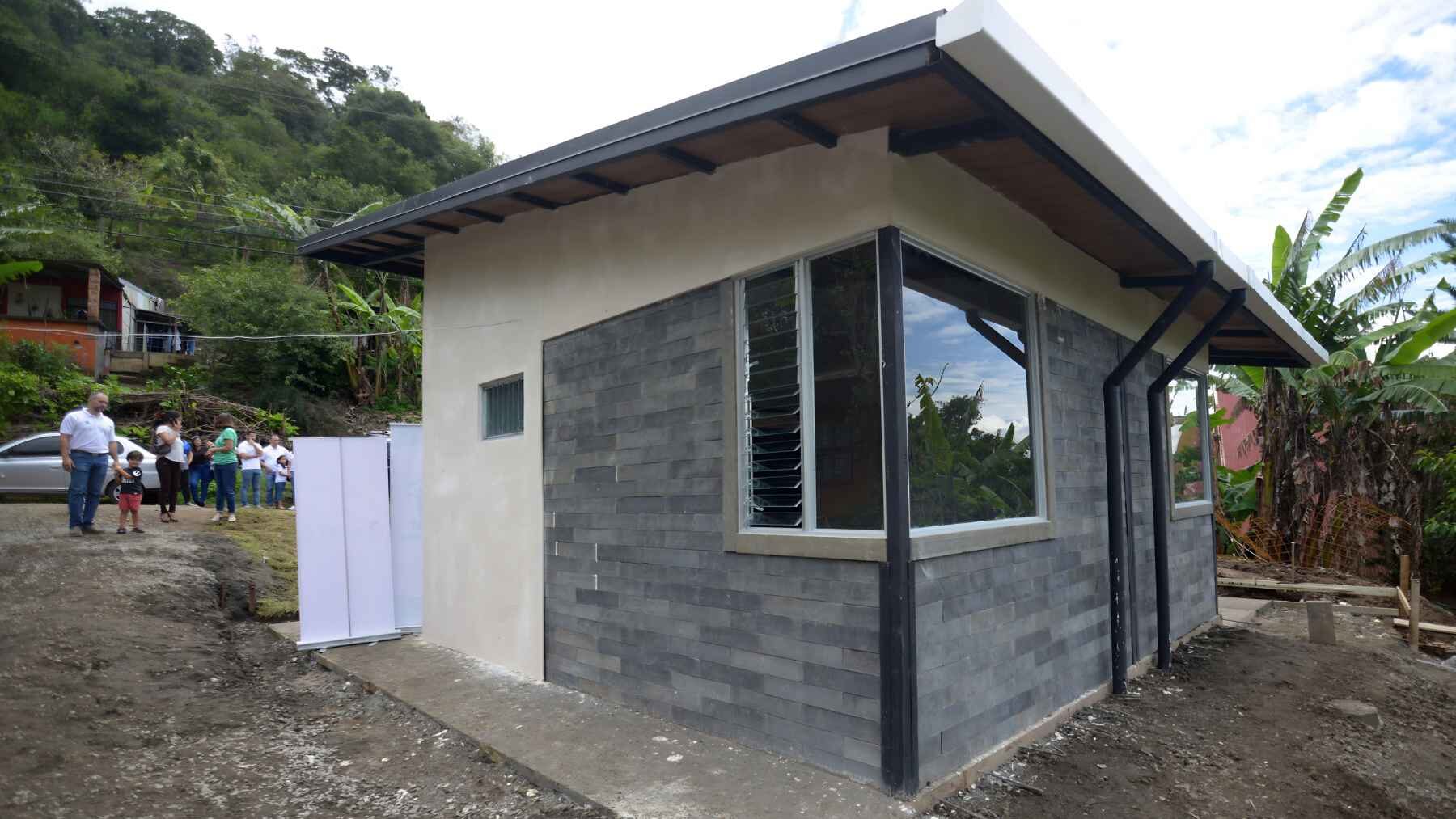
So how did seven tons of plastic waste reach the building site? Not in piles of loose soda bottles, but as standardized Bloqueplas pieces associated with Ekojunto and introduced locally by Urbarium.
The interlocking blocks fit together much like a child’s construction set, allowing volunteers to help under supervision from engineers. Foundations, roofing, utilities, windows, doors, reinforcement, and finishes remained conventional, so the completed home looked ordinary to the passerby.
The numbers need careful wording
Early Costa Rican reporting put the recycled plastic at 7 to 7.5 tons. A 2019 follow-up supplied the widely repeated tally of 850 blocks, but it indicated a lower total weight, so the most reasonable description is around seven tons and about 850 blocks, pulled from separate reports.
Seven tons sounds immense, and in one sense, it was. In 2018, it equaled roughly half of the 14 tons Costa Rica recycled every day, yet just above 1% of the 560+ tons of the country’s daily discarded plastic.
A useful outlet, not a complete cure
Globally, plastic waste more than doubled between 2000 and 2019 to 390 million tons, while only 9% was ever recycled. Converting selected waste into long-lived building materials can create value, but it is not a substitute for the larger work of reducing unnecessary plastic, expanding reuse, and improving collection systems.
Research reviews find that recycled-plastic bricks can provide insulation and strength benefits, but quality varies by polymer mixes, additives, manufacturing process, aging, and fire behavior, meaning each system needs testing and code compliance rather than feel-good promises.
Costa Rica kept testing the idea
No public record located for this review shows any entire neighborhood built with the same Bloqueplas system used for Mora’s home. Yet Costa Rica later followed a different path at Valle Azul, where Habitat for Humanity boasted 102 homes built with concrete blocks composed of up to 10% processed plastic and 90 tons recycled in total.
That later project should not be explained as a direct expansion of Mora’s home because there were different materials and partners. Considered together, though, the projects suggest that Costa Rica’s interest moved beyond a single headline-grabbing prototype toward larger housing programs that treat difficult plastic as a useful engineered input.
What this house really proved
For Mora, the breakthrough was not a recycling story. “Having a home has been my dream all my life,” she beamed before the opening, explaining that her deepest concern was providing her son a stable place of his own.
The house did not solve Costa Rica’s waste crisis or its need for affordable housing, but it showed how one family’s land, discarded material, and organized volunteer labor could combine into one permanent front door.