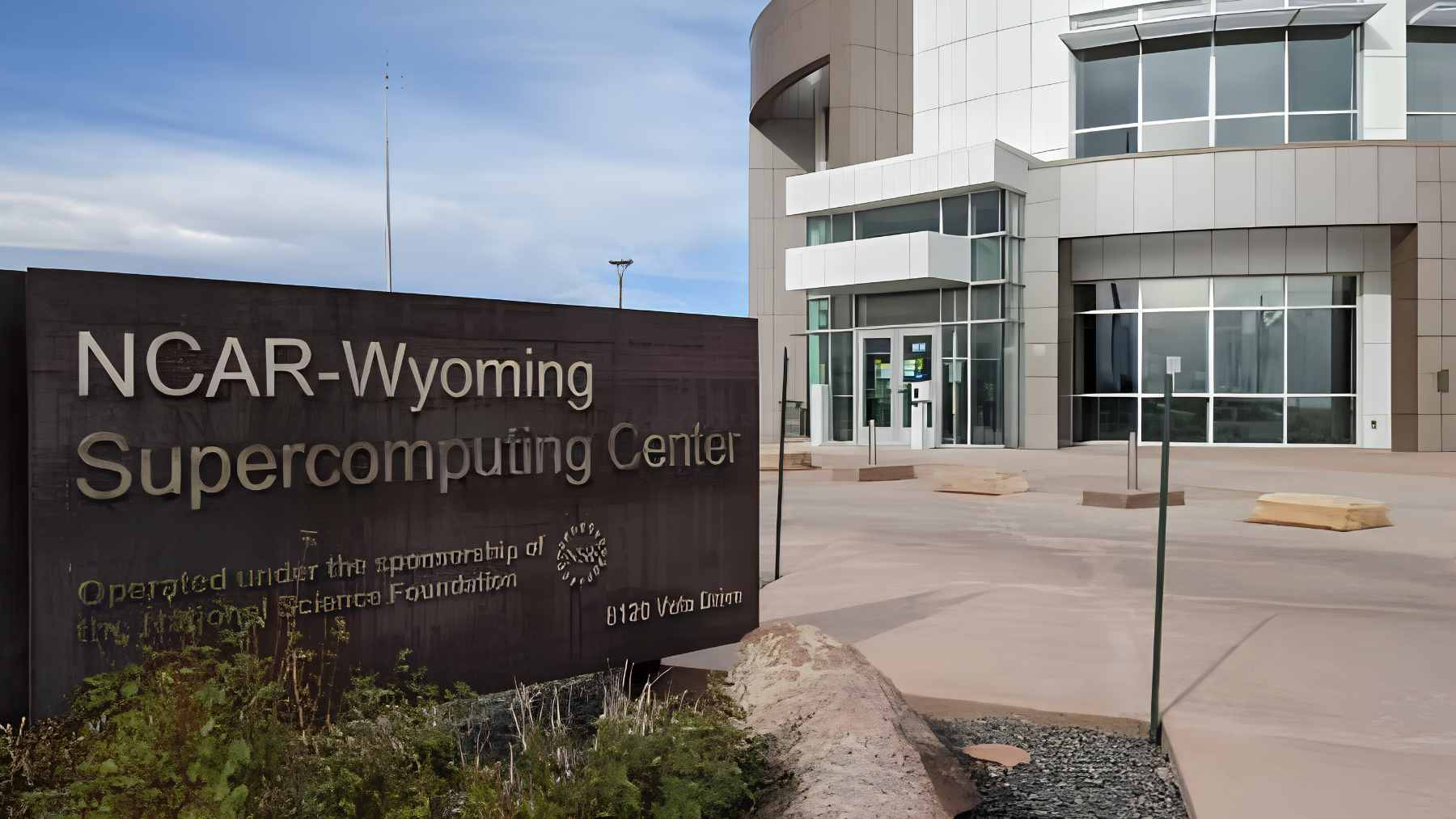
A federal court has stopped, for now, an effort to move the NCAR-Wyoming Supercomputing Center away from the nonprofit University Corporation for Atmospheric Research (UCAR), which has long run it.
The ruling keeps a powerful weather and climate research machine in Cheyenne, Wyoming, tied to the Boulder-based National Center for Atmospheric Research while the case moves forward.
The decision matters because this is not just a computer in a locked room. It helps scientists run detailed models of severe weather, wildfire behavior, streamflow, solar storms, and climate patterns, the kind of research that eventually touches flight planning, water decisions, farm forecasts, and the warnings people see before dangerous storms.
The judge stepped in
Senior U.S. District Judge R. Brooke Jackson granted a preliminary injunction on June 1, 2026. A preliminary injunction is a temporary court order that keeps a disputed action from moving ahead before the full lawsuit is decided.
Jackson found the consortium had met the test for this early relief. Essentially, the federal government cannot force the current managers to give up rights, resources, or responsibilities tied to the supercomputing center while the case is being litigated.
The ruling does not end the broader dispute, but for a research center facing uncertainty, it is a real pause button. Maybe most important, it keeps the staff and systems together for now.
Why this supercomputer matters
The supercomputing center opened in 2012 and has served more than 4,000 users from more than 575 universities and institutions. Its current flagship machine, Derecho, is designed to run very large Earth system simulations, including weather and climate models that ordinary computers could not handle.
A supercomputer is basically a huge network of processors working at once. Instead of checking tomorrow’s weather for one town, it can help test how storms form, how smoke moves during wildfires, or how solar storms might disrupt GPS.
Derecho can perform nearly 20 quadrillion calculations per second. That speed may sound abstract, but it is what lets researchers build more detailed forecasts and study risks that can affect emergency managers, airlines, farmers, and power grids.
The federal plan moved fast
The dispute grew after the Trump administration moved in December 2025 to dissolve or restructure the center, while the National Science Foundation later framed the process as a search for input on critical weather science infrastructure. The agency also said it was exploring a transfer of stewardship for the Wyoming supercomputing center and other major assets.
But the court focused on timing. According to the order, officials told the current managers in February that the transfer had already been decided, even though the public comment period had not yet closed.
That fact bothered the judge. The order says the agency received more than 2,500 responses, totaling nearly 4,000 pages, but had not fully considered them before moving ahead. The court said the sequence of events suggested the outcome had been “predetermined.”
The legal problem
The key law here is the Administrative Procedure Act. In plain English, it requires federal agencies to explain major decisions and follow a reasonable process, rather than acting first and filling in the reasoning later.
Jackson said the agency offered no adequate explanation for taking stewardship away from the consortium. The order also said the record showed no evidence that the agency had identified poor performance or management failures that would justify such a major change.
The court noted internal communications suggesting concern about climate-change policy work and diversity, equity, and inclusion efforts. But the agency did not formally rely on those reasons in court, and the judge said they could not uphold the transfer based on passing internal references.
Staff losses raised the stakes
The court also looked at what uncertainty was doing inside the center. The order described a “brain drain” and said the computing lab had lost eight employees over four months, with several citing the organization’s uncertain future.
That matters because running a high-performance computing center is not like replacing a laptop at the office. The systems need engineers, scientists, software specialists, and operations staff who understand hardware, cooling, data storage, security, and scientific users.
The order said replacing some positions could take from six months to three years. For a center that supports ongoing research, that kind of talent loss can ripple quickly.
The case is not over
For now, the center keeps operating under its current structure. UCAR interim president Eric Barron said the proposed transfer would have been “damaging” to the nation’s scientific community, and he pointed to work that supports weather, space weather, wildfire, water, agriculture, aviation, and the power grid.
Still, this is not a final victory on every issue. The broader lawsuit also challenges other federal actions involving the research center, including alleged efforts to dismantle programs, move resources, and change operations.
So what happens next? The court’s order buys time, which can matter a lot when the dispute involves people, machines, data, and research projects that cannot simply be packed into boxes and moved over a weekend.
What it means for science
For most people, the case may sound like an argument over who manages a building in Wyoming. It is bigger than that. The center’s work feeds the tools scientists use to understand storms, drought, smoke, floods, space weather, and long-term climate risks.
Those topics show up in ordinary life. They affect flight delays, wildfire smoke alerts, flood planning, crop decisions, and that uneasy moment when a storm warning flashes across a phone screen.
At the end of the day, the ruling says a federal agency cannot make a major change to scientific infrastructure without showing its work.
The official order has been published by the U.S. District Court for the District of Colorado.