When doctors see something suspicious on the pancreas, getting a clear answer is rarely simple. The organ sits deep in the abdomen, so confirming cancer often means using an ultrasound-guided needle to collect tissue, a procedure that can be uncomfortable, risky, and still miss disease.
Now, a research team in Portland has tested a different idea. Instead of going straight after the tumor, they looked for tiny particles the tumor sheds into the blood, then used a thumbnail-sized microchip, electricity, and glowing markers to spot them. In a blinded test, the approach distinguished pancreatic cancer from noncancerous pancreatic disease in 97% of cases.
Why this cancer hides
Pancreatic cancer is especially dangerous because it often stays quiet until it is already hard to treat. Symptoms such as jaundice, abdominal pain, and unexplained weight loss may arrive late, when doctors have fewer options.
That is why early detection matters so much. The American Cancer Society lists the five-year relative survival rate for pancreatic cancer, across all stages combined, at 13% for people diagnosed from 2015 through 2021.
Stuart Ibsen, Ph.D., put the problem in plain terms. “The pancreas is deep inside the body. It’s not like skin cancer you can see or a lump that you can feel,” he said.
What the chip catches
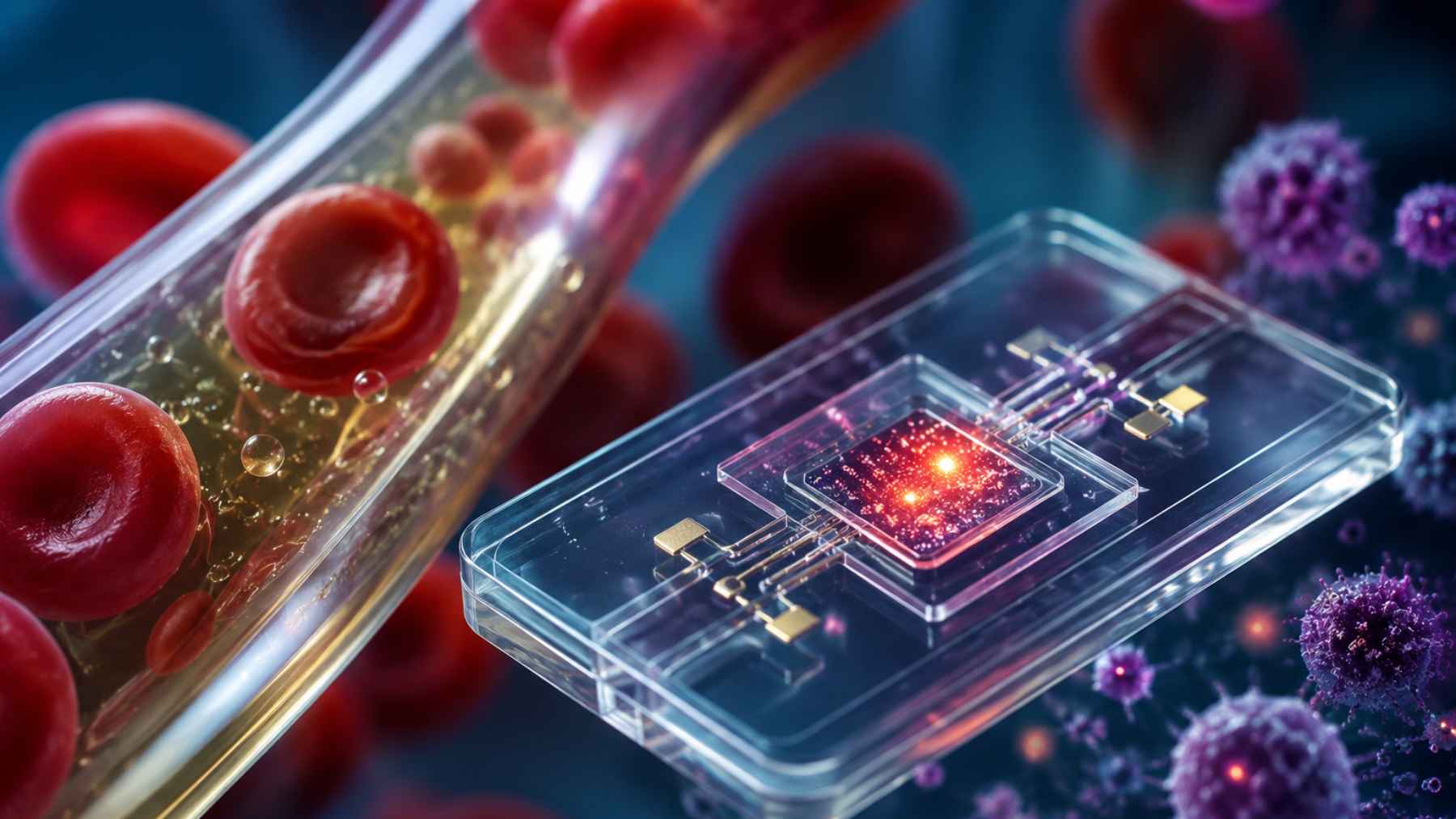
To understand the test, picture blood plasma like a crowded street. Mixed inside are nanoparticles, tiny packets released by healthy cells and by tumors. A liquid biopsy means looking for cancer clues in blood instead of cutting out tissue.
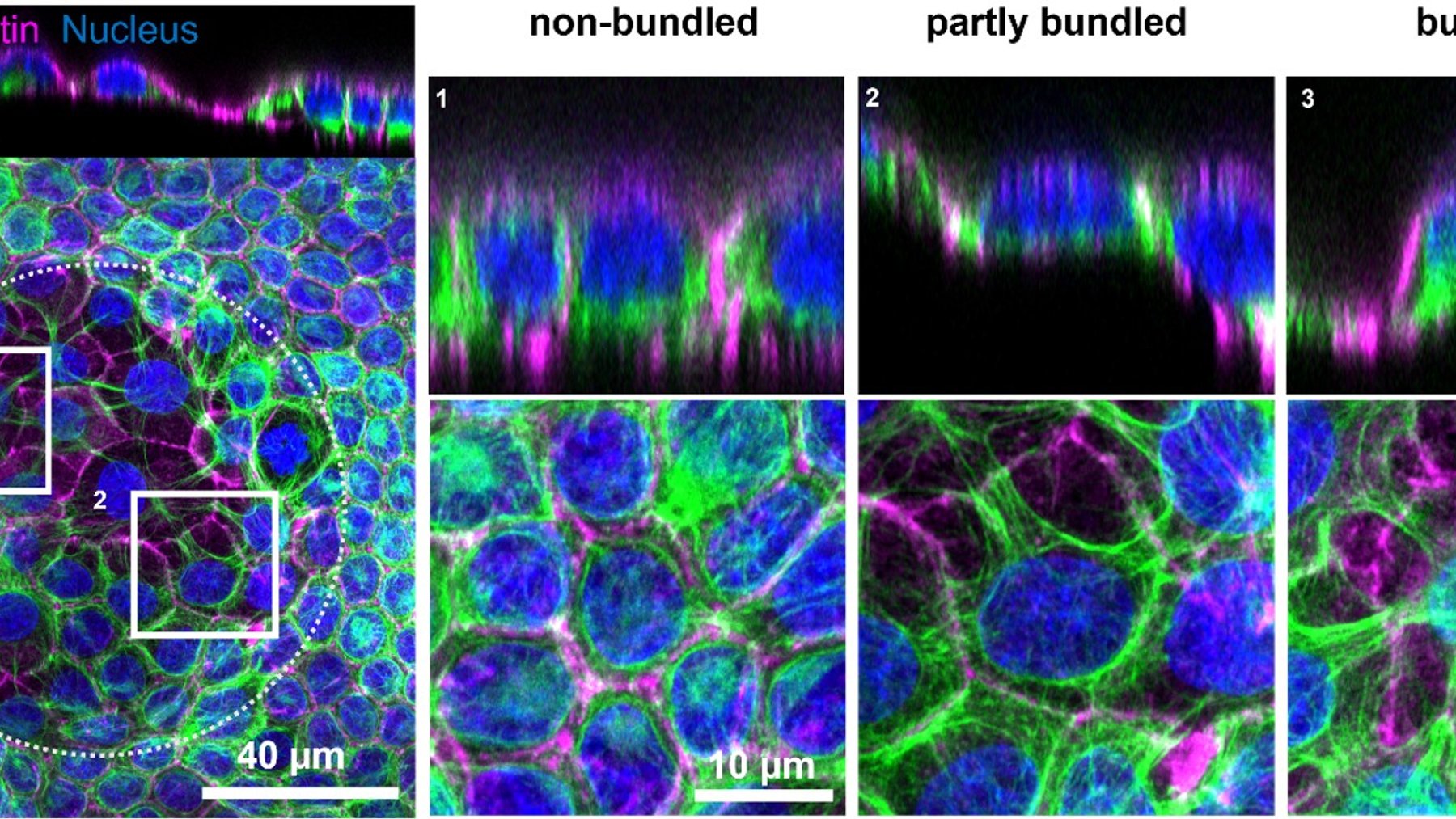
The method uses dielectrophoresis, a process in which an uneven electric field helps pull tiny particles toward electrodes on a chip. Once those particles gather, fluorescent stains look for cancer-linked markers, including glypican-1 and fragments of tumor DNA.
In practical terms, the brighter the electrodes become, the stronger the cancer signal appears to be. It is a bit like using a flashlight in a dark room, except the glow comes from molecular traces left behind by the tumor.
The study behind it
The study used blood plasma from 36 people who were treated in an interventional endoscopy unit. Some had confirmed pancreatic cancer, while others had noncancerous pancreatic conditions such as pancreatitis or precancerous lesions.
The paper lists Anna Malakian as the first named author and Stuart Ibsen as senior author, with work tied to Oregon Health & Science University (OHSU). The team also included its Brenden-Colson Center for Pancreatic Care, RyboDyn Inc. in San Diego, and the University of California San Diego.
Researchers ran the samples blind, meaning they did not know which blood came from cancer patients before testing it. That matters because it lowers the chance of bias. The chip either found the difference, or it did not.
Better than the needle
The standard test used for many suspicious pancreatic findings is endoscopic ultrasound-guided fine-needle aspiration. A doctor guides a thin needle through the digestive tract wall to pull tissue from the pancreas.
OHSU reported that this invasive approach typically reveals pancreatic cancer in about 79% of cases. In the new study, the microchip-based blood test reached a 97% likelihood of correctly separating cancer from benign pancreatic disease.
That gap is eye-catching, but it is not the same as a final verdict. The blood test still needs larger studies, in more hospitals, with more kinds of patients. Early results can look cleaner in a small trial than they do in everyday medical practice.
More than yes or no
One of the most useful findings was not just that the chip detected cancer. It also helped tell cancerous tumors apart from precancerous lesions, which can look very similar on imaging.
That difference can be huge for patients. A scan may show a mass, but the next question is the one nobody wants to guess at. Is it dangerous enough to remove, or can it be watched?
For surgeons, a clearer blood signal could help guide that decision. For patients, it could mean avoiding a major operation when the mass is not yet cancerous, or moving faster when it is.
Still years away
For now, this is not a test someone can request at a local clinic. The 36 participants already had suspected pancreatic problems, so the study was not a general screening test for the public.
Ibsen estimates the technique is probably about five years away from clinical use. That timeline includes validation, regulatory review, and the work needed to move the chip from a research lab into real hospital workflows.
There is also a bigger trend unfolding. A separate 2025 blood test study called PAC-MANN reported 85% accuracy for early-stage pancreatic cancer when combined with the existing CA 19-9 marker, showing how quickly blood-based detection is moving in this field.
What it could change
The promise here is not that one chip will solve pancreatic cancer by itself. The promise is a faster, less invasive way to read the warning signs when the body is already sending them.
For high-risk people, such as those with a strong family history, a simple blood draw could be much easier to repeat than an invasive biopsy. Fifteen minutes is also a very different experience from waiting through a chain of imaging, procedures, and lab reports.
Still, early promise is not the same as approval. For now, the chip remains a research tool, and the next big question is whether larger trials can keep the signal clean in real-world hospitals.
The official study has been published in Small.