A feel-good environmental story has raced across news sites and social media. It says 500 African spurred tortoises were released near the Sahara in 2021 and, five years later, satellite images showed green patches where only hardened sand had remained. That dramatic account is now circulating in multiple versions, but the materials reviewed do not identify a project name, exact location, research team, satellite dataset, or scientific paper.
The verified evidence is less spectacular, but it is still fascinating. African spurred tortoises do dig enormous burrows, conservationists have returned the species to protected land in Senegal, and researchers believe the reptiles may act as ecosystem engineers. What the official records reviewed do not show is a 500-animal release in 2021 or proof that tortoises caused a landscape to turn green.
The viral claim has no paper trail
A version published in May 2026 makes the central claim in plain terms. It says unnamed researchers released 500 tortoises along the Sahara’s southern edge and that greenery appeared around their digging zones over the next five years. The report also says satellites captured the change.
But it does not name the institution that ran the experiment, identify the release site, or provide the satellite images. There are no methods, vegetation measurements, control sites, rainfall records, or study citation that an independent researcher could check. That missing trail matters.
What official records show
A detailed 2020 species account from the IUCN/SSC Tortoise and Freshwater Turtle Specialist Group documents genuine conservation work in Senegal. It says the Village des Tortues sanctuary housed more than 300 African spurred tortoises and that approximately 56 had been returned to the wild in the Ferlo Nord Wildlife Reserve. In another North Ferlo program, radio-tracked animals had a survival rate above 80% after four years.
A newer official report describes a different project involving 46 juveniles born in Monaco. They arrived at Senegal’s Village des Tortues in December 2022 for quarantine, with plans to move them into a fenced area at the Koyli Alpha community nature reserve in 2024 before eventual free roaming. These carefully managed efforts are real, but none of the verified records reviewed matches the viral story’s 500 animals in 2021.
Why these tortoises still matter
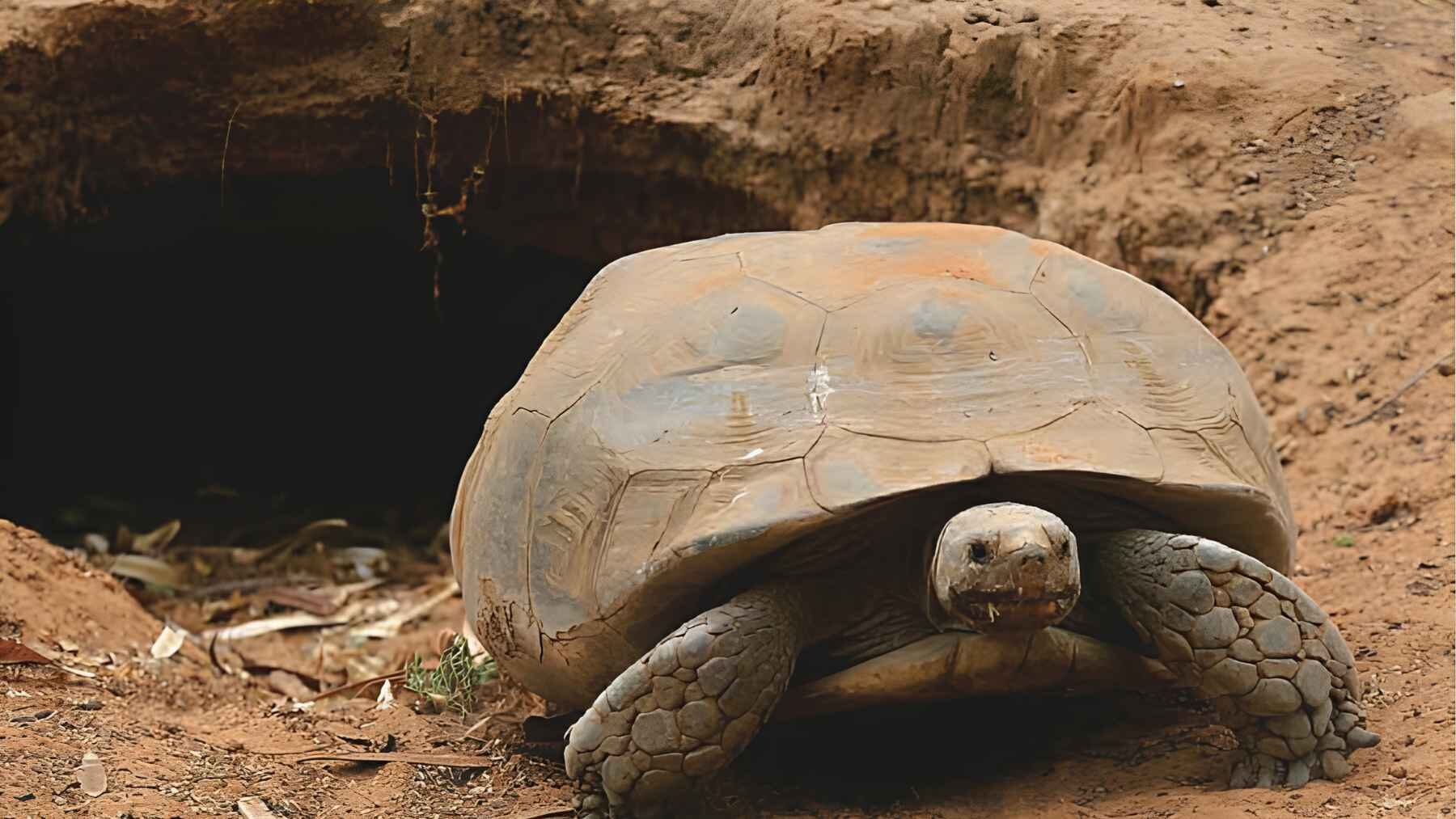
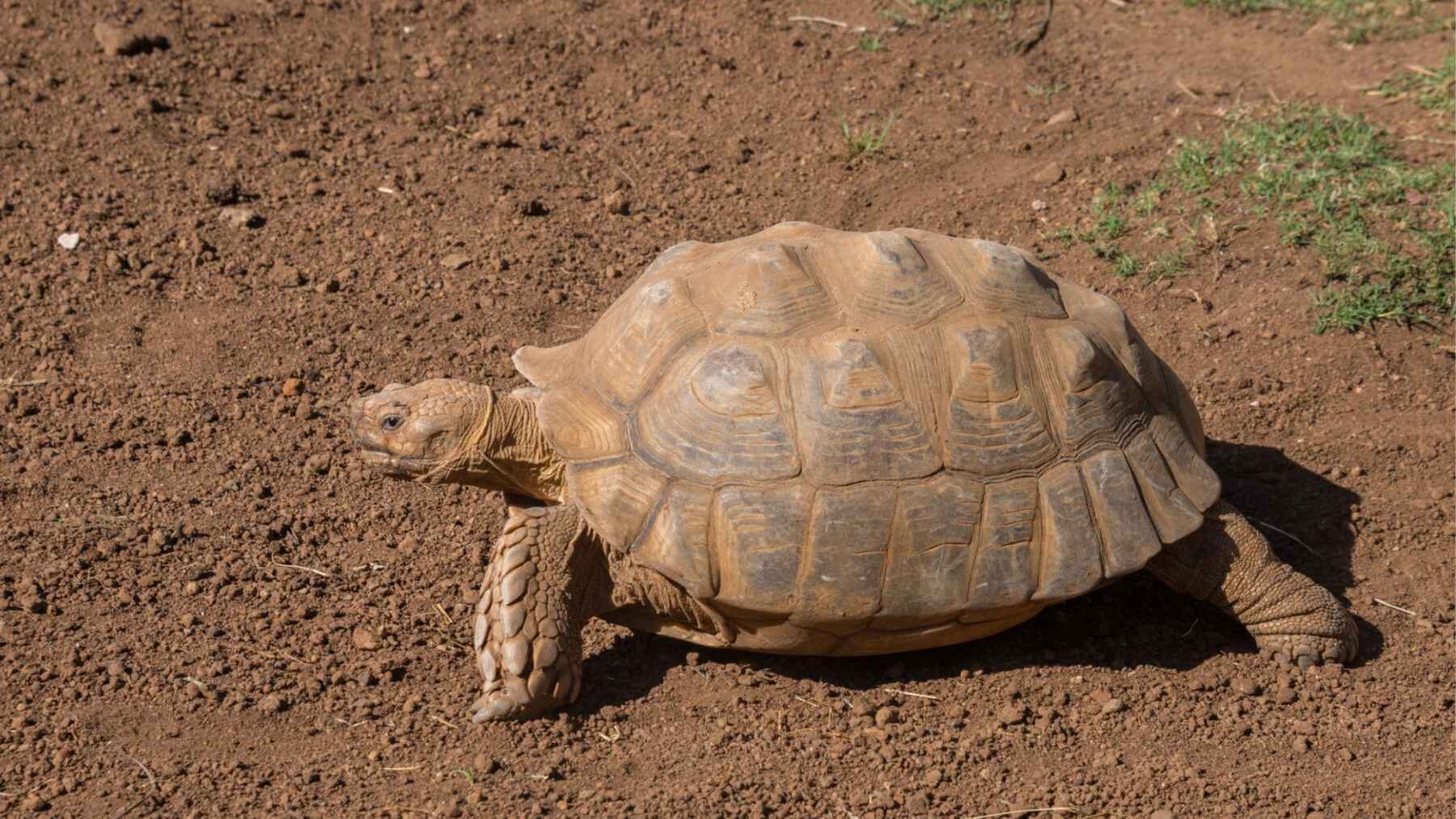
The African spurred tortoise is the largest living mainland tortoise, and some males exceed 220 pounds. Its survival strategy is digging. The technical species account says adult burrows can reach about 49 feet in length, not 49 feet straight down as the viral report suggests.
Those underground shelters help the animals avoid overheating and endure the harsh dry season. They can also create scarce shelter in an exposed landscape, which is why scientists see ecological potential. A 2017 review said the burrows have “great ecosystem engineering potential”, while also warning that their effects on other species were still unknown.
Green pixels need more context
Satellites are powerful tools for tracking vegetation, yet a green patch does not explain why plants appeared. Research across the Sahel shows that rainfall patterns strongly influence broad greening trends, while optical satellite data can struggle to separate grasses from woody plants. The picture from space is useful, but it is not a verdict.
To demonstrate that tortoises caused recovery, researchers would need to compare release areas with similar sites that had no tortoises. They would also need to track rainfall, grazing, fire, soil moisture, burrow locations, and plant species over time. Without those controls, imagery can show change, but not its cause.
Could tortoise burrows help water enter compacted ground and create useful microhabitats? That mechanism is plausible and deserves a proper field test. But the evidence available today does not establish that 500 tortoises turned a barren stretch of the Sahara green.
The Sahara is not the Sahel
There is another important correction hiding inside the viral headline. African spurred tortoises are animals of the Sahel, the semi-arid belt south of the Sahara, not creatures suited to the great desert’s central dune fields. Their habitat includes seasonal grasses, shrubs, stabilized dunes, and areas that receive rain during part of the year.
The species account says the tortoises generally avoid bare and cultivated areas. It also links their presence with places where human activity is limited and cattle are absent. Releasing reptiles onto lifeless open sand would not be a sound restoration plan.
Restoration needs more than a dramatic release
Reintroducing a native animal can restore ecological work that machines and tree planting do not always reproduce. Large reptiles can graze, move seeds, disturb soil, and provide shelter, creating opportunities for other organisms. But these benefits depend on suitable habitat, protection from hunting and trade, health checks, local support, and years of monitoring.
That is why the documented Senegal programs matter. Their main achievement is not a miracle visible from orbit, but the careful return of a threatened native species to landscapes where it once played an ecological role. The larger effects on soil, plants, and biodiversity remain a research question.
A better story than a desert miracle
There is no need to dismiss the tortoise’s potential just because a viral account runs ahead of the evidence. A reptile that can weigh as much as an adult person and excavate a tunnel nearly 50 feet long clearly changes its immediate surroundings. Scientists have good reason to investigate what happens around those burrows.
For now, however, the claim that 500 tortoises made the Sahara green should be treated as unverified. Good environmental reporting must separate a plausible mechanism, a documented conservation project, and a demonstrated result.
The most recent report was published on the Oceanographic Institute of Monaco website.