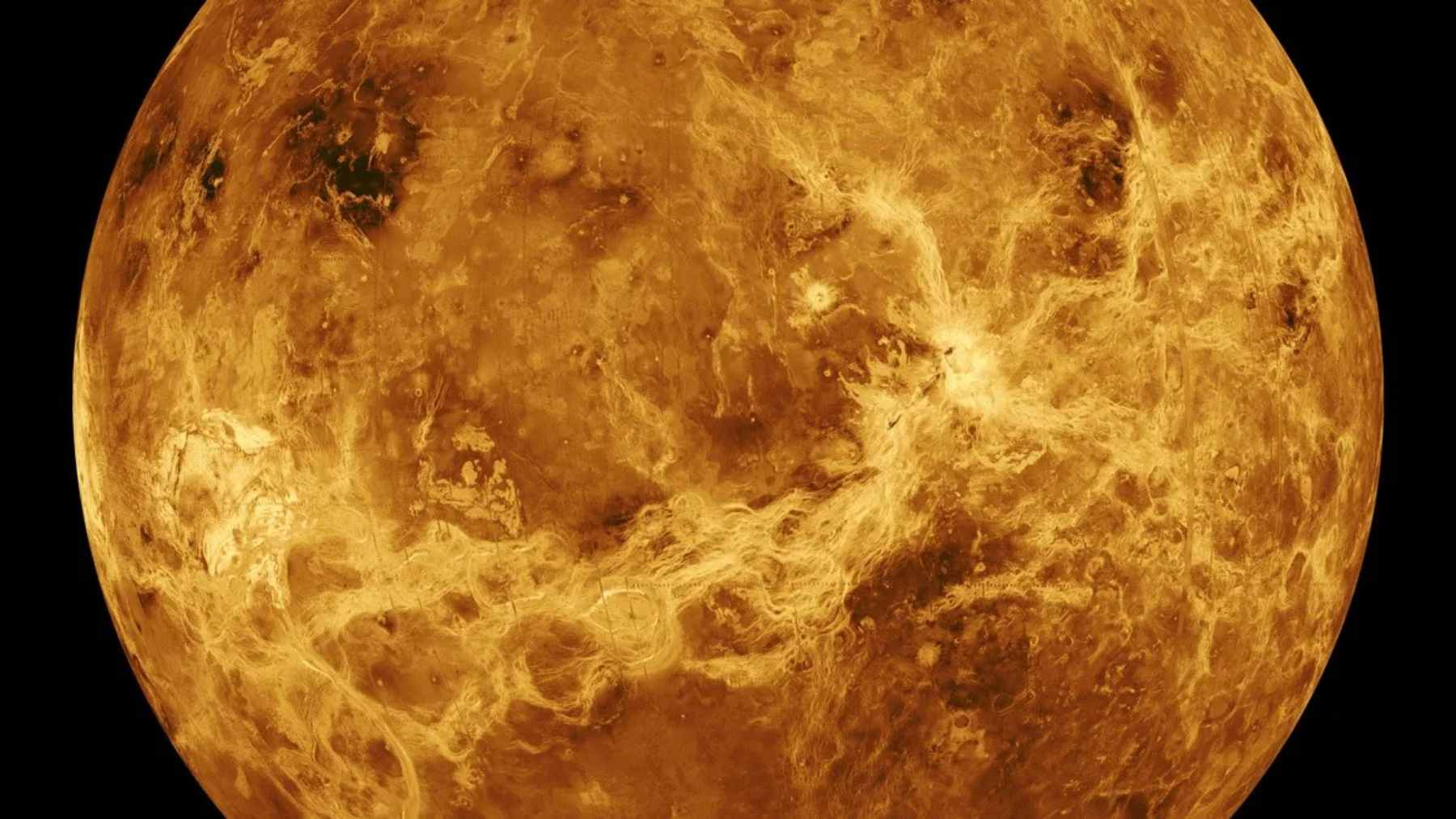
Venus has always had a talent for hiding its surface. Thick clouds block ordinary cameras, so for decades researchers have had to study Earth’s neighboring planet with radar instead of clear, close-up pictures.
Now those old radar records have delivered a surprise. A new study reports evidence for a large empty lava tube beneath Venus, likely the first volcanic cave identified below the planet’s surface, connected to a collapsed opening on the western side of Nyx Mons, a shield volcano about 225 miles across.
Old data found a new cave
The discovery comes from NASA’s Magellan spacecraft, which used radar to map Venus in the early 1990s. Magellan’s extended mission brought coverage to about 98 percent of the planet, giving scientists the first global geological picture of a world wrapped in clouds.
At the University of Trento, Leonardo Carrer, Elena Diana, and Lorenzo Bruzzone led the work with support from the Italian Space Agency, and the team’s coordinator put the stakes simply by saying “Our knowledge of Venus is still limited.”
A skylight is not a window in the everyday sense. It is a hole made when part of a lava tube’s roof collapses, leaving a pit that may reveal an empty tunnel below.
What radar actually saw
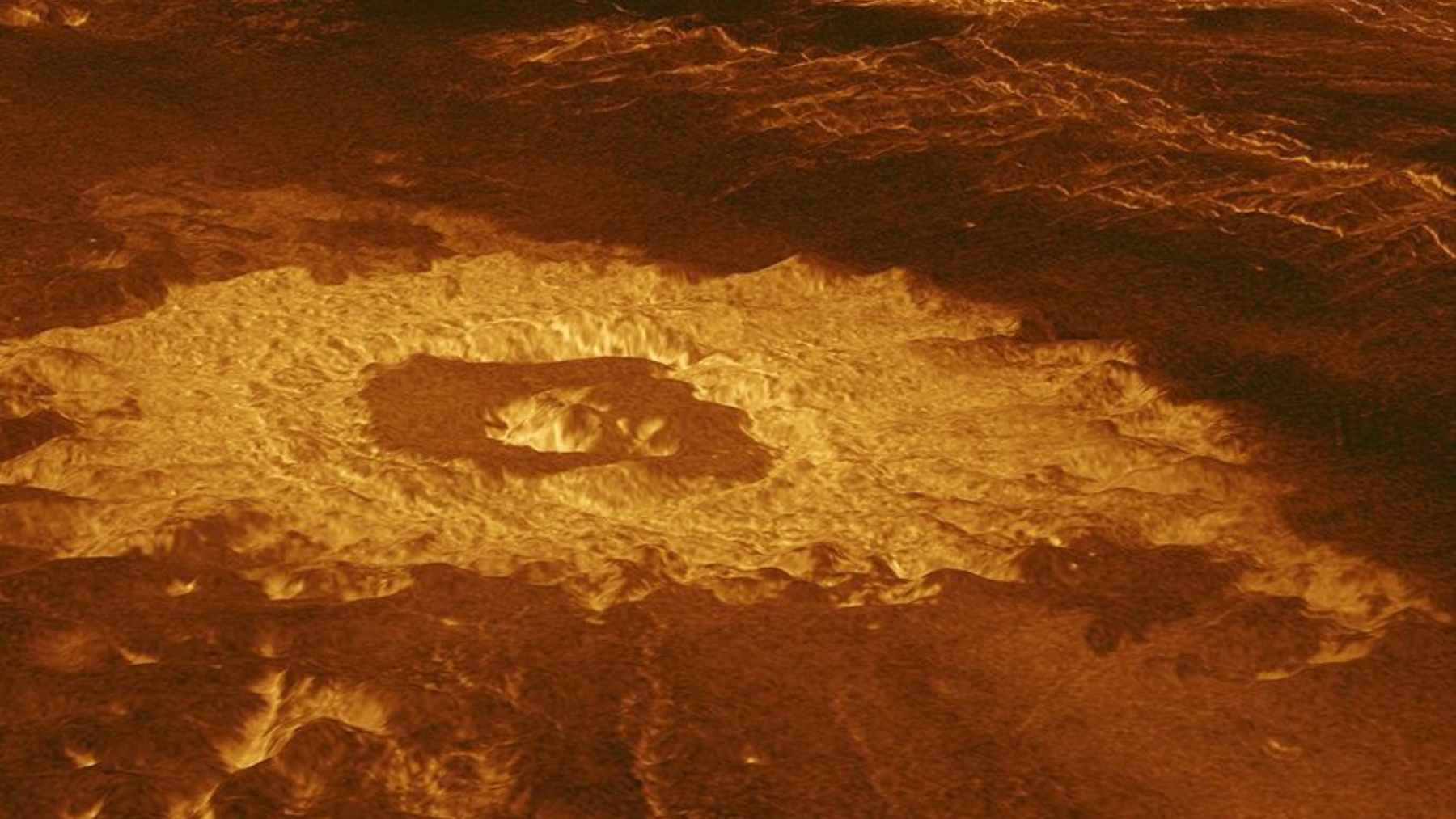
Radar is not a normal photograph. It sends radio waves toward a surface and reads the echoes that bounce back, which is why it can help scientists study Venus even through its thick cloud cover.
In this case, the researchers focused on a pit named “A” near Nyx Mons. Unlike nearby pits, it showed a lopsided bright radar return that stretched beyond the pit’s edge, a pattern the team says matches what can happen when radar enters a collapsed lava tube and reflects from the hollow interior.
That detail matters. From above, a pit can look like a simple sinkhole, but the radar signal suggested something more complicated hiding under the floor.
How lava built the tunnel
So, what is a lava tube? It is a natural tunnel formed when the top of a moving lava flow cools and hardens while molten rock keeps moving beneath it.
When the lava supply slows or stops, the inside can drain away and leave an open passage. On Earth, these tunnels can be walked through in places like volcanic islands, but on Venus they may grow on a much larger scale.
The new Venus structure is interpreted as a possible pyroduct, another term for a lava-made underground channel. In practical terms, it is ancient volcanic plumbing that may preserve clues about how heat and molten rock shaped the planet.
The size is hard to miss
The numbers are striking. The team estimates that the visible subsurface conduit averages about 0.6 mile wide, with a roof at least 490 feet thick and an empty space reaching no less than about 1,230 feet high.
The radar could track the cavity for at least about 980 feet from the skylight. Based on the surrounding terrain and similar pits nearby, the broader tunnel system may stretch for at least about 28 miles, though that longer distance still needs better data to confirm.
Try to picture a subway tunnel expanded to mountain scale. The study says the Venus feature appears wider and taller than lava tubes known on Earth or predicted for Mars, and closer to the upper range of what scientists expect on the Moon.
Why Venus makes giants
Venus is often called Earth’s twin because it is similar in size, but its surface tells a very different story. Its landscape has been heavily shaped by volcanoes, lava plains, and intense geological activity over time.
The researchers argue that Venus’ lower gravity and dense atmosphere may help lava tubes become especially large. A thick insulating crust can form quickly over flowing lava, helping the hot material keep moving underneath for longer.
This does not mean the newly identified tube is proof of an eruption happening today. But it fits into a growing picture of Venus as a planet whose volcanic history is not just a dusty chapter in an old textbook.
Why the find matters
For years, scientists suspected that Venus could have lava tubes, partly because similar structures are known or expected on the Moon and Mars. The hard part was finding evidence below a planet that does not let cameras see its surface easily.
Recent work has made the question more urgent. A separate 2024 analysis of Magellan data found evidence that two Venus regions may have changed during the spacecraft’s mission, suggesting lava flows occurred in the early 1990s.
That is why the cave discovery feels like more than a curiosity. It gives researchers a possible doorway into Venus’ subsurface, where older volcanic structures may be better preserved than on the open surface.
Future spacecraft could look inside
The next big step is better radar. The European Space Agency’s (ESA’s) EnVision mission is designed to study Venus as a connected system, from atmosphere to surface to interior. ESA says it will be the first mission to directly probe beneath the planet’s surface with a subsurface radar sounder.
NASA’s VERITAS mission is also expected to bring sharper radar mapping than Magellan. Its goal is to build detailed maps of Venus’ surface and search for signs of active or recent geological processes.
That could change the hunt. Old Magellan data were powerful for their time, but future instruments may spot smaller skylights, map hidden tunnels in more detail, and test whether Nyx Mons is part of a wider underground network.
The main study has been published in Nature Communications.