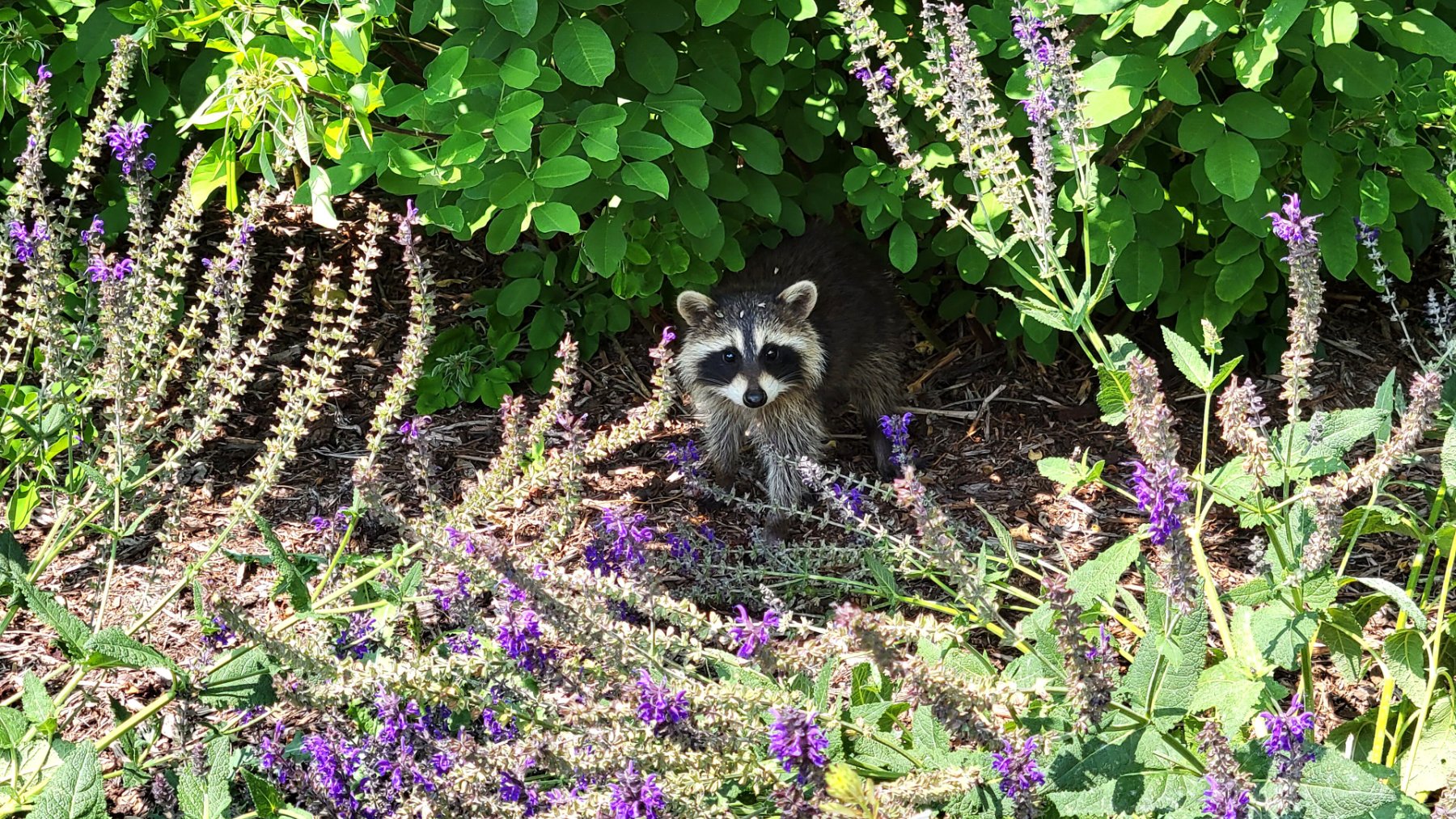
A baby raccoon found limping inside a storm drain in southeastern Virginia had three broken legs, according to Evelyn’s Wildlife Refuge. Two people stopped to help and brought the young female, later named Delilah, to the refuge for treatment.
The rescue was only the first step, and a follow-up brought cautious good news. Her casts had been removed, but the refuge said she still needed restricted activity and treatment for pain.
A small face beside the sidewalk
The encounter began when a passerby noticed movement near a sidewalk and spotted the raccoon peering out from a drain opening. She was limping inside, apparently alone, when two people nearby in a blue Zoomin Groomin van stepped in to help.
An examination revealed what the refuge described as “THREE broken legs,” with a femur fracture also mentioned in its account. The rescue account did not establish what caused her injuries, so neither a vehicle collision nor an accident inside the drain should be assumed.
Even then, staff described Delilah as feisty despite everything she had endured, and they committed to giving her an opportunity to heal. But being spirited was not the same as being well, and her caregivers warned that recovery would take time.
Encouraging progress, but not a finished recovery
In its follow-up, the refuge said Delilah’s broken legs were “fusing beautifully” and that veterinarians were satisfied enough with her progress to remove the casts. Limited activity would still be necessary for a few more weeks, alongside continued pain management.
That is a recovery milestone, not a guarantee of release. The Wildlife Center of Virginia describes rehabilitation as treating injured, sick, or orphaned animals with the goal of returning them to the wild, a different task from simply getting them out of immediate danger.
The wild neighbors sharing our streets
Why would a raccoon be so close to a sidewalk in the first place? Virginia Cooperative Extension explains that raccoons adapt readily to urban environments, taking advantage of available food and places to shelter.
To a raccoon, a neighborhood can offer more than passing cars and pavement. Trash, outdoor pet food, and accessible spaces beneath porches can provide reasons to linger, according to Virginia’s Department of Wildlife Resources (DWR).
That makes everyday habits part of preventing conflicts with wildlife. DWR recommends securing garbage and removing outdoor pet food, practical steps that reduce attractants without treating every visiting animal as an emergency.
Knowing when a young raccoon needs help
Seeing a raccoon during daylight does not, by itself, mean the animal has rabies. DWR says daytime sightings are common in urban and suburban areas, so the time on the clock is not enough to judge its condition.
A baby seen without an adult is not automatically an orphan that should be taken away, either. The Wildlife Center of Virginia advises assessing the animal’s condition and, when it is healthy, considering ways to reunite it with its mother rather than immediately removing it.
Visible injuries change that assessment. The center lists broken limbs, severe bleeding, and extensive wounds among wildlife emergencies, making difficulty walking a reason to seek professional advice rather than simply wait for an animal to move on.
Helping without making things worse
The instinct to scoop up a struggling baby animal is understandable, but direct handling can create another problem. Raccoons are a high-risk rabies species in Virginia, and the Wildlife Center of Virginia advises avoiding direct contact even with very young animals.
The same guidance warns against giving injured or orphaned raccoons food or water. Milk from the refrigerator or an improvised meal may feel comforting to offer, but inappropriate food and feeding methods can cause serious harm.
For Virginia residents, DWR maintains a directory of permitted wildlife rehabilitators and runs a weekday wildlife conflict helpline at 1-855-571-9003. Call for instructions before attempting a rescue, and keep children and pets away from the animal. The safest useful action may be making that call.
A rescue that depended on people paying attention
“Wildlife rescue truly takes a community,” the refuge wrote when thanking the people who stopped for Delilah. Its own work relies on contributions and volunteers, a reminder that the roadside moment is only one part of an animal’s path through care.
Delilah’s story offers both encouragement and a useful boundary between compassion and taking matters into your own hands. Getting an injured animal to qualified help can support its recovery without confusing a wild patient with a pet.
The refuge’s follow-up described progress while acknowledging that more healing was needed.