There was a viral affirmation that suggested that the Black Bear Solar in Virginia recruited 180.000 bees to form a living barrier against the black bears, but reports show that the real story is actually the other way around.
Following that version (that is not the one spread in social media), it was the security fence of the solar farm, the one that protects the bees from the bears. The pilot project, managed by Dominion Energy, wants to promote agrivoltaics by combining clean energy generation with pollination and sustainable agriculture
What is happening at Black Bear Solar
Black Bear Solar, a huge solar farm, near Dillwyn began operating in September 2023. For you to have an idea why it is described as huge, let me tell you that it has around 4,4000 panels that cover 13 acres. This system is amazing and can produce electricity for 400 family homes when the sunlight is at its highest point.
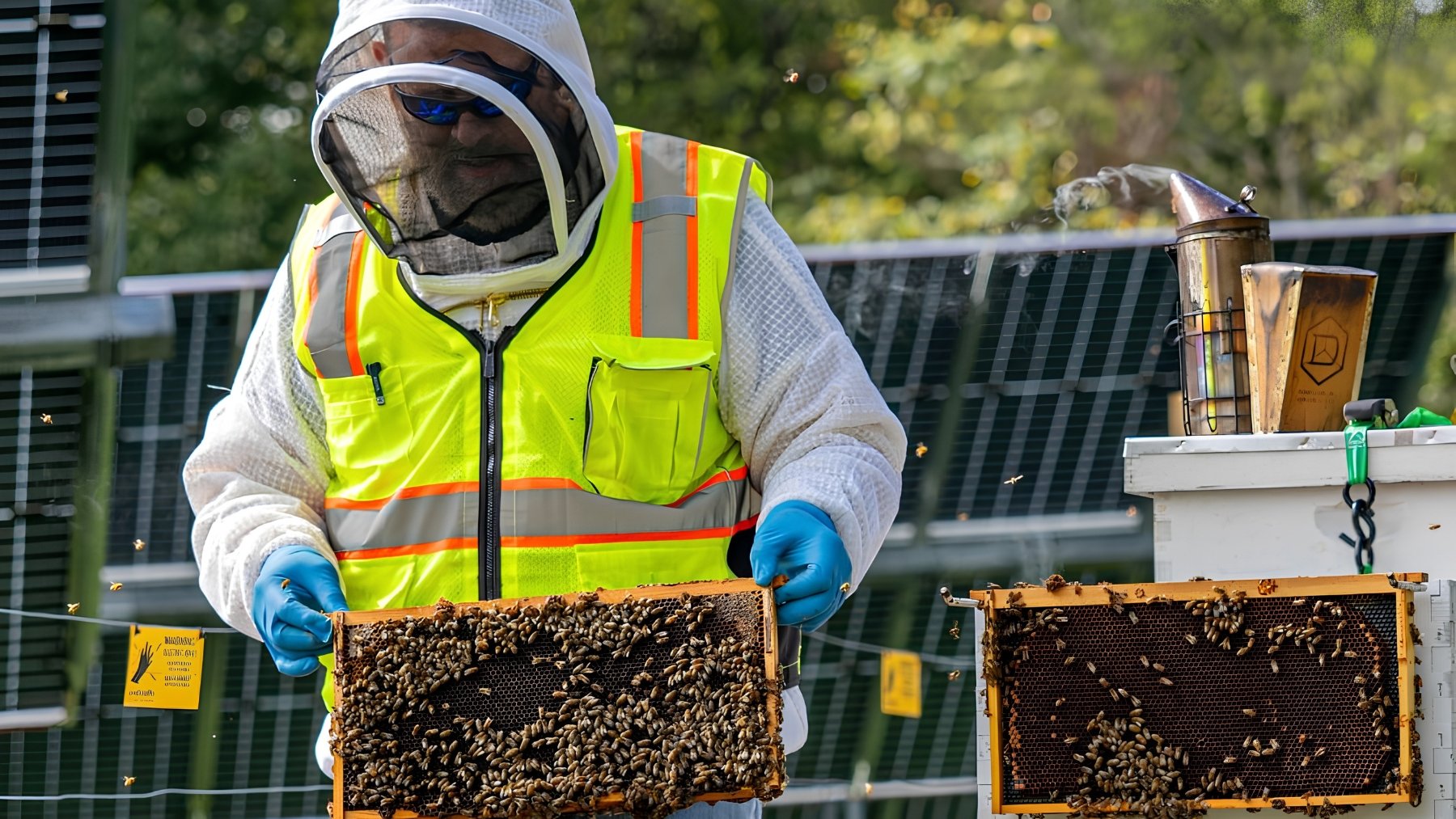
At the same time, Chuck Burden of Mountain House Apiaries prepared the beekeeping project as a pilot. They decided to include four hives with 45,000 bees with their dearest queen in each of them. Dominion project manager, Adam Fillius, says that the idea is to bring back agriculture to the site and so to have there a dual use.
Why the bear story falls apart
The bears are part of the local picture, but that is not what the viral claim says. In the area it is actually known that the beekeepers that are around had really suffered much more damage because of the bears. They even say that these animals tend to be attracted to the larvae that the bees produce. So actually the Black Bear Solar fence helps to protect the hives, and it was not designed as something against the bears.
To support that idea, we can think about the official Dominion Energy post, which insists that the locations of the colonies are not for the protection of solar equipment… Actually, the fence is the best barrier for their protection, since they are the ones that need it. They even discuss not having enough evidence to prove that the apiary was designed strictly as a control system of wild life. The only thing that that story does is to distort a pollinator project into a story that documented facts do not support.
A solar farm can become pollinator habitat
Most of the things that the site offers to bees nowadays are difficult to find all in one place. Native and flowering plants grow around the array of the panels, and what is best is that the property does not use a single pesticide. These plants are little bluestem, white clover, and black-eyed Susans.
Before moving the colonies to the property, Burden checked in the nearby farms the use of chemical products and wild pollinators, and actually it was only with four hives that he started (even knowing that he could have more). Sensors were added in the hives to keep track of their weight, temperature and sound.
Why agrivoltaics matters beyond one apiary
Nowadays it is very important that solar projects that are placed on the ground really need sunny and relatively flat land. This inevitably puts them in competition with agriculture.
So here is when it comes to talking about what the U.S. Department of Energy defines it as agrivoltaics. If they are well planned it can keep the land connected to agriculture, create new opportunities for farmers and beekeepers and sustain ecological objectives.
Agrivoltaics actually allows more than one job to be done at the same time. But what still needs to be confirmed are the real costs, benefits and effects in the long run. What is important about having such a friendly place for pollination is that bees, butterflies and many other pollinators contribute a big portion to global food production
What success will look like
So how is it that Black Bear Solar can measure its success? Well, it should consider colony health, winter survival, honey production and also exposure to pesticides and the activity in the surrounding landscape.
But results will not be measured in just one summer. This is a pilot, and it will be necessary to see how it expands based on the first four colonies’ performance. It is really interesting how on the same land, many roles can happen at the same time: the solar panels, the flowering vegetation, professional beekeeping, and wildlife protection.