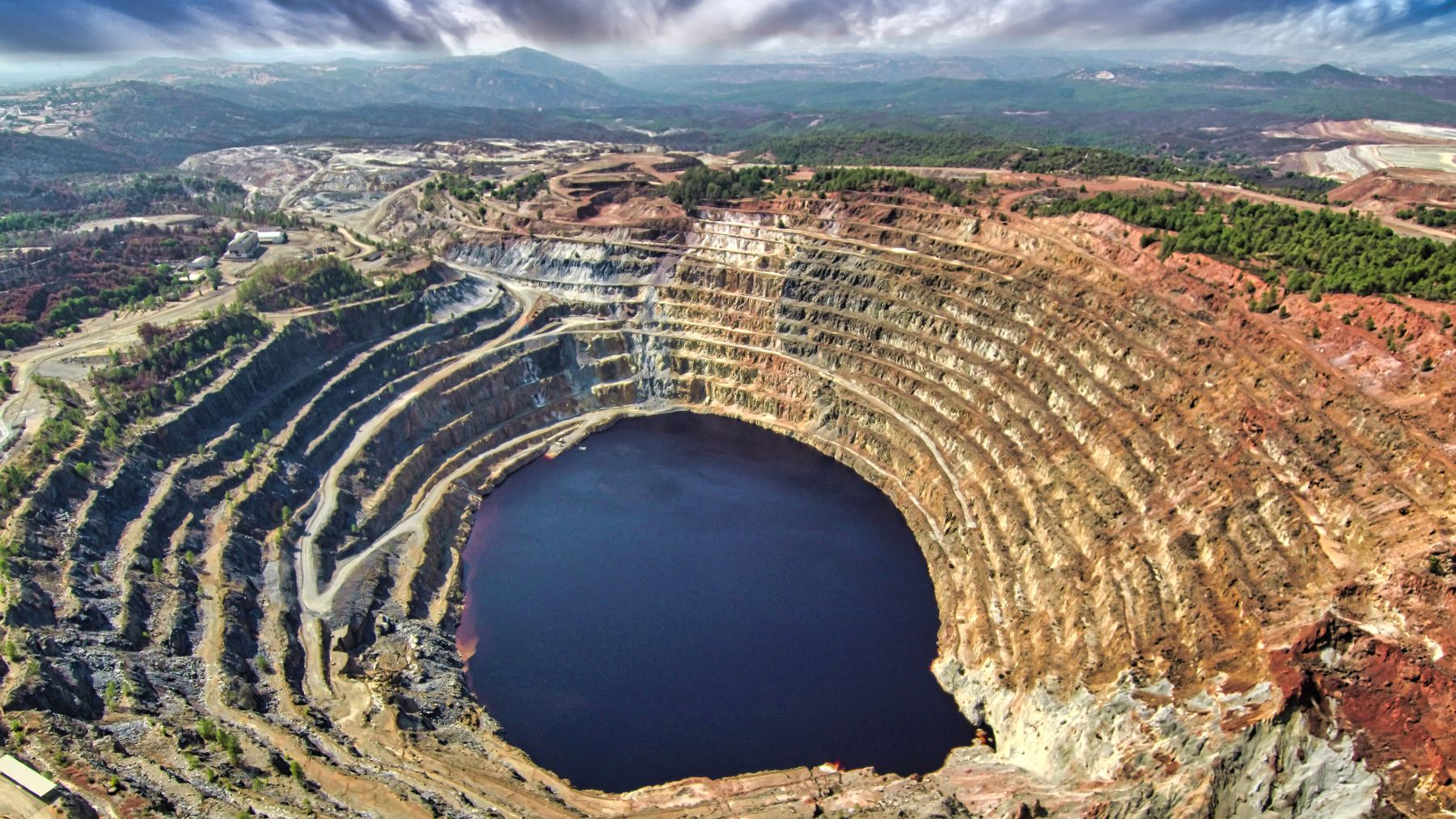
It might have been greatly mistaken at first to look at the Diavik Diamond Mine in the barren landscape of northern Canada’s territories and think of nothing more than another mining company that digs for stones buried in the ground. It has now become a precedent for renewable energy advancement or technology development. Far stranger and more revolutionary is that this generates 4.2 million kilowatt-hours of clean power annually, an industry notorious for its ecological footprint.
How Diavik Diamond Mine became a solar energy powerhouse
The Diavik Diamond Mine is not in the news today for the diamonds it digs up but for its leap to clean energy. Rio Tinto Mining, the owner of Diavik, has installed a 3.5 MW solar power station in the area. This is the single largest off-grid solar project in all of Canada’s territories, and it has 6,620 panels designed to capture both sunlight and the light reflected by snow.
This large-scale shift marks a significant deviation in how mining operations traditionally source power. The solar systems generate 4.2 million kilowatt-hours annually, saving one million liters of diesel fuel annually. This has reduced 2,900 tonnes of CO₂ emissions annually—equivalent to taking 630 cars off the road.
Transitioning to renewable energy: What makes Diavik’s shift groundbreaking
Renewable energy at Diavik is a new day for an industry considered a large emitter of greenhouse gases. Altogether, with the current exploration of closing down the mine by the end of 2026, the solar and wind power stations will jointly meet 20-25% of the energy requirements of the mine. Notably, these clean energy sources will keep powering operations during the three years of post-closure work.
Matthew Breen, Chief Operating Officer at Diavik, emphasized the importance of this transition: “This project proved that we are residents of the environment in which we transact our business.” This scheme helps identify Rio Tinto’s good intentions in realizing new benchmarks in sustainable mining. Similarly, the Government of Northwest Territories provided CAD 3.3 million ($2.4 million), suggesting it supports improving the business-community interface created for sustainability goals.
The new lofty goals for clean energy are transforming mining industries globally
Diavik solar project falls under the Rio Tinto overall plan to transition to sustainable power generation. This company has set a reduction target in scope 1 and 2 emissions to 50 percent by the year 2030 and net zero by the year 2050. These challenging targets are proof of increased awareness of the environmental impact within the mining sector.
Construction for the solar power plant started in 2024 by Solvest, an Alberta-based firm operating from Whitehorse. This project aligns with Rio Tinto’s USD 1 billion renewable energy plan for big projects. The Diavik mine will stop diamond mining by 2026, but its push for clean energy will have a lasting impact on the resource.
A sustainable legacy: Diavik’s transformation beyond diamond mining
When production began in 2003, diamonds were the sole focus of the Diavik Diamond Mine. Situated 186 miles northeast of Yellowknife on Lac de Gras Island, it became an iconic symbol of Canada’s northern mining industry. Today, Diavik is redefining itself through its solar power initiative, setting a precedent for sustainable mining.
Now generating 4.2 million kilowatt-hours of clean energy each year, Diavik demonstrates what it means to be a socially responsible industry leader. This remarkable shift shows that mining and environmental stewardship can coexist, with companies like Rio Tinto leading toward a greener future. With 4.2 million kilowatt-hours of clean energy produced yearly, the Diavik Diamond Mine is redefining what it means to operate responsibly in one of the world’s most energy-intensive industries. Through bold steps like this, Rio Tinto proves that mining and environmental care coexist. Also, read about this big story