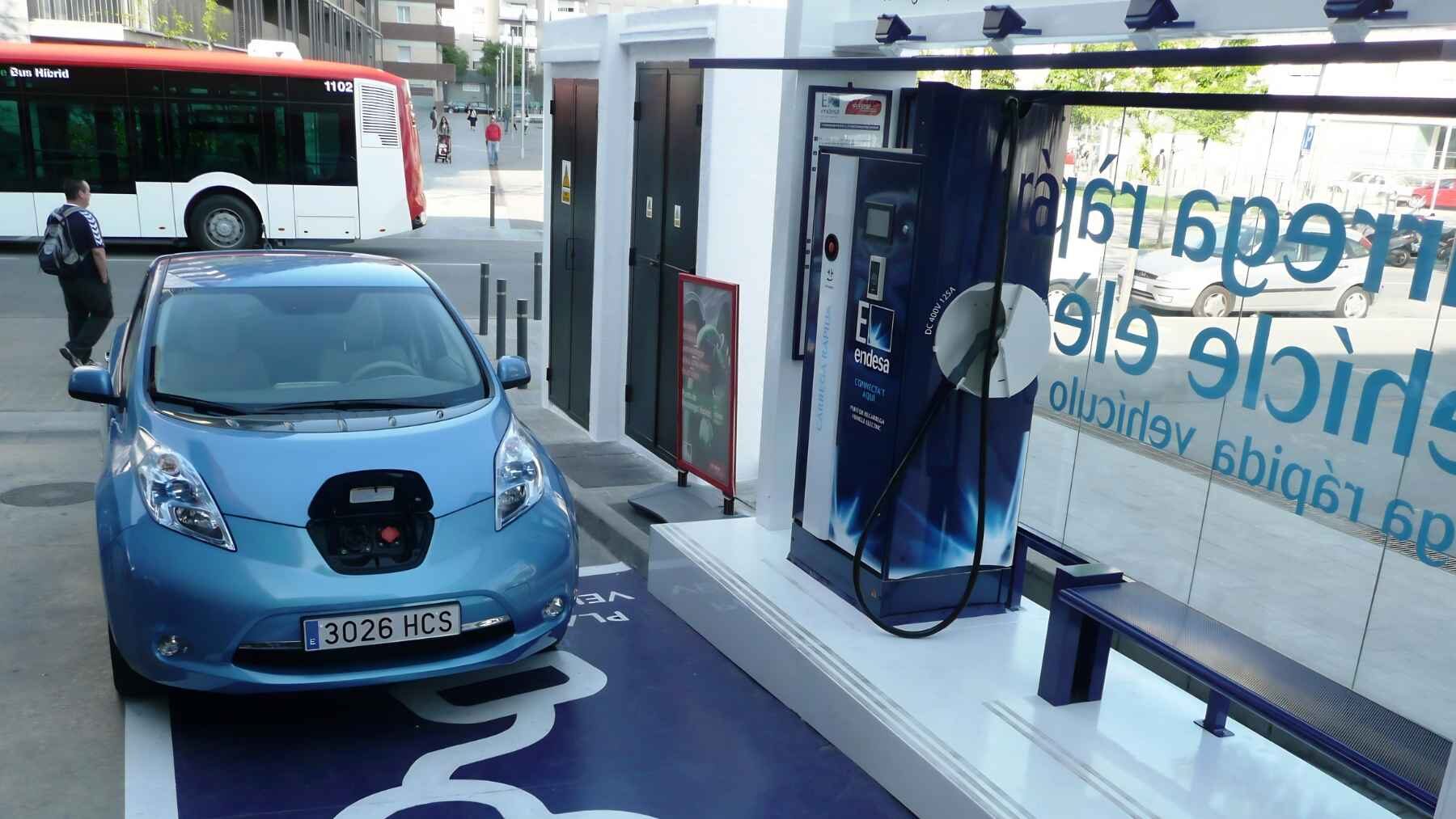
Electric driving in La Rioja remains far cheaper on energy than gasoline, but the region’s transition is being slowed by a stubborn problem. ANFAC’s latest barometer, updated through June 30, counts 355 operating public charging points and another 125 out of service, while La Rioja’s overall electromobility score reached 26.4, just below Spain’s 26.9.
At the European Central Bank’s July 16 exchange rate, the supplied local estimate converts to about $2.29 to $3.44 for 62 miles in an electric car. Covering the same distance in a gasoline vehicle comes to roughly $11.47 to $17.20, a gap large enough to matter on an ordinary household budget.
Cheap miles add up
For a driver covering about 620 miles in a month, those ranges work out to roughly $23 to $34 for electricity and $115 to $172 for gasoline. That is an energy-only comparison, not the full cost of buying, insuring, financing, maintaining or parking the vehicle.
The final number also depends on where and when the battery is charged. Home charging can shift the expense onto the electric bill, while frequent use of public fast chargers may narrow the savings, so the headline figure should be treated as a practical estimate rather than a universal price.
Sales move first
ANFAC’s barometer is a base-100 progress index, not a market-share percentage. It combines battery-electric and plug-in hybrid registrations with wider measures linked to the driving-age population and the public charging network.
La Rioja scored 37.9 on ANFAC’s latest measure of electrified vehicles within total sales, above Spain’s 36.5. But its broader vehicle-penetration reading was 37.0, below the national score of 38.3, showing that strong dealership results have not yet spread evenly through the population.
That distinction matters. A few strong months in showrooms can make the market look electric, but replacing the cars already on the road takes years.
More plugs, same anxiety
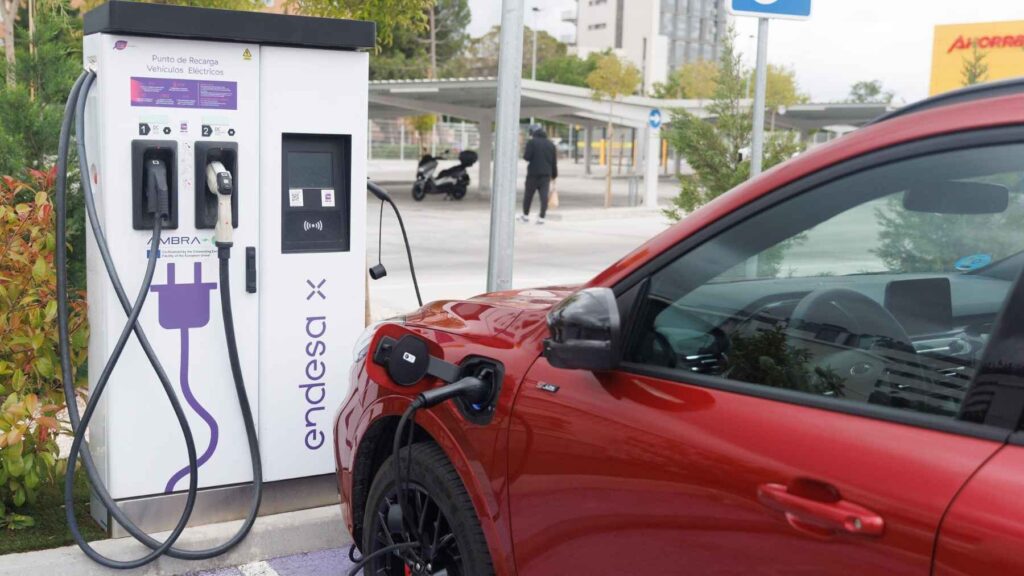
Between the end of March and the end of June, La Rioja’s operational public network grew from 331 to 355 charging points. The out-of-service count barely moved, rising from 124 to 125, which means about 26% of the region’s installed public points were unavailable at the end of the second quarter.
A charging point shown on an app is little comfort when it is broken, switched off or still waiting for a grid connection. Reliability is what turns a network from a map of good intentions into something drivers can trust on a dark evening or during a busy vacation trip.
Road coverage is one of La Rioja’s stronger features. ANFAC still counted 159 operating interurban points, which implies the entire net increase during the quarter came in urban locations and left the network split between 196 urban and 159 interurban chargers.
Fast charging remains rare
Most of the region’s operating points are still slow. Of the 355 available chargers, 232 are rated at 22 kW or below, about 65%, while 123 offer more power and only 22 reach at least 250 kW.
Slow charging works well when a car will sit for several hours at home, work, or a hotel. It is a different story beside a highway, where drivers want a short coffee break rather than a long wait, especially after traffic jams, road noise and the usual stop-and-go fatigue.
ANFAC says equipment rated at 250 kW or more can bring a charging stop closer to roughly 10 to 15 minutes, although real sessions depend on the vehicle, battery temperature, and charging curve. In practical terms, La Rioja has made progress, but ultra-fast charging still represents only about 6% of its operational points.
Factories face the turn
The change is also reaching the workshop floor. Daniel Rueda of the La Rioja Automotive Cluster said suppliers tied to combustion propulsion, transmission and exhaust systems face a deeper overhaul than companies making seats, trim or other interior parts. Rueda put it plainly, “If your business makes a component for any of those three systems, you have to reinvent yourself or redefine your components.”
That is not a small adjustment, since suppliers must invest in equipment and skills before they know exactly how quickly customers will switch. Current EU law still sets a 100% reduction in fleetwide tailpipe carbon dioxide emissions for new cars and vans from 2035. A European Commission proposal would instead set that tailpipe reduction at 90% and address the remainder through credits allowed under the proposed system.
The distinction is crucial because the 90% figure is not yet the rule in force. As of July 2026, the European Parliament procedure was awaiting a committee decision, with an indicative first-reading plenary date of November 23, 2026.
What comes next
La Rioja does not need only more charging points. The data point to a practical checklist that includes keeping installed units working, connecting completed sites to the grid faster, expanding high-power charging on interurban routes and giving households enough policy certainty to make a major purchase.
At the end of the day, the region’s electric transition is no longer just a question of whether plug-in cars can save money. It is whether the charging network and local supply chain can catch up before the market and the law move on.
The official report was published by ANFAC.