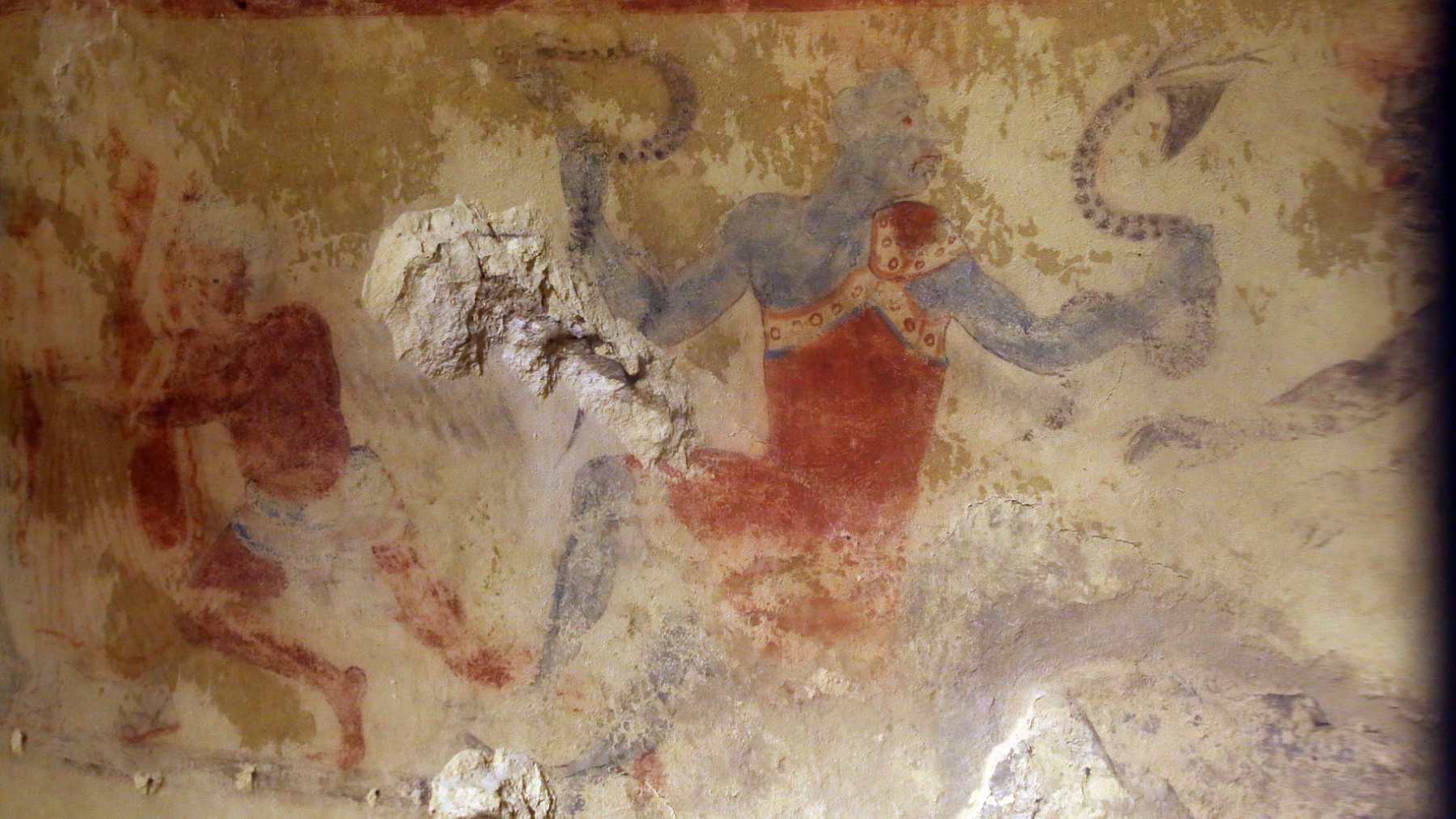
A new study based on the famous painted tombs of the Etruscan necropolis of Tarquinia puts forward the idea that they were something more than simple funeral spaces: their architecture, the paintings, the darkness and the particular acoustic conditions made up part of a sensory experience planned to deeply influence whoever went inside.
The necropolis of Monterozzi, located in the Italian town of Tarquinia, includes more than six thousand tombs dug into the rock, the oldest of which go back to the 7th century BC. Among the most studied burials there are around two hundred that still keep their paintings, and they are the main characters of this new archaeological hypothesis.
When we think of the world of death, we are used to reading every aspect of it in relation to the rituals of passage toward the afterlife. However this study, published in the Journal of Archaeological Method and Theory by Maurizio Forte, of Duke University, and Jacqueline Ortoleva, looks for something more than a simple material reading. Instead of analyzing the scenes as decorations of funeral chambers showing banquets, dances or animals, the researchers asked themselves about the experience and the sensations that going into those spaces during the ceremonies for the dead could have stirred up.
The visitor would have gone down from outside toward an underground space, where natural light did not reach. As he moved forward, the temperature, the lighting and the perception of sounds would have changed. Once inside, the paintings would have been the only visible thing in the half light, while the only things to be heard were the voices, the steps and the music of the rituals. According to the researchers, all these elements could have helped to create a carefully planned and controlled experience.
The study starts from the analysis of the acoustic features of the funeral chambers to suggest that certain spaces were conceived to make sensations like fear, suggestion or disorientation more intense. Not all the tombs were designed in the same way, but each one would have been built keeping in mind a different idea, with the goal of causing different effects on the visitors who set foot in it. Comparing two burials of the Tarquinia necropolis, both from the 5th century BC, this difference was especially clear.
In the so-called Tomb of the Rooster (Tomba del Gallo), when someone spoke or played an instrument, the sound did not stay trapped inside but spread quickly toward the outer corridor. Without an annoying echo, the visitors could speak clearly and concentrate on what they had come to do. The situation was very different in the Tomb of the Blue Demons (Tomba dei Demoni Azzurri), whose walls caused an echo that took more than seven seconds to fade out completely. Low sounds, like drum beats or clapping, resounded with such intensity that they made the chest and body of the visitors physically vibrate. “Sound behaves as a material force,” Forte and Ortoleva write.
In the conclusions of the study, the researchers believe that the combination of acoustic disorientation, the flickering light of wax candles and the pictures of a large creature could push the mind of the visitors toward a state of detachment from reality and toward an emotional journey aimed at taking in the idea of death.
In this sense, the stone funeral architecture of the Etruscans would have been much more than a resting place for the dead: it would have been closely tied to the funeral rituals and to the world of the rites of passage, both for the living and for the dead.
Photo: Sailko.