In September 1991, eight people got locked inside the Biosphere 2, a gigantic self-sufficient artificial ecosystem in Arizona, to test if humanity could live in closed habitats. Sixteen months later, the levels of oxygen decayed from 21 percent to 14 percent leaving most of the crew with fatigue and concentration problems. The cause was not only the people and the plants (the ones supposed to help keep the atmosphere breathable). It was also soil microbes that consumed oxygen, while the carbon dioxide reacted with the concrete of the building, demonstrating how hard it would be to replicate Earth on the Moon or Mars.
Biosphere 2 was built as a miniature version of Earth
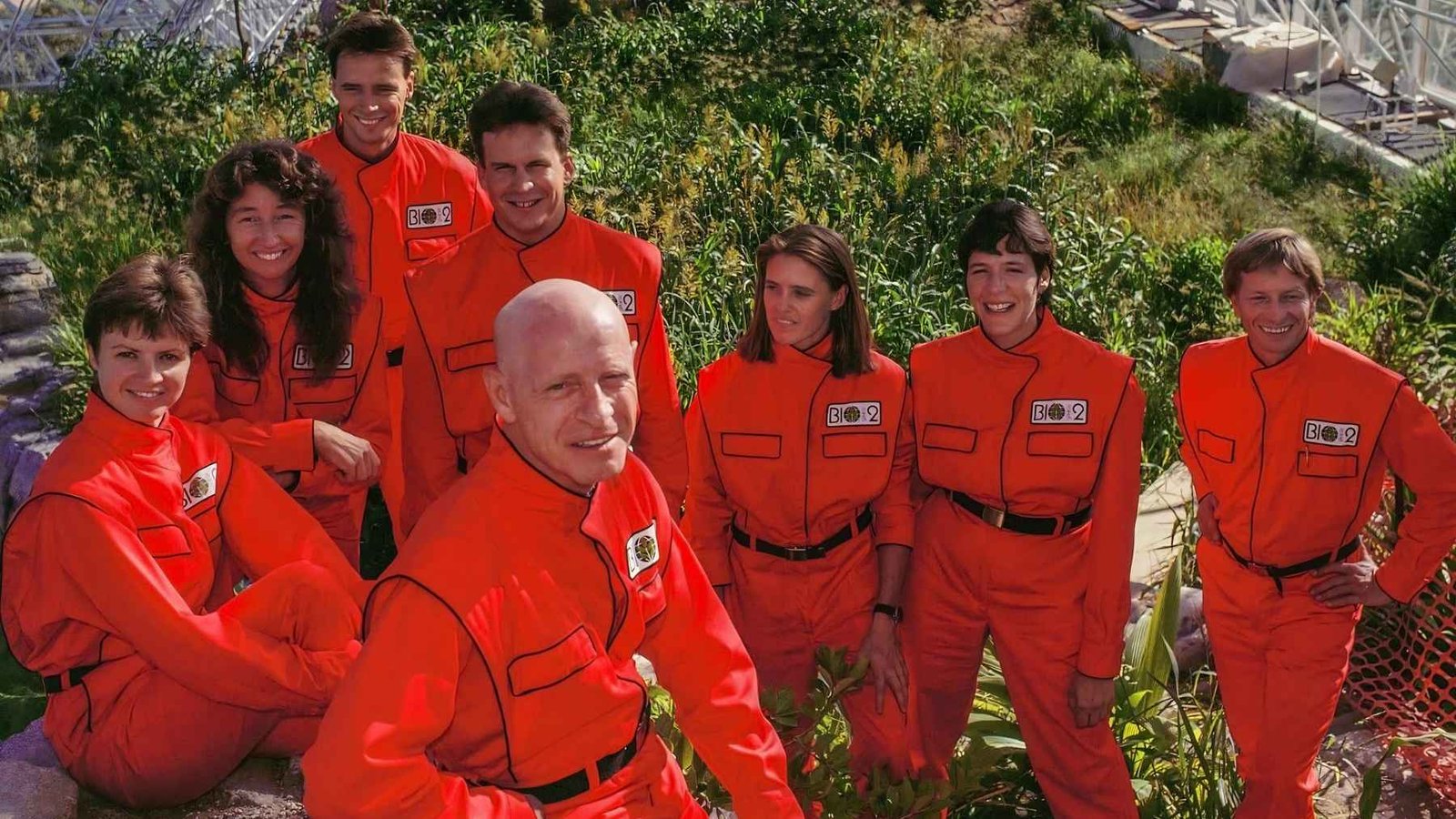
On September 26, 1991, four men and four women entered for what was expected to be a two year experiment, but things at the beginning did not work as they should, and the atmosphere started to change.
Inside the Biosphere 2, there were several environments designed to imitate parts of our natural world: a rainforest, desert, savannah, oceans, agricultural areas, and water systems.
Oxygen fell from 21 percent to 14 percent
So yes, things did not go as expected. Starting with the oxygen concentrations, which constantly declined during the mission. In 16 months, levels went down to 14 percent!
That is really hard for the human body, but still the atmosphere was still capable of sustaining the combustion. However, breathing it was comparable to living in a place at an altitude of around 13,000 feet. As we said at the beginning, the crew started to experience exhaustion, poor concentration, and reduced physical capacity.
At first it was strange for the ones leading the investigation, since Biosphere 2 contained so many oxygen-producing plants.
Tiny organisms in the soil were consuming oxygen
And the answer is here. Researchers found that part of the problem was in the soil. Large quantities of organic matter were placed there to help the growth of plants, but that ended up serving as food for microorganisms.

So, this inevitably brought the microbes to breath as the other living organisms: they consumed the oxygen and released carbon dioxide. And having the Biosphere 2 with its exterior atmosphere sealed, biological processes had a big effect on the air of these 8 people.
The concrete quietly changed the atmosphere
Inside Biosphere 2, a lot of the carbon dioxide did not stay in the air, whereas normally the carbon dioxide that is released through microbial respiration would stay in the atmosphere and participate in the carbon cycle of the ecosystem.
Researchers after not understanding what was happening, they found out that the carbon dioxide was interacting with exposed concrete in the structure. So, the microbes consumed the oxygen and produced the carbon dioxide, but part of that gas stayed trapped in the construction material.
Carbon dioxide created another atmospheric puzzle
But the oxygen problem was not the only strange thing that happened inside Biosphere 2.
During daylight, plants released the carbon dioxide through photosynthesis. And then when night arrived, respiration made the concentrations go up again. With time, the crew used a mechanical carbon dioxide scrubber to actually help control those changes.
Managers eventually had to add oxygen
It was in January 1993, that critics started to appear because the project managers injected oxygen into Biosphere 2—basically undermining the idea of testimng a truly closed system.
On the other hand, supporters argued that Biosphere 2 was an experiment, not a demonstration with a specific result. Actually they emphasized the idea that when something unexpected happened, the solution was literally to respond to it and then to measure the consequences (and that became part of their research).
With all these unexpected events, lessons for future long-duration habitats appeared. If a place like this is ever built far away from Earth, active atmospheric management will probably be needed. This shows that depending completely on plants and biological processes to keep the air safe is not enough.
Biosphere 2 still matters for Moon and Mars habitats
More than three decades later, maybe the lesson here is that creating closed environments to inhabit is about much more than placing people, plants, water and food. You have to think about microbes, the soil and the concrete. Even materials that seem to be passive can be part of chemical reactions that gradually change the atmosphere..
Biosphere 2 could not replicate the Earth, but this still makes it a scientifically valuable experiment. It showed how difficult it is to reproduce the interactions that make our planet habitable. So yes, copying the Earth is not easy.