Elon Musk is not new to radical, innovative concepts in space travel. While many would assume his SpaceX company is still primarily focused on Mars or returning to the Moon, recent developments show that Musk’s sights are now set on an even more ambitious target: Jupiter.
The reason? NASA’s Europa Clipper mission aboard SpaceX’s Falcon Heavy rocket is paving the way for an entirely new avenue of exploration in the search for life beyond Earth and our solar system.
The hidden gems of Jupiter: Why Europa is the focus now
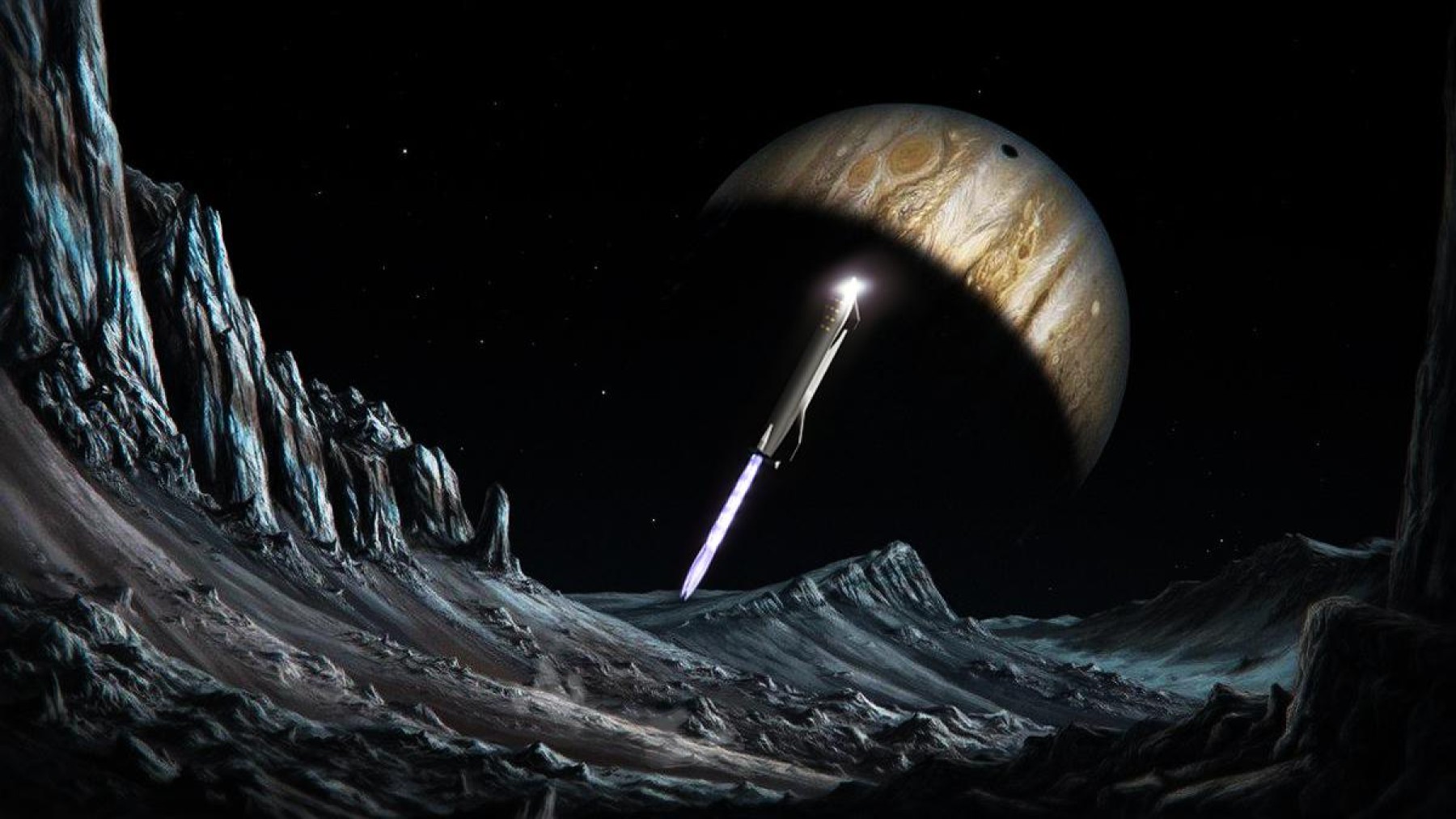
Mars, once part of Musk’s dream, is still an important destination. However, recently, attention has been paid to Jupiter’s moon, Europa. Europa is the most promising candidate for the search for life beyond our home planet, as the site of one of NASA’s most ambitious planetary missions.
Europa is shrouded with ice, and below it is a salty ocean of water, which experts think might have all the ingredients required to support life. Musk’s association with NASA on the Europa Clipper project shows another strategic shift from colonizing Mars to other unknown worlds – the possibilities that might open up could be even bigger than Mars itself.
Europa Clipper, currently on its way to Jupiter as of October 2024, will take about 5.5 years to get to Jupiter, with its target year set at 2030. If the mission confirms that Europa’s sea has the ingredients for life, then the mission will be a significant scientific one.
Even for Musk, it is not just a technological victory but a change in philosophy that seeks answers in the farthest corner of our solar system.
SpaceX’s innovative launch: How Falcon Heavy powers the mission forward
The Europa Clipper mission wouldn’t be possible without the aid of a powerful SpaceX Falcon Heavy rocket. Compared to previous missions, where reusability has been the key to Falcon Heavy, this mission demanded the maximum utilization of the rocket’s boosters.
For the first time, the company left boosters to explode in the ocean to provide maximum thrust to launch Europa Clipper 1.8 billion miles away. SpaceX’s contribution towards the grand venture of NASA explains the symbiosis between commercial space organizations and governmental space agencies.
Whereas with Musk, we see many ideas related to Martian colonies that are isolated and able to sustain themselves, this mission might presage a new epoch in space relations, during which the most distant regions of the universe will become open due to collective experience and equipment.
Musk has always wanted to break the mold, and sending a probe to investigate Europa’s potentially sustainable ecology is no exception.
Exploring new horizons: What the future may hold after Europa Clipper
Although the Europa Clipper mission aims to analyze the current status of habitability of the Europa moon, its completion can lead to further expansion of the space mission. Should life be discovered on Mars, or if the prerequisites for life are identified, the concept of the universe and the existence of extraterrestrial life changes completely.
Moreover, Europa may be only the first step in the space exploration of Jupiter. And there are other ocean worlds in the solar system, such as the moon of Saturn named Enceladus, where life can perhaps be found.
For Musk, it is essential to his dream of making humanity a space-faring species. It might not be about creating colonies right now, but it is about finding our location in the universe.
Even the existence of microbial life forms on Europa could change the focus of all space exploration agencies from colonizing other planets to finding forms of life.
The following decades of manned space exploration may be oriented not to Mars but to deeper and more scientific purposes, such as studying the ice moons of the outer planets.
Elon Musk’s association with NASA’s Europa Clipper mission keeps SpaceX ahead in both manned and unmanned missions, making the company a leading contender in space missions for several more years.
The exciting journey toward Jupiter has just begun
Although Mars might still be a distant vision of the future where humans can live, Musk’s collaboration with NASA on the Europa Clipper mission isn’t precisely confined to Mars only. Finding life on one of Jupiter’s moons is a mission and the key to the universe.
While SpaceX is preparing to blast the Europa Clipper to its 2030 destination, Musk is already on his way to changing the space travel game again. Jupiter may be farther than Mars, but for Musk and humanity, it might hold the key to answering the age-old question: Are we alone in the universe?