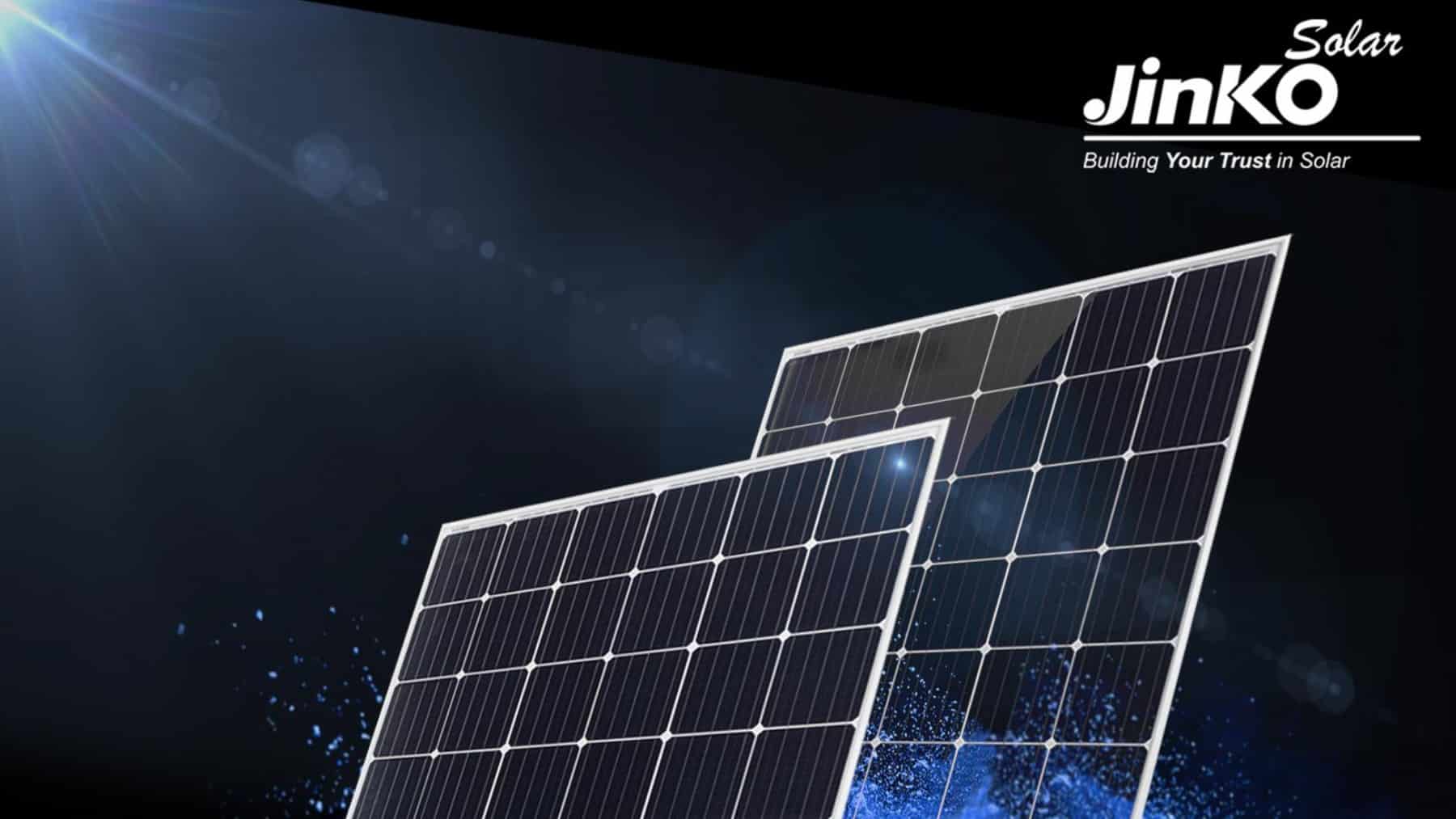
We know that at first glance, it may seem like a discreet change, but it has the potential to turn everything upside down. The solar energy sector has just taken a bold (and, why not, curious) step. The person responsible? JinkoSolar, a photovoltaic technology giant, has just broken a new world record: 27.02% efficiency in its TOPCon n-type solar cell.
The quiet breakthrough that changed everything
Well, this revolution began with some excellent R&D work within the subsidiary Zhejiang JinkoSolar Co. Ltd., and what was their goal? Well, “just” to surpass the previous efficiency limit of n-type TOPCon solar cells. This is because the efficiency was already high; back in 2022, results were already around 26.1%.
In practice, all of this translates into a 182mm cell that not only breaks records but redefines what we understand by “technological limits.” But the story doesn’t stop there. In addition to the cell itself, Jinko also announced that its solar modules (complete panels) achieved 25.58% efficiency, a result certified by TÜV SÜD, one of the world’s most respected authorities in this type of validation. All of this was achieved thanks to improvements such as:
- Encapsulating film with special patterns.
- Multiple busbar interconnects (SMBB).
- Reflective layers that enhance solar absorption.
“We are very proud to achieve a breakthrough in the conversion efficiency of N-type TOPCon cells in less than half a year, breaking the previously set record of 26.1%”, said Jin Hao, CTO of Jinko Solar.
The solar revolution that scaled up very quickly
You might be thinking, “Cool, but when will this get to my roof?” And the answer is: sooner than you think. That’s because JinkoSolar is in the midst of a massive industrial expansion. By 2025 alone, more than 40% of its production capacity will be upgraded to reach 50 gigawatts of TOPCon capacity. In practical terms, this means more panels with this technology will be available on the market, and at increasingly affordable prices (almost like this ‘golden’ wind turbine that provides 5,000 kWh for free at home).
By the way, here’s a point to note: we’re not talking about ordinary panels. Rather, new models from the brand can deliver up to 670 W of power, a 24.8% efficiency in mass production, and bifaciality of up to 85%. What does this mean? Well, they capture light from both sides, maximizing yield, even in environments with reflective soil, white roofs, or industrial coatings. This level of performance changes everything, as smaller projects generate more energy, solar plants take up less space, and overall costs per kilowatt drop.
“We will continue to invest in R&D innovation and mass production capabilities, and accelerate the industry’s pace of upgrading to advanced N-type products”, highlighted Jin Hao, CTO of Jinko Solar.
What does this solar revolution cause?
Okay, but after all this, what’s this strange effect everyone’s talking about? Well, the breakthrough itself didn’t just bring technical improvements; it also had an unexpected impact on the market: a kind of curvature of expectations. This is because, with such high efficiency being achieved in such a short time, analysts and investors began to revise all previous projections for solar technology, as if the limits of what was possible had been stretched overnight. What was considered “top-of-the-line” became “mid-range” almost overnight.
What we mean is that this phenomenon has sparked a rush among manufacturers, startups, and even governments to find out more about the new tech. Suddenly, being “sustainable” is no longer enough; it’s necessary to be efficient at scale, and quickly. In fact, some companies are rethinking their entire product strategies. An example of this is the first super solar panel presented by a Japanese company.