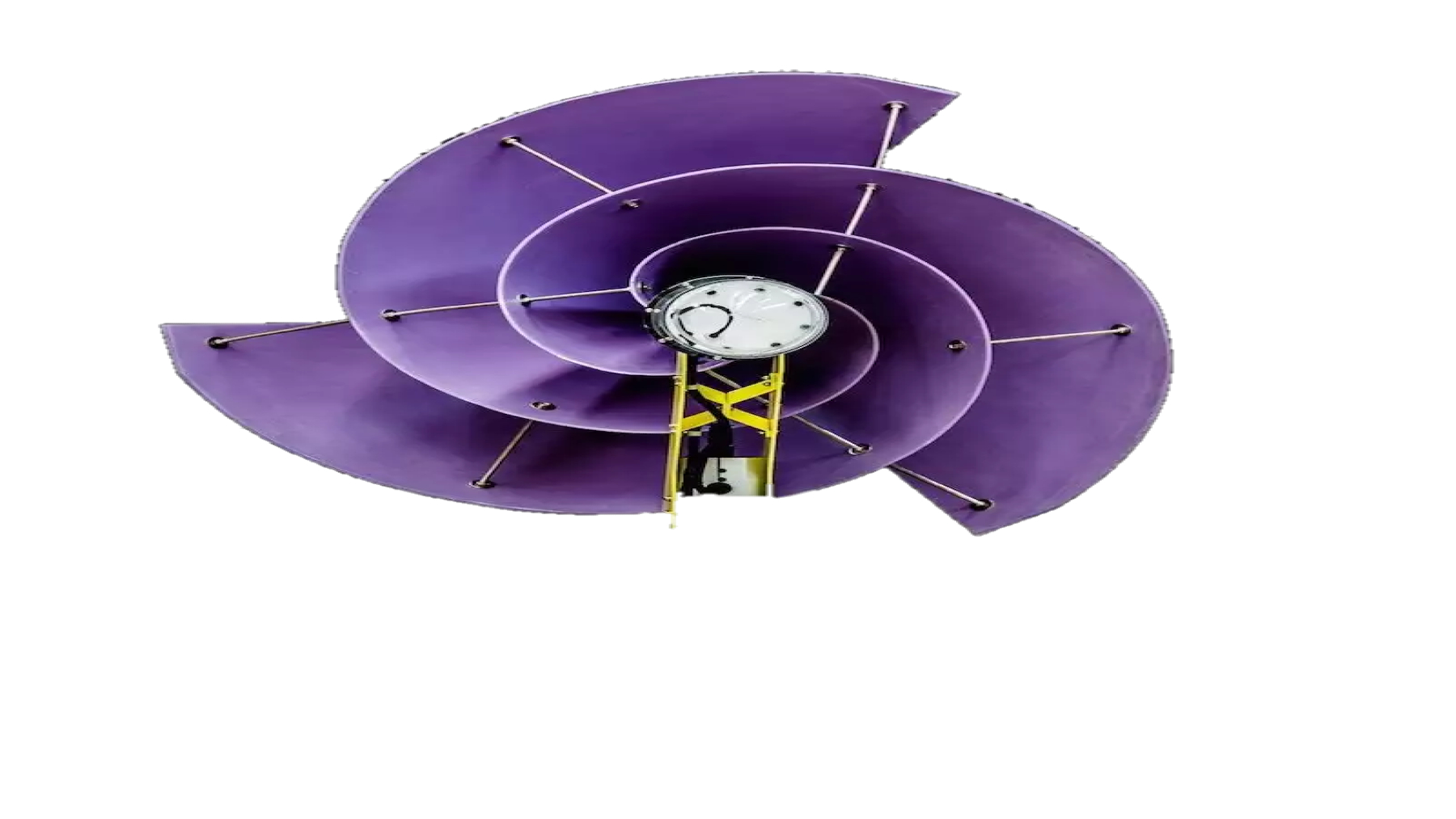
Wind power is gradually rising to the challenge, and in the residential market, it is as popular as solar power. Meet the Liam F1 Mini Urban Wind Turbine by Archimedes – a miniature wind turbine specially developed for city use.
This small and revolutionary product delivers energy to home roofs and generates up to 1500 kWh of free electricity per year — and it is silent. The Liam F1 is quickly proving to be a strong contender for solar energy solutions and a worthy contender for solar panels for consumers who are concerned about sustainability and the environment.
A quiet revolution: why silence matters in urban energy solutions
The Liam F1 Mini Urban Wind Turbine is also characterized by one of the major benefits of wind energy – it is almost noiseless. Cities are often sensitive to noise, and even though wind turbines are beneficial and clean, their noise is also a problem for the people living nearby.
The Liam F1 Mini is virtually noiseless because of its conical design, and it can fit in areas with high population density. This lets the homeowners get the wind energy they need without impacting their environment, making it different from the standard wind turbines. The Liam F1 is designed for urban and suburban areas where noise is a major concern when installing renewable energy generators.
The design of the Liam F1 Mini is best suited for cities because turbulence is a characteristic of the wind within city limits. In such conditions, conventional turbines are ineffective; on the contrary, the Liam F1 is designed to perform well.
It actually has a helix-like structure, so it can self-adjust to face the wind in the same way that a weather vane moves. These features guarantee optimal performance and power generation irrespective of fluctuating, oscillating wind conditions.
With an efficiency in capturing wind energy, the Liam F1 Mini produces approximately 1500 kilowatt hours per year with a low wind velocity of 5 m/s. This is a huge output for urban homes as it supplies clean energy that can be utilized instead of the grid.
Compact and versatile: adaptable for every home environment
The Liam F1 Mini’s cutout is a mere 1.5 m in diameter, and the structure is compact and lightweight; therefore, it can be mounted on almost any roof without requiring massive pole-like supports.
The size of this system also makes it easy to integrate into homes, and its design can easily fit any residential environment; homeowners can even opt for custom colors to best suit their exterior. The Mini version is slightly smaller and measures 0.75 meters in diameter, allowing more installation options, particularly in houses with small roofs.
This compact design does not come at the cost of power; in fact, it allows homeowners to incorporate renewable energy into their homes where they might not have been able to otherwise because of the size of the wind turbines.
The Liam F1 Mini Urban Wind Turbine can be noted not only in terms of energy produced but also in the aspect of cost and simplicity of service. It has a high energy output, which makes it possible to recoup costs in a short period when government incentives for renewable power generation are available.
Moreover, this wind turbine can be combined with solar power to form a combined system that can receive the best of wind and solar energy. Together, they provide nearly a continuous power supply to cover energy requirements all through the day.
Owners of the Liam F1 not only save their money on energy but also help to lessen the amount of CO2 emissions in their households.
Shaping the future of sustainable home energy solutions
The Liam F1 Mini Urban Wind Turbine has created a niche in the renewable energy market by combating the problems of energy generation in urban areas. It is ideal for homeowners searching for sustainable power solutions since it is quiet, performs optimally in urban areas, is compact, and economically feasible.
That is why, with the growing number of cities and individual homeowners choosing renewable sources, inventions like the Liam F1 will soon turn roofs into effective power plants.
The Liam F1 opens the way to cleaner and more accessible energy for all by providing an option or at least a supplement to solar power as a renewable energy source for our cities and setting the new standard in urban renewable energy.