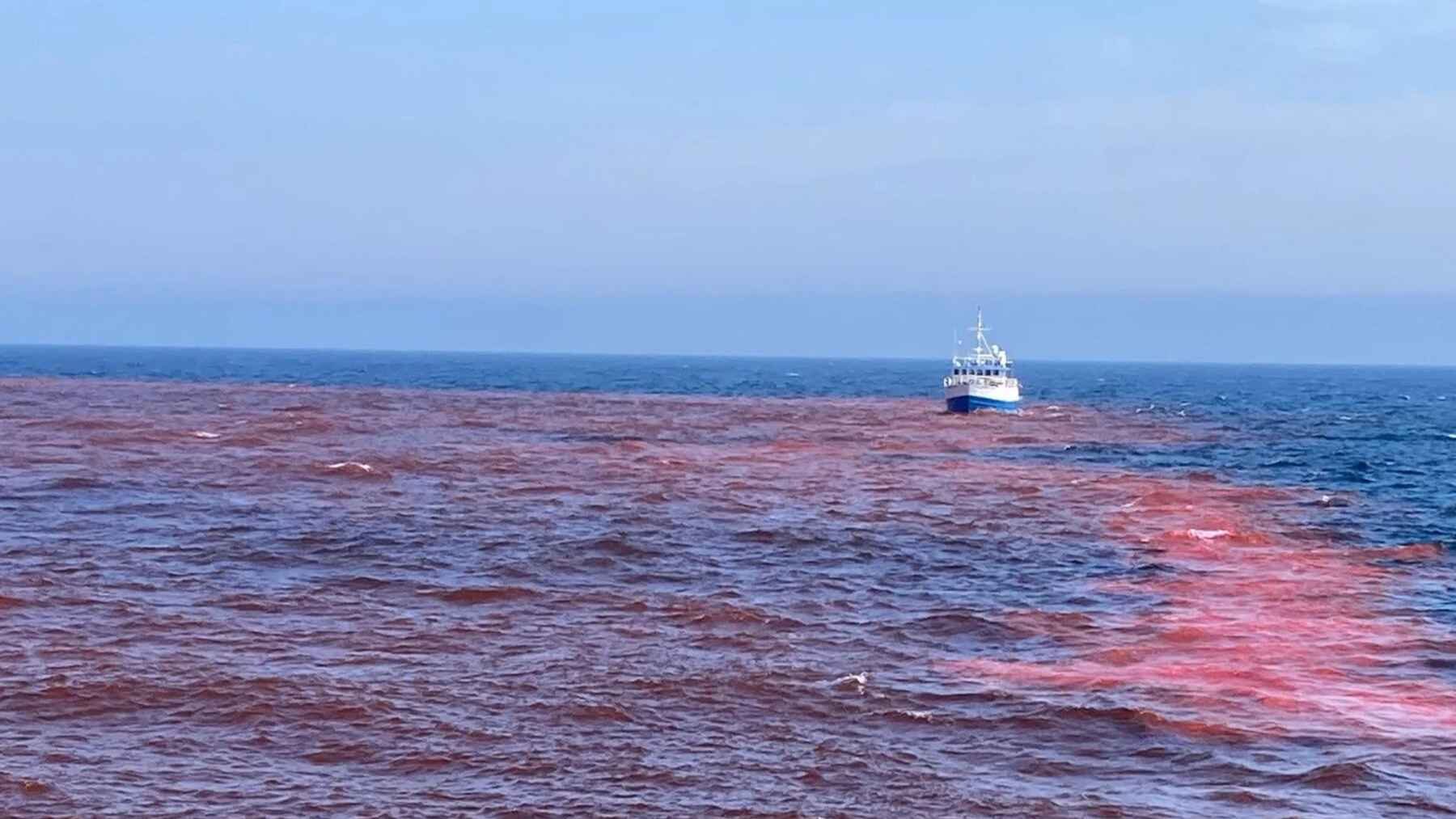
As carbon emissions make the ocean more acidic, can a human intervention return the seas to a more alkaline state? Last August 2025, researchers with a federal permit set out to test that question by dumping 16,500 gallons of a 50% sodium hydroxide solution, or lye, mixed with a vivid water tracer at Wilkinson Basin 38 miles from Cape Cod. The six-hour release became the first EPA-permitted U.S. field trial of ocean alkalinity enhancement.
The color was deliberate. Preliminary findings announced by the Woods Hole Oceanographic Institution (WHOI) on February 25, 2026, suggest the team could follow the treated patch for about five days, compare its movement with computer models, and create conditions that increased the surface ocean’s capacity to take up carbon dioxide, while measured pH and dye levels later returned to baseline as expected.
Why scientists added lye to the ocean
Why pour a caustic chemical into a living ocean? The idea rests on a troubling fact, which is that the ocean absorbs about 30% of the carbon dioxide released into the atmosphere, and that service gradually changes seawater chemistry and makes it more acidic.
Ocean alkalinity enhancement attempts to strengthen seawater’s natural buffering system. Sodium hydroxide shifts dissolved carbon toward bicarbonate and carbonate ions, lowering the amount of free carbon dioxide in the water and creating room for more of the gas to move in from the air.
What the pink dye actually did
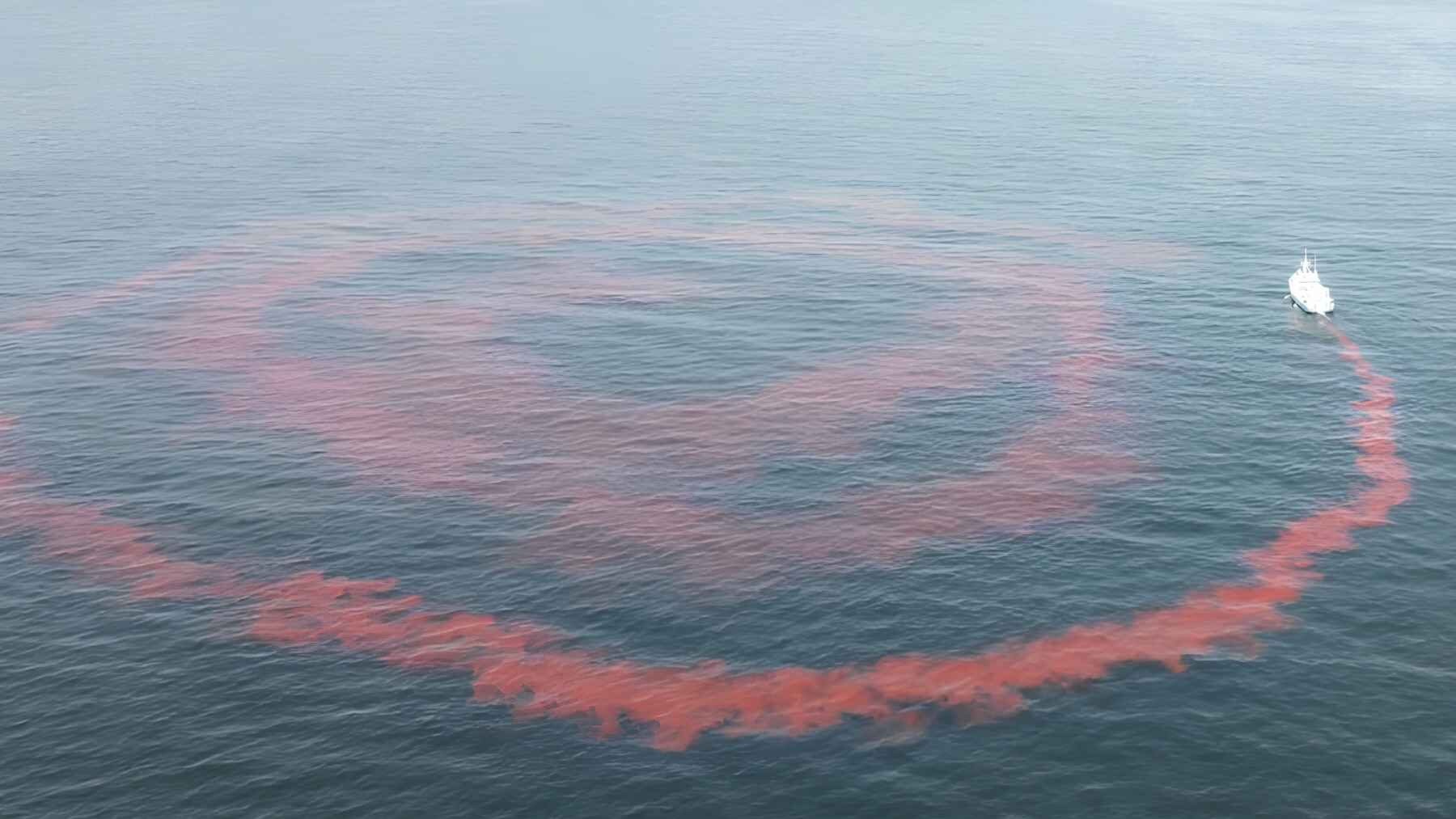
The rhodamine dye did not remove carbon. It worked like a temporary highlighter, showing scientists where the alkaline water traveled as currents and turbulence stretched the patch across the Gulf of Maine.
Researchers followed from another ship, deployed autonomous underwater vehicles and gliders, collected water samples, towed plankton nets, and used satellite imagery. That monitoring is key because a carbon removal method is not useful if scientists cannot measure where it went, how long it lasted, or how much atmospheric carbon it actually captured.
Why Wilkinson Basin was chosen
Wilkinson Basin was not selected at random. Simulations of ten locations on the U.S. Northeast Shelf found that summer conditions there offered a favorable combination of spreading, surface retention, and tracer detectability for a carefully monitored field test.
The wider Gulf of Maine also carries real ecological and economic stakes. A 2025 study found that changes in ocean circulation have temporarily increased the region’s buffering, but warned that acidification could accelerate once that protection reaches its limit, with shellfish and the broader food web exposed to the consequences.
What the early results showed
WHOI reported no significant differences inside and outside the patch in the biological indicators it measured, including bacteria, phytoplankton, chlorophyll, zooplankton, fish larvae, and lobster larvae. The researchers did not directly measure effects on higher levels of the food web, however, and said fisheries impacts still require further modeling.
A separate laboratory study adds an important dose of caution. The copepod Calanus finmarchicus showed no significant survival effect after tested exposures at pH 9, but juveniles exposed to the much more extreme pH 10.5 condition for 10 minutes had a 10.7% reduction in survival, showing why rapid dilution and exposure time cannot be treated as minor details.
The controversy did not disappear
Sodium hydroxide is caustic before it is diluted, and environmental groups opposed the project, arguing that releasing it into marine habitat could harm wildlife and that ocean geoengineering should not advance before its risks are understood. That concern has not vanished simply because one small trial produced reassuring early measurements.
The EPA nevertheless issued the permit after public review and consultations with federal wildlife and fisheries agencies, concluding that the controlled activity would not unreasonably degrade or endanger human health or the marine environment. The LOC-NESS team also reported 55 engagement efforts with community, fishing industry, and tribal participants from 2023 through 2025, though its own researchers acknowledge that difficult governance questions remain.
What this experiment did not prove
This test did not establish that ocean alkalinity enhancement is ready for commercial deployment, nor did it provide a complete life-cycle calculation covering chemical production, transport, energy use, cost, and permanent carbon removal. WHOI describes LOC-NESS as noncommercial research that is not selling carbon credits, and its quantitative field results are still being prepared for peer review.
A traceable pink patch is one thing. A climate-scale system is another, and any future role for ocean carbon removal would have to complement rapid emissions cuts rather than offer polluters an excuse to delay them.
What comes next
For now, the strongest conclusion is narrower but still useful. Project lead Adam Subhas said the early results showed small-scale deployments could be “engineered, tracked, and monitored with high precision,” while the biological indicators measured during the trial showed no significant impact.
Final carbon accounting and a peer-reviewed assessment are still pending.
The official statement was published on Woods Hole Oceanographic Institution.