Renzo Piano’s two-blade Dragonfly wind turbine, tested with Enel Green Power in Pisa
Renzo Piano’s Dragonfly Wind Turbine, with two blades, in partnership with ENEL Green Power, marries clean design to nature’s efficiencies. In Pisa, it…

· · 4 min read
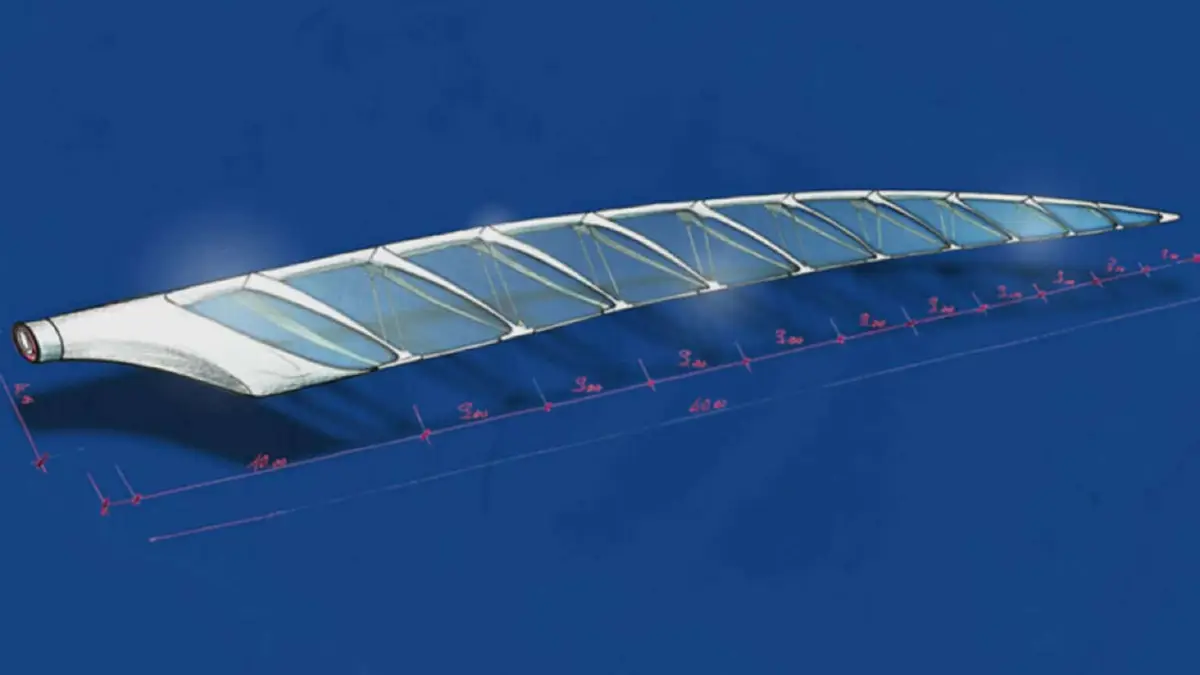
Renzo Piano’s Dragonfly Wind Turbine, with two blades, in partnership with ENEL Green Power, marries clean design to nature’s efficiencies. In Pisa, it also has been put to the proof to prove to all that it finally is possible to pave ways for revolutionary renewable energy-safe in terms of aesthetics and environmental impacts and more importantly, a more real challenge to old-style turbines.
Turbine inspired by dragonflies: Efficiency with aesthetic touch
This is the one turbine that is designed to rotate with absolute epitome. It is made with the effect in reducing not only size but also noise, quite at variance with the traditional three-blade turbine. That has been made possible with the available technology, with polycarbonate and lightweight carbon materials used for its construction, thanks to which it could harvest even the whispering wind whose power generation starts at a wind velocity of just 2 m/s.
The design has made for beauty and usefulness. The two blades are perfectly integrated with the mast, making them nearly invisible when the turbine is at rest. Measuring at a height of 20 meters and having a mast diameter of only 35 cm, it is a small and very discreet design.
With its blade diameter totalling 16 meters, the turbine is still quite large, but this feature does not denote its capability to be effective with the least environmental effects around one’s home or business premises. They are usually not an eyesore to an urban environment.
The incredible advantage with this design is the fact that it does away with noise pollution and that matters pertaining to wildlife are considered. It is possible to trick some suboptimal designs that are better suited for nature’s harmony rather than being destructive to different living creatures or people’s property.
Mimicking the dragonfly stabilizing effect in flying, the flight dynamics allow it to catch even the most sluggish of winds and produce energy, making it an excellent alternative for deployment within urban environments (just like these wind turbines for less than $200).

Brilliant breezes: A savvy answer to lesser energy scale
This is the aim: The Dragonfly Invisible Wind Turbine is to manage air so that wind turbines can perform or balance varying winds. Almost every present wind turbine is on the order of modifying angle of blade or acting in stall mode for high wind speeds, which proves too expensive for small-scale usage.
The dragonfly-inspired design gets around this through capturing wind from a full circle and exploiting even its smallest amounts to create maximum energy deriving from tiny changes in wind. By the end of the second month of testing, the prototype had managed to generate 1241.02 kW-hours’ worth of electricity, channeled directly to the grid.
This performance signals a good potential for this to be more widely taken up. Its small size and low operational requirements make it more portable and more accessible than larger models in use in homes and small enterprises.
Mass production after testing will target the Italian market. Introducing such equipment into already densely populated areas will help solve inconveniences in the provision of renewable energy by harnessing the wind power and further enhancing the intermittent issue commonly associated with wind exploitation.
Dragonfly turbine: Where conservation really starts with design
The Dragonfly Invisible Wind Turbine, on the other hand, represents a significant leap toward sustainable urban energy solutions. This innovation does not monopolize the landscape as traditional turbines do, which often outraged rejection among local communities, afflicted with the modern trends in architecture and the environment.
The minimal visual imprint of the Dragonfly Invisible Wind Turbine undoubtedly gives impetus to the plan integrating renewable energy application in both the natural and built environments. The project is part of a more comprehensive strategy to enhance performance in renewable technology and drive environmental stewardship.
Aline, it is also the evidence that ENEL Green Power has chosen Renzo Piano as the architect, which underscores the importance of leading technology with a comprehensive approach to design, vision, environmental stewardship, and the challenges of new technologies.
The idea of the dragonfly design originated from an extensive study on how dragonflies fly. The researchers were astonished to find out that the wings of dragonflies generate vortices because of the fixture surfaces, thereby creating such undermining air resistance phenomena in a way that somehow regulates the dragonfly in flight. The application of this principle their turbine becomes very energy efficient and stable under minimal wind motion as well.
The Dragonfly that is undetectable and powered by the wind is an invention. The Mini Wind Turbines which are even concise and extremely quite are heyday’s most efficient machines. It’s a unique innovation that does not only avoid the needs of heavy machinery like traditional windmills, but at the same time decreases noise levels: two main changes in all mini-urban wind turbines to date (such as these new small wind turbines residential tax credit).
Glossary for this story
- Wind power
- Electricity generated by the wind, which turns the blades of wind turbines.
- Renewable energy
- Energy from sources that are naturally replenished, such as sunlight, wind, water and biomass.
ECOnews Newsroom
Writer at ECOnewsA team of journalists specializing in socio-environmental news, sustainability, climate change, the environment, responsible consumption, and innovation. At EcoNews, we provide clear, reliable, and relevant coverage of the environmental and social challenges shaping our era.
More from ECOnews NewsroomComments · 0
Rules ›No comments yet. Be the first to share your view.