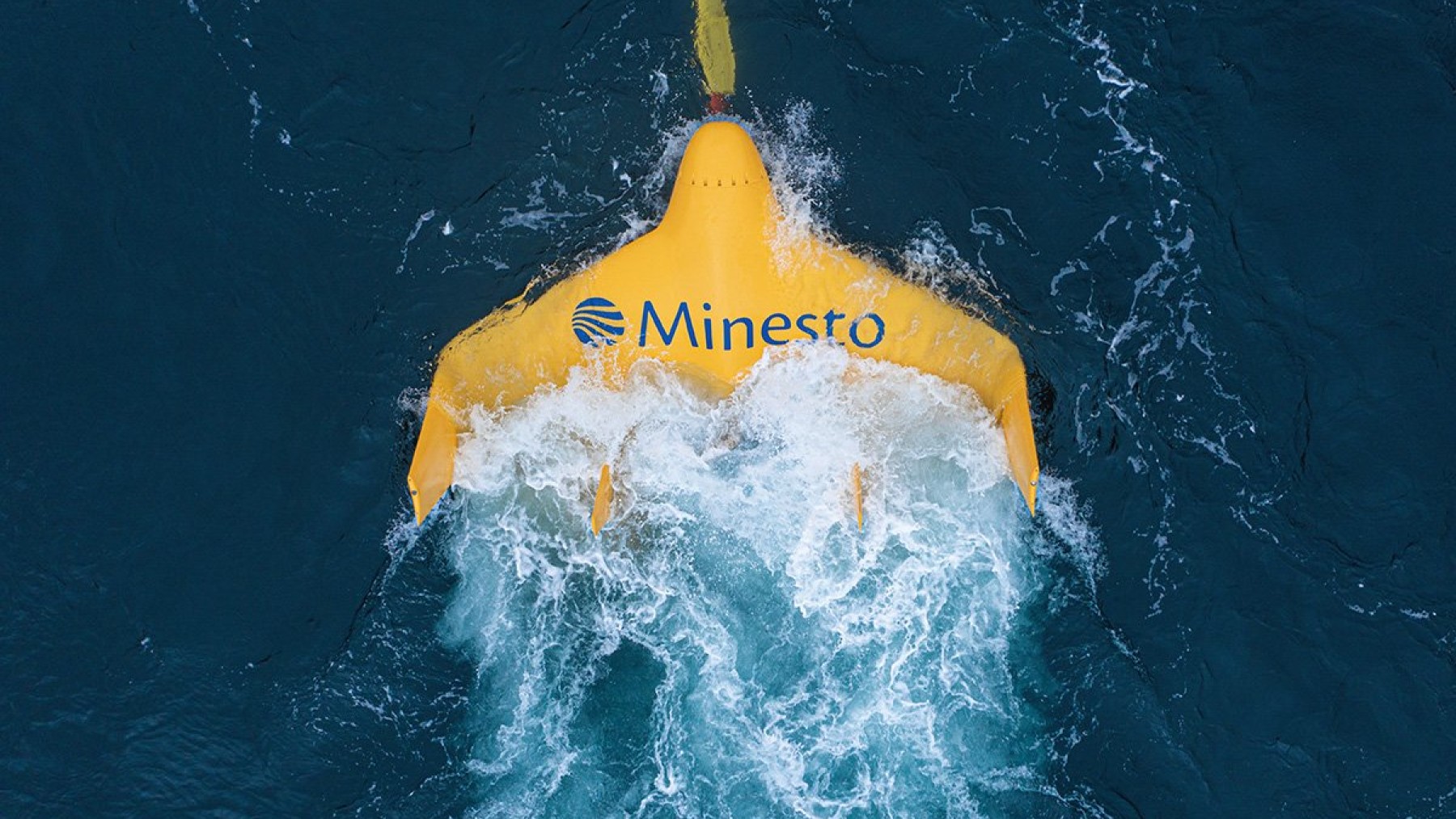
Renewable power sources have improved recently, but a new technology is emerging or “immersing.” The Dragon 12, an underwater kite manufactured by Minesto, a Swedish firm, uses tidal currents as an energy source.
Tidal kites harness the motion of ocean water, and this technology shows excellent potential for bringing in a new age of renewable energy, particularly for the Faroe Islands.
How tidal kites generate electricity underwater: The Mechanics explained
The Dragon 12 also follows fundamental principles that would make standard kites fly. It makes a figure of eight in the water and increases the water velocity over the wings that turn a small turbine. This figure-eight motion improves the current’s strength, boosts the turbine’s efficiency, and generates electricity that could be on par with conventional wind farms.
This is where the technology’s actual value is, using ocean currents, which are dependable, predictable, and inexhaustible, to generate a constant electrical current.
The Dragon 12 has some advantages over offshore wind turbines. First of all, it is less massive and significantly more affordable, which means that it is cheaper and can be installed and repaired much more easily. This results in a lower LCOE; hence, it can produce cheaper energy not only for customers but also for electricity suppliers.
Tidal kites work beneath the water level, a far more stable platform than the wind and storms that affect offshore turbines. This stability makes it even possible to have a predictable power supply in regions that change weather conditions.
The positive impact of tidal kites on both the environment and the economy
Tidal kites have the potential to bring positive environmental impacts. These kites decrease reliance on fossil energy sources and reduce greenhouse gas emissions due to diversifying energy sources. They generate helpful energy when used to supplement other forms of renewable energy, such as wind and solar, where weather conditions often affect production.
In the economic aspect, tidal kites are an advantage in remote islands and coastlines that rely on imported fossil fuels. These communities can save energy expenses, create more employment chances in the renewable power sector, and aim to achieve energy self-sufficiency by generating electricity domestically.
The future of tidal kites: Revolutionizing energy in small islands and coastal cities
Thus, the Faroe Islands are the right place for testing the Dragon 12. The Faroe Islands are a small group of islands with big plans to be 100% reliant on clean electricity by 2030. They are currently using solar, wind, and hydroelectric power sources.
Apart from contributing to this goal, tidal kites in this blend also show how this technology can be applied worldwide. If the Dragon 12 becomes successful, then tidal kites can be installed in coastal and island countries worldwide as a renewable and versatile source of electricity.
The possibility of using tidal kites does not end with small island nations. Large coastal cities and areas with high tidal flows are ideal for applying this technology for electricity generation to relieve the existing central electric power stations based on conventional fossil fuels.
As material science and technology progress, these tidal kites can be redesigned to work in various aquatic conditions ranging from deep sea to river currents.
For these reasons, the authors conclude that they are a promising technology for the future of renewable energy, where tidal kites are a necessary part of diversifying energy sources to meet the needs of growing populations and increased industrialization.
Why tidal kites are poised to revolutionize clean energy generation
The Dragon 12 tidal kite significantly shifts how renewable energy is harnessed. Minesto has applied this by leveraging ocean currents to bring in a technology that is as efficient and can revolutionize areas that depend on imported power.
The predictability and affordability of the Dragon 12 is evidence of the transition towards a more effective energy supply system that better serves the needs of the population as well as the needs of the planet. They have made a device that will change how electricity is produced and make renewable energy available to everyone, even in the most isolated regions of the globe.