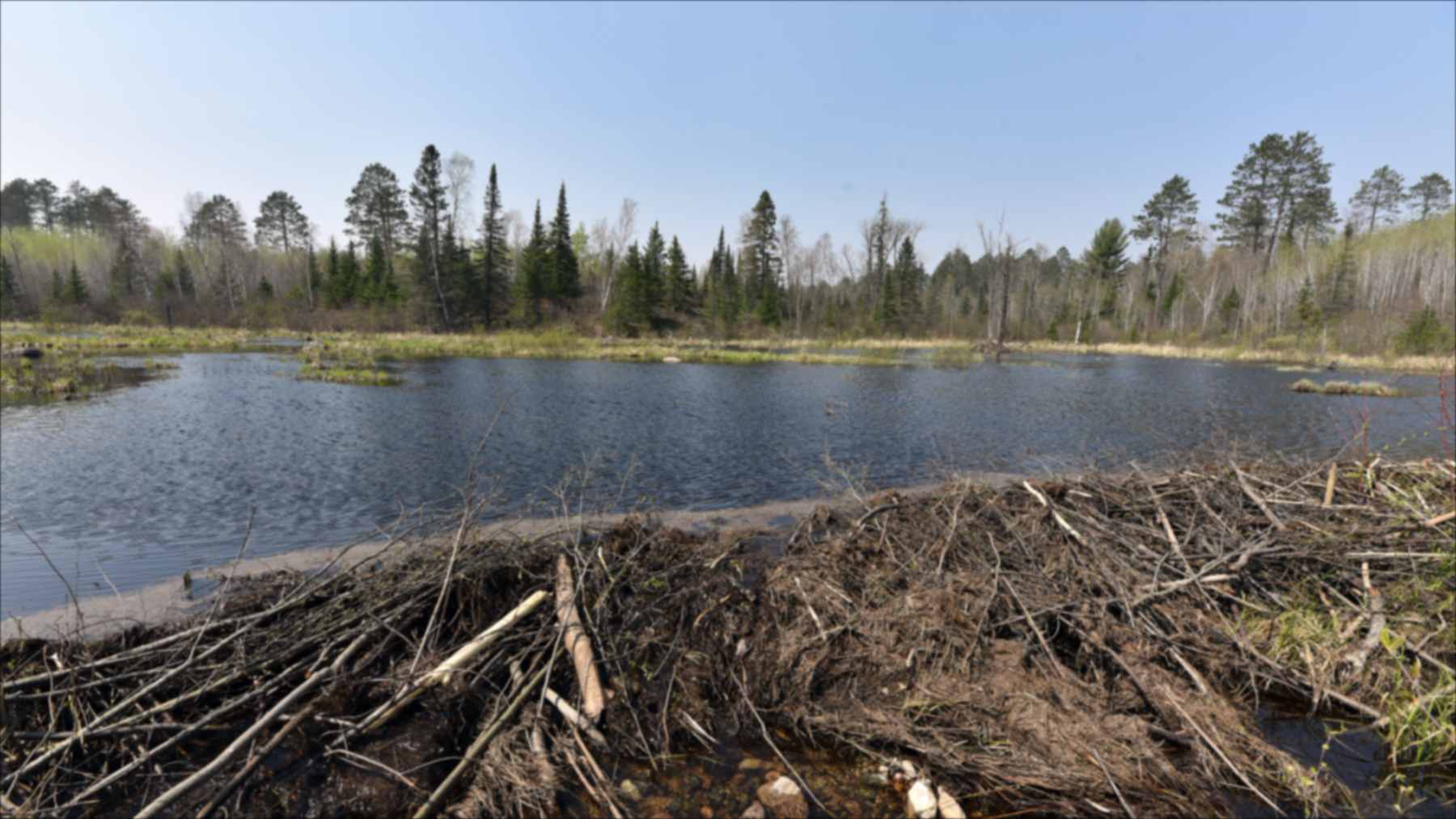
A pair of beavers released at Studland in Dorset, England, in March 2025 turned a patch of dense woodland into a wetland within a year. Their 115-foot (35-meter) dam slowed a stream and formed a pond where cameras recorded an otter fishing and a barn owl hunting.
The story has since moved beyond that first anniversary. In an August 2026 update, the National Trust reported that the pair’s network of dams was still retaining water during dry conditions, offering an encouraging glimpse of how restored wetlands might help wildlife cope with drought.
A small release with a complicated beginning
The pair belonged to a larger introduction of four Eurasian beavers, released as two pairs on March 5, 2025. Relocated from Scotland, they arrived at Little Sea, a freshwater lake of about 82 acres, under England’s first license specifically authorizing a wild beaver release.
Another beaver pair was already living there, having appeared in 2024 through either natural dispersal or an unauthorized release. The newcomers therefore entered an occupied landscape, where finding a suitable territory was part of settling in.
For the pair that eventually built the new wetland, that search included an unexpected coastal trip. The female swam to nearby Swanage before conservation teams returned her to Little Sea for her welfare.
How a dam changes an entire habitat
What happens when a stream slows down? At Studland, water collected behind the dam while tree felling opened gaps overhead, bringing more sunlight into the previously shaded woodland. Together, those changes created new opportunities for wetland plants and animals.
“The effect on the ecosystem in a relatively short time is astonishing,” said Gen Crisford, the National Trust’s wetlands project officer. Volunteers also recorded redpolls and water rails around the developing habitat, adding to the wildlife captured on camera.
A felled tree does not always mean a dead tree, either. Trees such as the willows surrounding Little Sea can send up fresh shoots after cutting, a process similar to traditional coppicing that produces patches of new growth alongside older woodland.
A summer update brings stronger evidence
By August 2026, specialist volunteers had recorded seven species of dragonfly and damselfly at the new wetland. A drone survey was also helping the team track changes in open water and tree cover, giving the project a clearer record of how the site was developing.
The breeding picture needed more patience. Although cameras had recorded the wetland pair mating, no kits had been seen by the August update, while a separate resident family at Little Sea had produced two new kits that year.
Could beavers help keep roads from flooding?
The National Trust reported indications that the dam was helping protect a nearby road during heavy rain. For residents, that could mean a practical benefit beyond better wildlife habitat, but the announcement did not provide measurements showing how much the road’s flood risk had changed.
Research elsewhere helps explain why that possibility deserves attention. A 2021 study published in Hydrological Processes examined more than 1,000 storm events across four English sites and found an overall pattern of lower peak flows and longer delays between peak rainfall and peak streamflow after beaver activity.
Those effects varied with location and season. The findings support including beaver wetlands in flood management, while leaving an important local question to answer through monitoring, namely how much protection a particular dam provides during different storms.
Holding water also means making room for it
The drought connection has supporting evidence beyond Dorset. Research reported by the University of Exeter in 2024 found that wetlands in four Devon beaver territories collectively stored more than 24 million liters of water, and described how stored water helped sustain downstream flows during the 2022 drought.
That figure cannot be applied to Studland, where the August report described water retention without giving a volume. It does, however, help explain why keeping water in a landscape can matter when a hot, dry spell leaves wildlife with fewer places to shelter.
Bringing beavers back takes long-term care
Making space for wetlands also requires working with the people nearby. England’s release policy calls for projects to engage local landowners, manage potential damage to farming and infrastructure, and prepare plans that usually cover at least 10 years.
The Dorset project shows why both patience and monitoring matter as animals reshape their surroundings. The August 2026 official project update was published on the National Trust website.