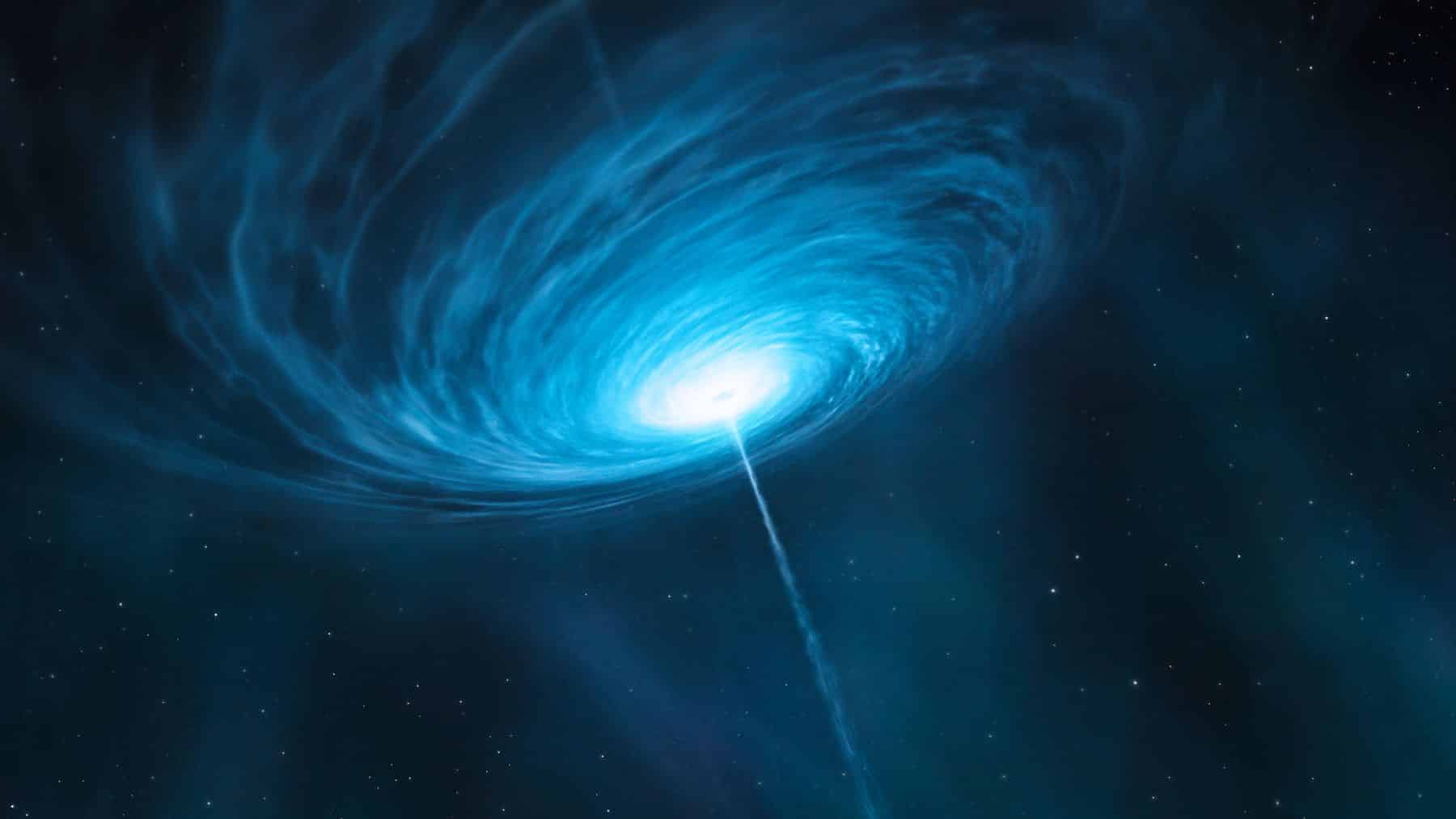
The detection of water in the ancient universe provides essential details about the initial universe’s nature and its capacity to support life outside our planet. Water molecules were created just after the initial supernova events, thus indicating that crucial life-friendly conditions existed earlier than scientists assumed. The scientific community accepts that water existed abundantly before early galaxies appeared, which extends our understanding of when living systems might exist throughout space.
Supernovas were the cosmic factories producing water in space.
Supernova explosions of stars were vital for making water possible during the first stages of universe evolution. Studies show that the first stars from Population III were massive and brief, which characterized their existence. The stars used their fuel reserves at quick rates, resulting in spectacular supernova transformations of the neighbouring cosmic structures.
High-mass stars detonated to change these stars’ composition and release heavy elements such as oxygen through the cosmos. Supernovas allowed oxygen to combine with hydrogen, resulting in water molecule formation throughout the supernova-dispersed gas areas. Supernova clouds containing expanding debris hosted conditions for water molecules to collect and endure after temperatures rose and chemical reactions took place. All necessary water-forming elements were available to the cosmos during its most ancient times.
Scientists reveal how early space clouds held rich reservoirs of water
Early supernovas generated dense zips of gas where the produced water became extraordinarily concentrated as cloud cores. Cloud cores serve as the origin of both new stars and planets. Water molecules united with cosmic elements within massive matter clouds, which led to the preparation of how planetary systems would form in the future.
Water distribution throughout these regions means planetary discs containing high levels of water first appeared during cosmic dawn when the first galaxies had not yet developed. Early detection of these conditions reveals that life-giving environments existed before previous time estimates. The formation of planets through these water-rich regions would indicate that life-friendly conditions started to emerge in the very beginnings of cosmic time.
According to scientific predictions, water-containing clouds existed for millions of years to shape the development of planetary systems. Early formation of water-rich regions within the universe would enable star systems to maintain water during their planetary formation processes and develop environments comparable to Earth.
Computer simulations confirm how water formed at the dawn of time.
Research teams utilized computer simulations to study the processes of the earliest stars, which developed into water through their lifespan and post-death expansion. The supernovas’ ejected material expanded and cooled, enabling oxygen to react with hydrogen atoms to generate water vapour throughout expanding debris halos. The research methodology established an explanation for water molecule creation even beyond planetary spheres.
The water quantity remained limited while the supernova remnants’ dense cores concentrated it sufficiently to form new stars and planetary bodies. The study demonstrated that the basic stars from the first generation contribute significantly to the distribution of vital precursors for forming future planetary systems. Early supernova detonations played a vital role in water creation processes and thus demonstrated the essential nature of stellar existence in creating cosmic chemical elements.
Recent investigations indicate that cosmic dust and radiation affect the stability of water molecules. Certain stellar gravitation fields help new stars conserve their water content beyond the point when water would have normally dissipated. These primordial environments recycle water continuously, which results in an increase in water content with time.
What this means for the search for extraterrestrial life
Scientists made a crucial discovery about water’s existence in the universe 100-200 million years after the Big Bang, thus transforming Earth-based life detection research. Based on this new evidence, planetary systems had the potential to emerge before many of the first galaxies formed. The availability of water at the time of planetary formation would have enabled the development of a life-supporting environment at a speed faster than previous research indicated.
Research indicates that the discovery extends the length of time life may have developed in space while offering new space observatories to focus on. The discovery of water during cosmic evolution from its earliest stages indicates that life-supporting environments might exist worldwide in previously predicted numbers. Scientists proceed with observations of exoplanetary systems to find traces of former water storage locations.
Supernovas stand vital for generating all necessary life-originating elements because scientists proved their role in creating water from the dawn of the universe. Scientists now have stronger possibilities to detect extraterrestrial life because water traces in the primordial universe demonstrate that life-supporting environments existed much earlier than scientists initially thought.