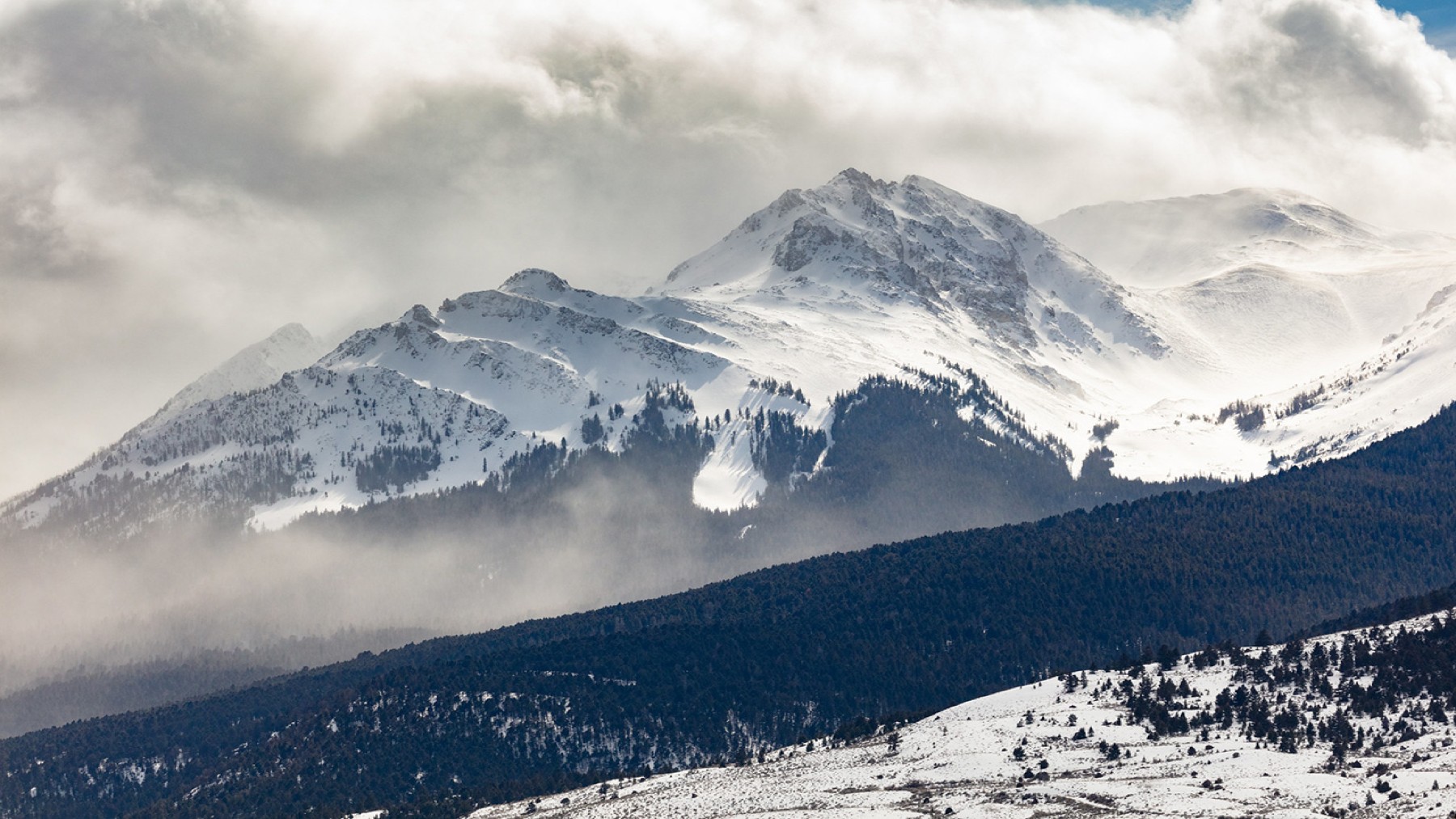
One of Earth’s most famous supervolcanoes sits under Yellowstone National Park, and after lying dormant for 160,000 years, it is beginning to twitch. Current investigations have established shifting magma activity in the northeastern part of the park, and researchers have formulated a historical perspective to address this activity.
Signs of a restless giant: A few array-acting facts about how Yellowstone is moving its magma
Astute research has revealed that magma is shifting underground in the northeast part of Yellowstone, the last evidence of volcanic activity 160000 years ago. This finding, demonstrated by YVO research, indicates that certain aspects of the supervolcano behavior are shifting. Large magma reservoirs suggest that the whole volcanic system is still active with continuous construction and modification.
Modern equipment is being used by scientists to monitor activity in this region of Yellowstone. Tremor and vertical motion measurements are very important to register variations in volcanic seismicity. More than 2300 earthquakes were reported in the region in 2023, with the most significant measure at 4.0 in West Yellowstone, Montana. The information on the nature and structure of the hydrothermal system is most often obtained from the geochemical analyses of the gases emitted at the fumaroles and thermal measurements.
The comprehensive description of Yellowstone volcanic activity starts from the three significant eruptions of the past 2.1 million years, with the last eruption occurring 640 thousand years ago. They also led to the formation of the present caldera, which characterizes the physical features of the Yellowstone National Park. While such large-scale eruptions are comparatively infrequent, other Vulcanian activities, especially lava and hydrothermal explosions, are much more frequent.
The events of the last bacterial layer date back to when Yellowstone National Park was 70,000 years old, and the features of hydrothermal activity argue that Yellowstone National Park is still an active volcano. They remain closely watched to capture any meaningful shift in the supervolcano’s activity as the landscape supports this historic past.
Magma movement’s implications: What if Yellowstone’s behavior started changing radically?
A magma shift northeast from Yellowstone would likely have certain outcomes. It could also change pressure in other areas of the Volcanic System, possibly awakening other dormant areas. While specialists point out that there’s no sign that the volcano could erupt soon, geological data suggests the system is indeed changing in ways still unknown.
This is shown by the recent earthquakes in the park; two were recorded in the first week of January 2024 with a magnitude of 3.1 and 2.5, respectively. While these events are not unusual, they are part of a pattern that scientists carefully analyze to anticipate any more significant changes in the supervolcano’s behavior.
Drilling has been proposed as a method to save Yellowstone from blowing up earlier. However, a research geophysicist and Scientist-in-Charge of the Yellowstone Volcano Observatory, Michael Poland, has said that drilling into Yorkshire to release pressure is not feasible. These magma chambers are not just storehouses of expanding liquid magma that can be quantitatively tapped, as in overinflated balloons.
The geothermal dilemma: Why drilling for power is a legal and environmental problem
According to the act of Congress, geothermal power generation is prohibited, even though it is applied in many areas worldwide. The Geothermal Steam of 1970 made it mandatory for the Department of Interior to protect and manage the hydrothermal features in the National Park Service units. Exploring geothermal energy in Yellowstone may harm these special features of geology and history.
Yellowstone’s latest movement of magma brings the level of one of the most complex and dangerous volcanic systems in the world to another level. For the new segment, one emerges with other development and risk evaluation candidates, requiring more detailed models. The consequences of the Yellowstone eruption that could possibly occur in the future are catastrophic; even though their occurrence is not expected for a long time, climate and ecosystems will be affected.
The best things that could be done to combat the future volcanic unpredictability of Yellow Stone is to remain watchful and to carry out further studies. In providing effective and efficient solutions used in analyzing the heterogeneity of the magma system, people and the government enhance their capacity to control risks accorded to this powerful natural agent.