Sustainability in vehicles doesn’t just rely on electricity; there are still many things to change and improve. We saw it with the new microscopic material they’re going to start using, and now it’s time to see it again. A zero-emission combustion engine seems like science fiction or, at the very least, contradictory. However, they have managed to manufacture it for the first time, and you won’t believe what it’s like.
Ferrari’s combustion engine, an unprecedented invention
Ferrari has developed a new internal combustion engine that runs on hydrogen and produces no polluting emissions. This represents a significant technological advancement for the automotive industry, demonstrating that combustion engines can be compatible with a sustainable future.
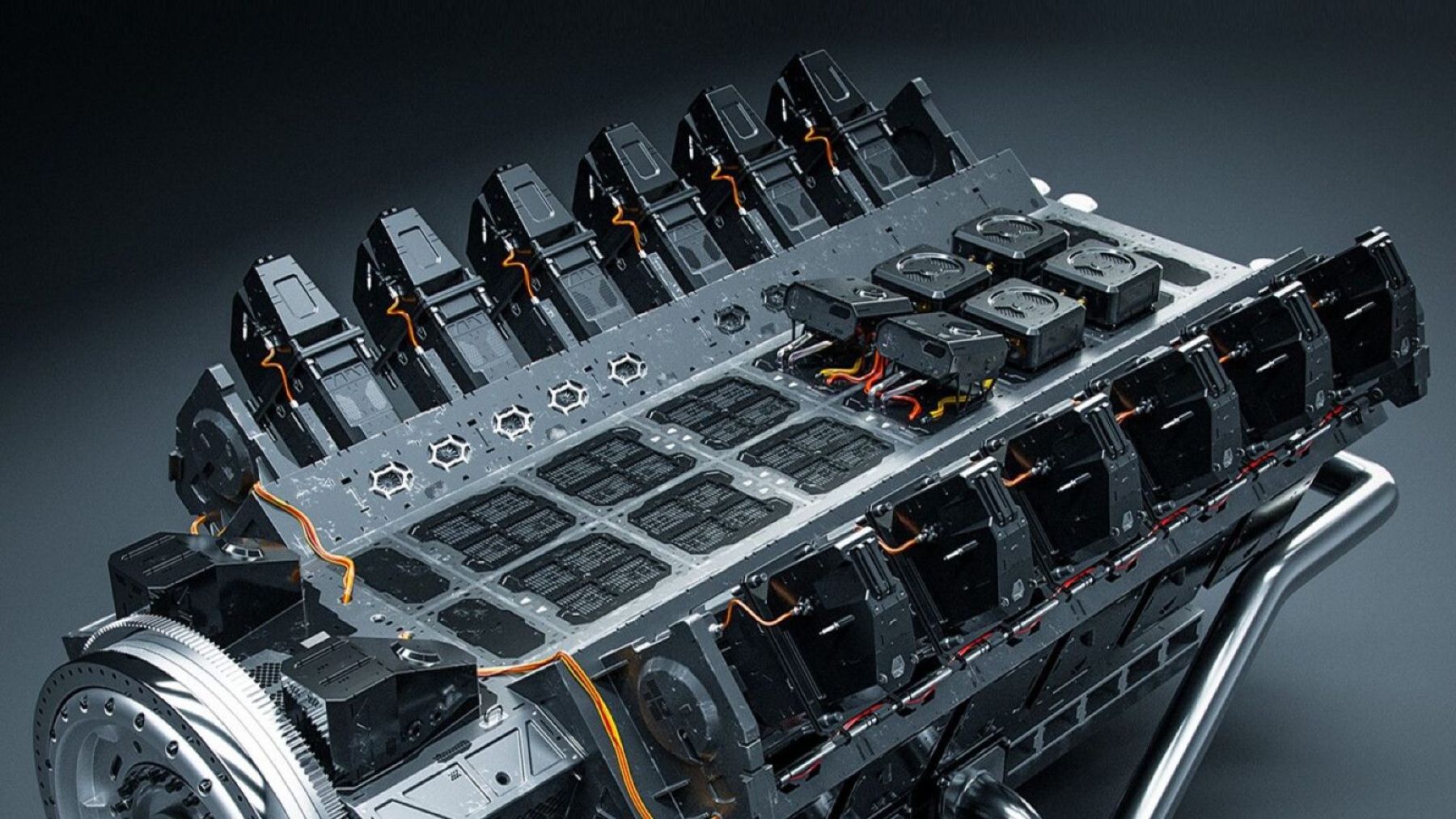
Ferrari’s patent describes a V6 engine with a downward-facing arrangement, which allows for more efficient combustion of hydrogen. Although still in the conceptual phase, this innovative design captures attention for its potential to power ultra-high-end sports vehicles without compromising performance.
This advancement shouldn’t surprise you, as the iconic Italian luxury sports car brand has been exploring alternatives to traditional combustion engines for years. Electrification is an option, as demonstrated by recent hybrid models from the brand, although they have now wanted to go further.
A look at the features of Ferrari’s zero-emission engine
The new hydrogen internal combustion engine developed by Ferrari presents very interesting technical characteristics as seen in the patent documents filed by the company. It’s a 6-cylinder inline engine with an unconventional downward-facing arrangement.
This means that the cylinders are tilted downwards instead of upwards as is usual. An advantage of this configuration is that it allows the hydrogen injectors to be placed very close to the cylinders, optimizing the mixture and combustion.
Additionally, not having overhead cylinder heads greatly simplifies the distribution system. Another notable feature is that it is turbocharged by two turbochargers, allowing it to achieve high specific power despite running on hydrogen.
It is expected to easily surpass 400 horsepower, figures that are even impressive by Ferrari standards. Undoubtedly, if it is finally implemented in future models of the brand, it will give rise to high-performance supercars.
The emissions, the most curious aspect of this new Ferrari engine
Ferrari’s new hydrogen combustion engine is revolutionary for its ability to operate without generating polluting emissions. Unlike traditional combustion engines that emit carbon dioxide and other harmful gases, this engine only emits water vapor.
This is because hydrogen is a clean fuel. When hydrogen is burned inside it, the only chemical reaction that occurs is the combination of hydrogen with oxygen from the air, forming water. No harmful byproducts or emissions, such as nitrogen or methane, are generated.
According to the technical data presented in the patent, this twin-turbo V6 reaches a maximum power of about 650 horsepower. This places it on par with the powerful engines currently fitted to high-end sports vehicles. Additionally, the torque delivery is very favorable, with a maximum of 800 Nm.
This zero-emission combustion engine opens the door for the continued innovation of similar engines along this line. However, we still don’t know to what extent we are taking a true giant step forward. The reason for this slight unease? What has been discovered about electric cars, which are now being sold almost given away to compensate for a historic fraud.