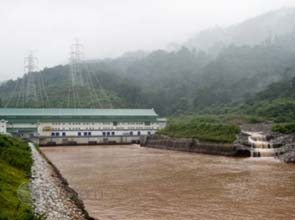
The 1,070-megawatt Nam Theun 2 hydropower facility will provide up to 300 gigawatt-hours of electricity to the people of Laos. Total cost of building was $1.43 billion.
The power plant’s operator, Nam Theun 2 Power Company, is jointly owned by Electricite de France International, Thailand’s Electricity Generating Public Company and the Lao government.
The developers said the hydropower facility will emit 35 times less greenhouse gases compared with a coal-fired power plant of equivalent size.
But in addition, the facility is hosting a biodiversity conservation that is said to help avoid another 40 million to 60 million tons of carbon dioxide emissions.
The power plant will use up to $1 million annually to protect the 4,000-square kilometer Nakai-Nam Theun Biodiversity Conservation site.
“This project is a testament to the fact that when hydropower projects are done right, in a socially and environmentally responsible manner, the benefits are considerable,” said Kunio Senga, director general of the A.D.B.’s Southeast Asia department.
Nam Theun eyes $2 billion in revenues over the next 25 years through electricity exports. The government plans to export more than 90 percent of the total electricity it produces to Thailand.
The project received $120 million from the Asian Development Bank and more from 27 other financing institutions, including the World Bank, the European Investment Bank and the Agence Francaise du Developpement.
Mr. Senga said a close working relationship with the communities allowed the developers to address the former’s concerns, such as paying for more land and introducing welfare programs.
The hydropower project will reportedly support efforts to improve health and education especially in the Nakai Plateau villages where it is located.
More than 50 percent of the families in the area live in poverty, earning only $2 a day. Child mortality rates are high, clean drinking water is scarce and sanitation is almost nonexistent.