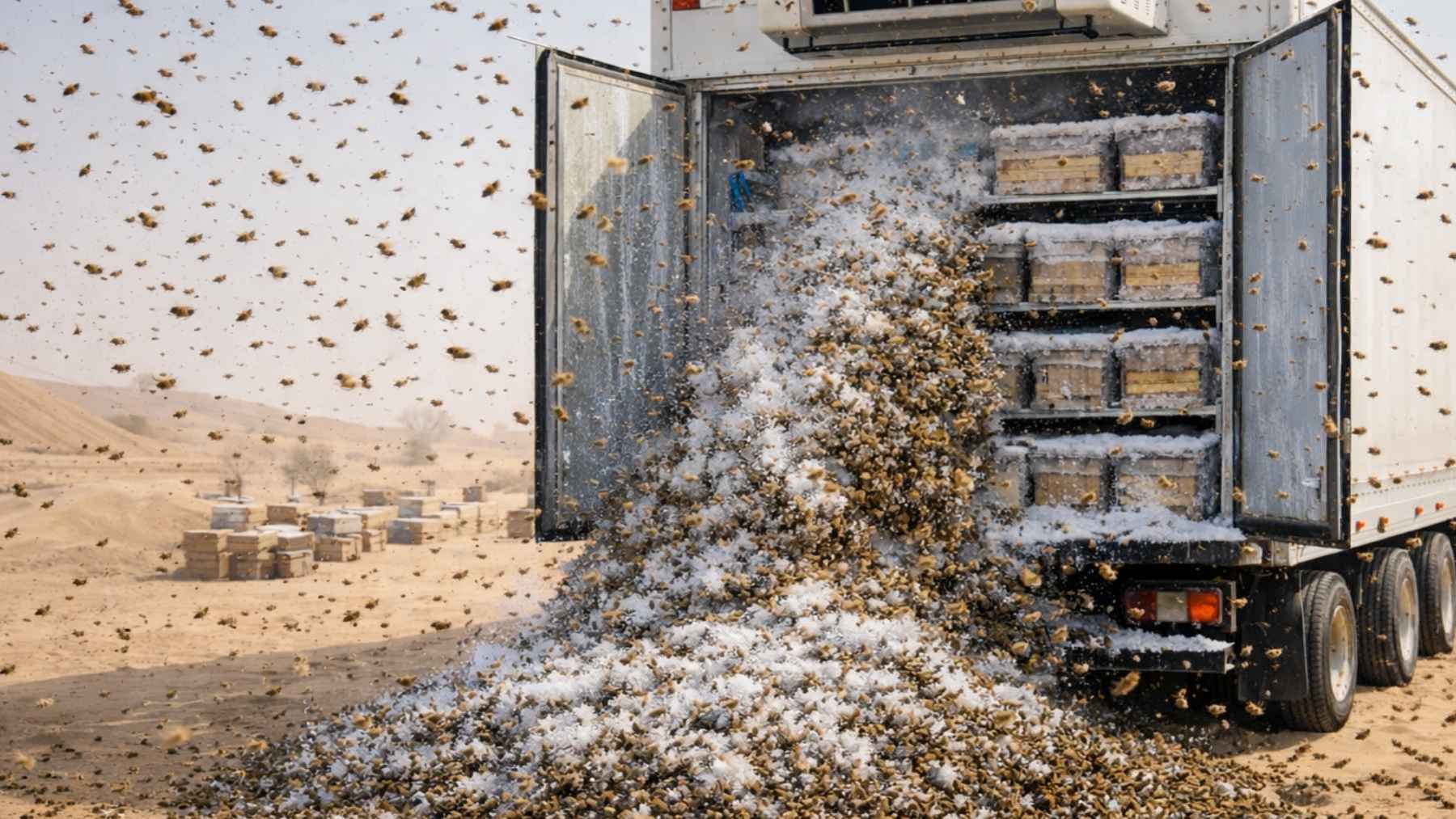
In one of the harshest corners of the planet, the Sahara Desert has quietly put some very big human ideas to the test. First came ambitious belts of trees meant to form a “green wall”, then an even bolder move that shipped in refrigerated hives with millions of bees to jump start pollination and life.
The desert answered with heat, dust and failure. What finally started to work was not high-tech biology, but simple geometry carved into the sand.
When biology met scorching sand
Reports from recent projects describe sand temperatures that can soar past 50 °C and, at times, even higher at the surface, hot enough to soften wax and cook delicate tissues. In these conditions, many mass tree plantings in the wider Sahel saw seedlings die quickly because the soil had hardened into a crust that shed rainwater instead of absorbing it.
The bee experiment ran into the same wall. Hives brought in to “re-green the desert” suffered when the wax combs began to liquefy, the internal structure collapsed and entire colonies overheated. Zoologists who later analyzed the episode say it forced a rethink of decades of efforts that tried to add life on top of soil that could no longer hold water.
Viral stories about “frozen bees” and spectacular hive disasters mix real problems with details that are hard to verify, but the underlying pattern is clear enough. If rain cannot soak in, almost nothing thrives.
Drawing half moons in the sand
That is where the half moon pits come in. Local communities and land restoration programs have been digging shallow, crescent shaped basins, typically two to four meters across and a few tens of centimeters deep, with the open side facing uphill so that every burst of runoff drains into them.
Inside each pit, the crust breaks, water slows down and seeps deeper, and farmers often add manure or compost to feed the soil.
Measurements in Sahel projects suggest that inside these “medias lunas” the ground can be several degrees cooler than the exposed sand around them, which cuts evaporation and creates tiny refuges where hardy grasses, insects, birds and eventually native trees can return.
The Food and Agriculture Organization describes demi‑lune structures as “a quick and easy method of improving rangelands in semi-arid areas”, and the United Nations Convention to Combat Desertification lists them among recommended practices for restoring crusted soils.
What the data say
Scientists estimate that more than 60% of agricultural land in sub-Saharan Africa is now degraded, which drags down crop yields and makes communities more vulnerable to drought.
Evidence from Burkina Faso, Niger and Mali shows that half moon structures can increase water infiltration by up to 70% and cut soil erosion by more than half compared with untreated land.
In some trials, that shift has helped restore grazing areas and improve natural tree regeneration on land that once looked completely barren.
A 2025 case study in northern Nigeria found that previously bare plots fitted with four-meter-wide half moons quickly showed higher soil moisture and visible vegetation recovery after the rainy season. The authors conclude that half moon water harvesting is “a viable, community adaptable approach” for restoring drylands and should be folded into national climate and land policies.
For people far from the desert, this might feel abstract, like something that only matters on the edge of the map. Yet these quiet earthworks are part of the same global push that includes big initiatives such as the Great Green Wall, all trying in different ways to keep soils alive in a hotter world.
At the end of the day, the lesson from the Sahara is surprisingly down to earth. Before we add bees, trees or any other biology, we need to fix how water meets the ground.
The study was published in the International Journal of Agriculture and Earth Science.