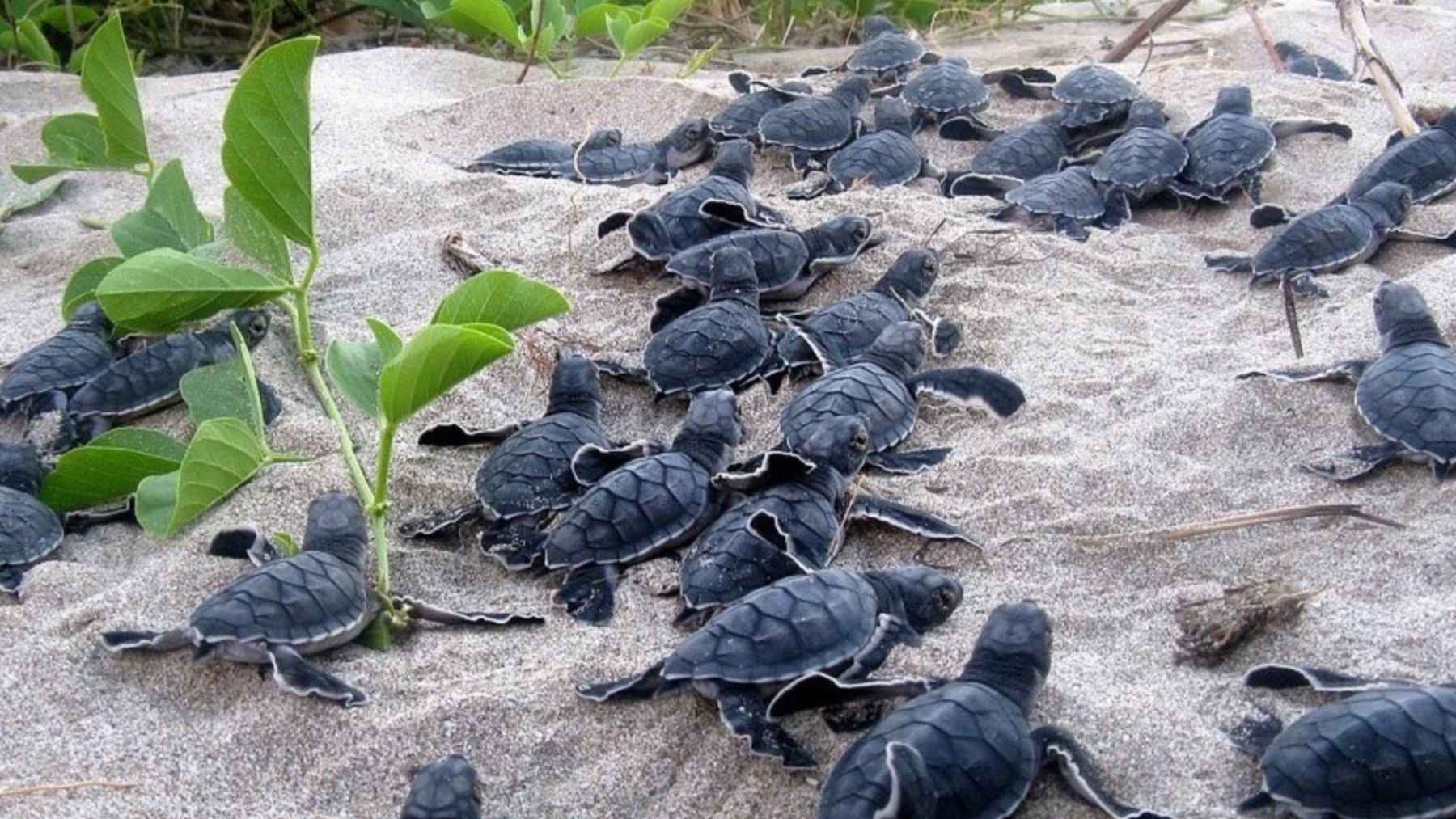
On a nesting beach, more tracks in the sand usually sounds like a win. But a long-running study of loggerhead sea turtles in Cabo Verde, an island nation off West Africa, suggests the picture is more complicated.
Females are showing up to nest earlier than before, but they are producing fewer eggs and they are coming back less often, so is a crowded beach really proof everything is fine?
By tracking individual turtles for 17 years, scientists found that the average gap between breeding seasons doubled from about two years to about four years, while the number of nests and eggs per female fell.
The pattern lines up with warmer surface water near the nesting beaches and with lower productivity in feeding areas off West Africa that leaves turtles with less stored energy. For conservation, it means counting nests is not enough.
A 17-year field record
The new peer-reviewed study, published February 11, 2026, reports results from loggerhead sea turtles nesting on Sal Island in Cabo Verde, based on monitoring from 2008 through 2024. Instead of counting nests once a season, the team tracked individual females across years, which helps separate real biological change from natural ups and downs.
The work brought together researchers from Queen Mary University of London and local conservation groups who patrol nesting beaches night after night. Cabo Verde hosts tens of thousands of nesting females each year, so small shifts in how often each turtle breeds can add up quickly.
Kirsten Fairweather, scientific coordinator at Associação Projeto Biodiversidade, told Oceanographic Magazine that the busy beaches can hide a slowdown because “the turtles are working harder for less return.” That line captures the study’s central point, more activity onshore does not automatically mean healthier reproduction.
Earlier nesting, warmer water
One of the clearest changes was timing. The turtles have been arriving and nesting earlier in the season, a shift scientists call “phenology,” meaning the calendar of life events such as breeding and migration.
In this case, warmer sea surface temperatures were linked to earlier nesting and also to shorter gaps between nests during the same season. The idea is simple, heat can speed up egg development inside the turtle, so the next clutch, or batch of eggs, is ready sooner.
Lead author Fitra Nugraha said the turtles are “adjusting their timing to warmer temperatures,” showing real flexibility. But the study also warns that timing alone cannot carry the population if the turtles arrive with less energy to spend.
Food shortages at sea
Loggerhead turtles are described as “capital breeders.” That means they save up energy during years of feeding at sea, then spend that stored fuel on nesting, a bit like using savings for a big expense.
To estimate how much food was available in the turtles’ West African feeding areas, the researchers used satellite measurements of chlorophyll, the green pigment in microscopic ocean plants. NOAA explains that chlorophyll is a useful way to track phytoplankton, tiny drifting plants that sit at the base of most marine food webs and support everything above them.
Lower chlorophyll levels in those feeding areas lined up with longer breaks between breeding seasons, smaller clutches, and fewer nesting events. In practical terms, less food offshore can mean fewer eggs on the beach, even if the sand is still covered in tracks.
Breeding less often
The biggest red flag was how long females now wait before returning to nest again. Over the 17-year record, the average gap between breeding seasons grew from about two years to about four years.
Even if a turtle starts breeding at a younger age, coming back only half as often can pull down her lifetime egg output. Starting earlier does not automatically offset fewer returns.
When the turtles did return, they tended to lay fewer clutches, meaning fewer separate nests, and each nest held fewer eggs than earlier in the study period. That pattern helps explain why a beach can look busier in one season while the long-term trend is quietly heading the wrong way.
Conservation beyond the beach
Christophe Eizaguirre, the study’s senior author, said “Temperature alone doesn’t tell the full story.” The team argues that protecting nesting beaches remains essential, but it is no longer enough on its own.
Feeding grounds far offshore help decide how many eggs the next generation starts with. If ocean productivity keeps slipping, turtles may need more time to rebuild their energy reserves before they can reproduce again.
That pushes conservation beyond fences and patrols on the sand. Strategies that protect key feeding habitat, reduce accidental capture in fisheries, and limit pollution could matter just as much as keeping nesting beaches safe.
How this fits bigger research
A separate open-access 2025 study in Regional Environmental Change mapped risks to nesting beaches across Cabo Verde using drones, surveying 61 beach segments about 330 feet long. The authors reported that 48% of the surveyed segments faced at least one major threat, including marine debris and light pollution.
These pressures stack on top of broader conservation concerns. The International Union for Conservation of Nature lists loggerhead turtles as vulnerable globally, and its Marine Turtle Specialist Group classifies the North East Atlantic nesting population as endangered.
So what should we watch for in the coming years, more nests, or more eggs per turtle? The new research suggests the second number may tell the truer story, because it points to the ocean conditions the turtles cannot live without.
The main study has been published in Animals.