In a Nature Geoscience paper published February 23, 2026, scientists report that two large “blackwater” lakes in the Democratic Republic of Congo are releasing carbon dioxide linked to peat that accumulated thousands of years ago. Radiocarbon measurements suggest roughly 39 to 40 percent of the lakes’ dissolved inorganic carbon, a direct source of outgassed CO2, originates from surrounding peatlands.
Why does that matter outside Central Africa? Because peatlands are among Earth’s biggest natural carbon stores, and climate models have often treated deep peat carbon as stable unless an obvious disturbance dries it out. This new evidence suggests there may be a quieter, steady leak that has been missing from the “climate math.”
A carbon vault with an unexpected leak
Across the tropics, swamps and wetlands slowly accumulate peat, which stores carbon in partially decomposed plant material. ETH Zurich notes that tropical peatlands in the Amazon Basin, the Congo Basin, and Southeast Asia together store around 100 gigatons of carbon, about 110 billion US tons.
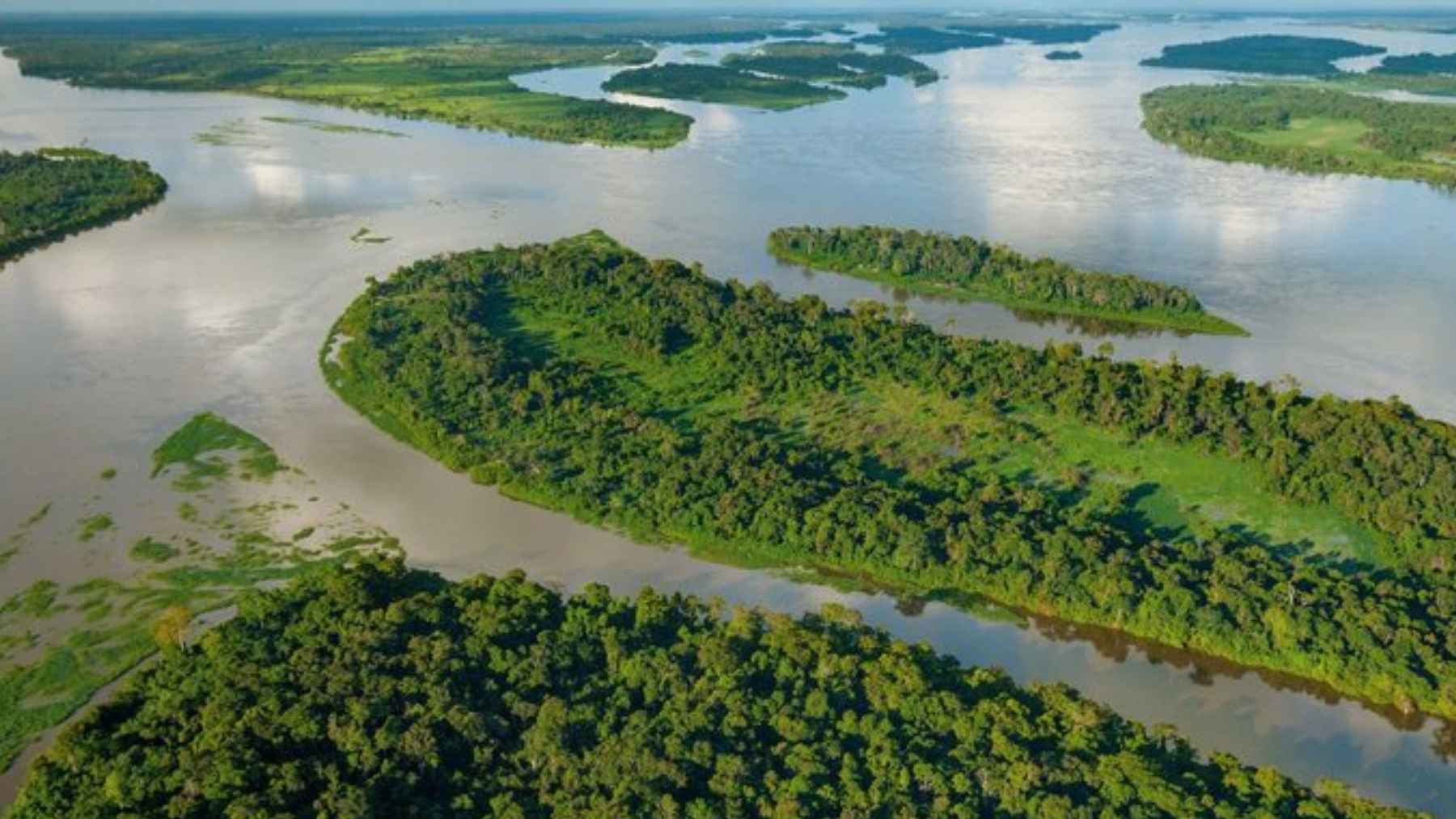
In the central Congo Basin, peatlands and swamps cover only about 0.3 percent of Earth’s land surface, yet they hold about one third of the carbon stored in tropical peatlands. They are hugely important, and also hard to study, with remote sites often reachable only by boat.
The lakes at the center of the story
The research zeros in on Lake Mai Ndombe and Lake Tumba, two humic lakes embedded in this peatland landscape. Mai Ndombe spans about 869 square miles (about 2,250 square kilometers), while Tumba covers about 270 square miles (about 700 square kilometers).
Their dark water is stained by organic compounds that leach out of decaying vegetation and soils, giving the lakes a “strong tea” look described by ETH Zurich. That constant inflow of organic material helps fuel microbial activity and makes these lakes major sources of carbon dioxide to the atmosphere.
Dating the CO2 like a time stamp
To see where the carbon was coming from, researchers analyzed dissolved inorganic carbon in the lake water and used radiocarbon dating as a kind of time stamp. Carbon that recently cycled through living plants looks “modern” in radiocarbon terms, while older carbon shows a depleted radiocarbon signal.
They found mean radiocarbon ages of about 2,170 radiocarbon years for Mai Ndombe and about 3,515 radiocarbon years for Tumba. The team’s isotope mixing estimates suggest ancient peat carbon accounts for about 39 percent of the dissolved inorganic carbon in Mai Ndombe and about 40 percent in Tumba.
How peat carbon may reach the atmosphere
The paper points to a pathway that starts in the peat itself. Microbes appear to respire old carbon within the peatlands, the resulting carbon dioxide is transported to the lakes, and then it escapes to the air through outgassing.
The surprise comes through clearly in the team’s public comments. “We were surprised to find that ancient carbon is being released via the lake,” lead author Travis Drake said, and coauthor Matti Barthel added, “The carbon reservoir has a leak, so to speak, from which ancient carbon is escaping.”
Why the numbers matter for climate models
Climate models and national carbon budgets rely on good accounting. ETH Zurich says tropical lakes and wetlands have been underrepresented in global models, which means some emissions may not be fully captured when scientists simulate the carbon cycle.
The Nature Geoscience authors also offer a sense of scale. Combining their peat contribution estimate with outgassing flux work for Mai Ndombe, they infer that more than about 165,000 US tons of peat carbon per year could be vented by that lake alone (over 150,000 metric tons).
Water levels can change the methane story
Carbon dioxide is only part of the greenhouse gas mix. In parallel work summarized by ETH Zurich, the team also looked at methane and nitrous oxide emissions from Lake Mai Ndombe.
Water level turned out to be a big control knob. When lake levels are high, microorganisms break down methane more effectively, but when levels drop during the dry season, methane is consumed less efficiently and more escapes to the atmosphere.
Dry seasons, deforestation, and a riskier balance
If climate change brings longer, more intense droughts, peat can dry more often and oxygen can penetrate deeper into the soil, accelerating decomposition that releases additional carbon dioxide. ETH Zurich also warns that changes in land use, especially forest conversion to cropland, could worsen drying and help keep lake levels low.
Barthel put it in plain language when describing the water cycle role of forests. “We all know the analogy whereby forests are the green lungs of the Earth,” he said, pointing to how trees recycle moisture that supports clouds and rainfall. It is a reminder that what happens far upstream can echo outward, even into everyday things like heat, storms, and the electric bill.
What scientists want to learn next
A key open question is whether this is a long running natural equilibrium balanced by new peat formation, or a sign the system is moving toward destabilization. Researchers say they still do not know the exact mechanisms that mobilize old carbon from peat into lake water, which makes more field data essential.
For now, the takeaway is simple and a little unsettling. A remote lake can behave like a vent for ancient carbon, and that hidden flow can quietly shift the global balance. Who else is still missing a piece of the puzzle?
The study was published on Nature Geoscience.