If you want to know how a city is doing, you might check an air quality alert on your phone or notice whether parks feel green and alive. Now scientists are floating a stranger idea. What if the best “environment report” is buzzing past you on a flower?
A new study suggests that the intestines of wild bees can work like a living snapshot of urban nature. By reading the DNA inside a bee’s gut, researchers say they can estimate local plant diversity and spot signs of environmental stress that traditional wildlife surveys can miss.
Why bees can track city health
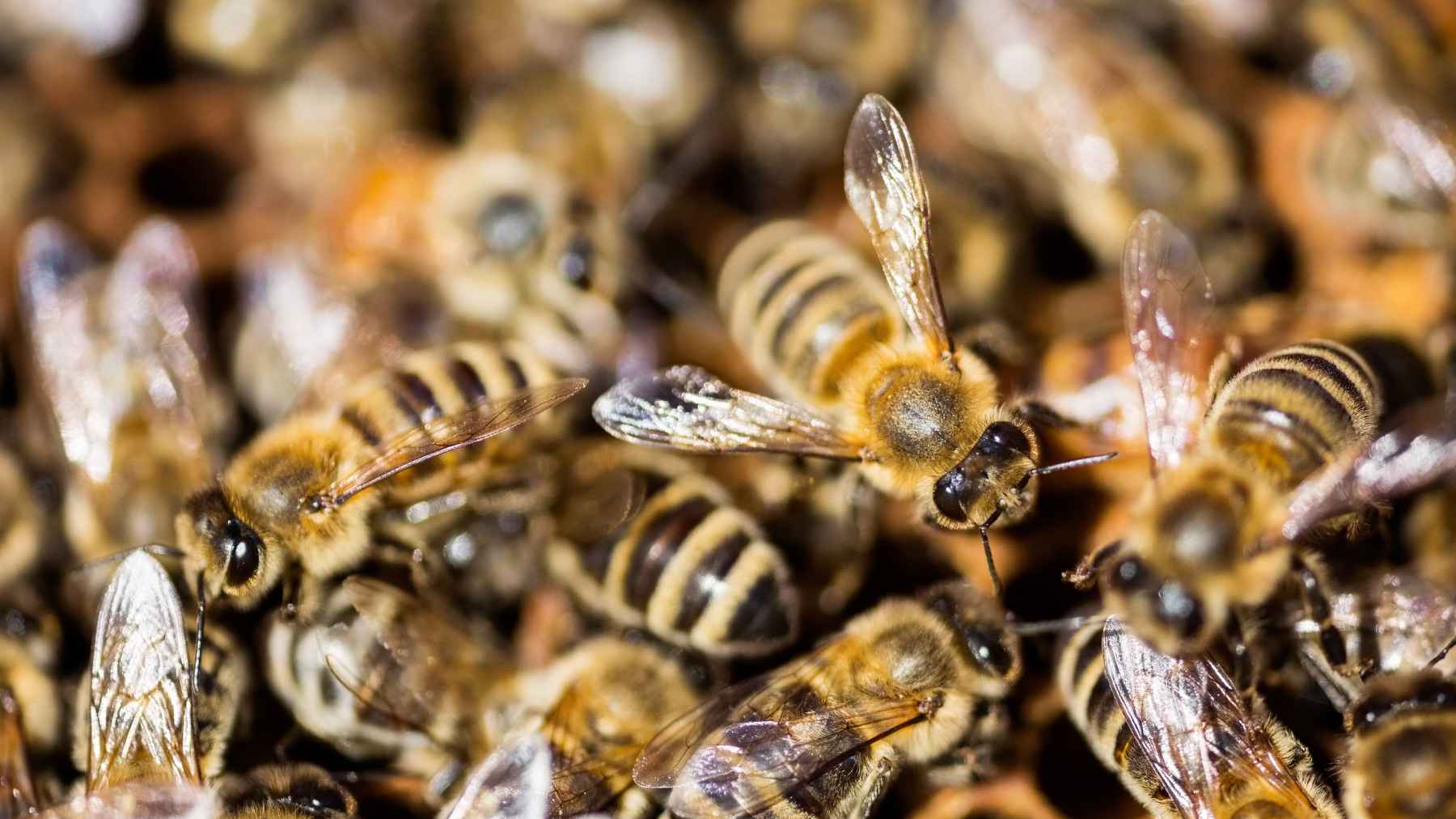
Bees are natural collectors, and not just of pollen. As they fly, they pick up microbes and chemical traces from plants, soil, and water, then carry some of that information back into their bodies and hives. That is one reason scientists have studied honey bees as “biomonitors,” meaning animals that help measure what is happening in the environment.
There are already real-world examples of this idea. In one project led by the University of British Columbia, researchers analyzed honey from city hives and found it could help pinpoint where contaminants like lead were showing up across a neighborhood. It is the same basic logic as checking what ends up in a filter, except the “filter” is a foraging insect.
But honey, pollen, and wax mainly tell you what bees touched and brought home. They do not always show how the bee’s body is responding. That is where the gut comes in, since it reflects both what the insect ate and how its internal microbes are holding up.
Reading a city inside a bee
The new work focused on a solitary mason bee called Osmia excavata, a species that nests alone instead of forming large colonies. Researchers studied these bees across 10 urban agricultural sites in Suzhou, China, then used “shotgun” metagenomic sequencing to read DNA from the full gut sample. In simple terms, it is a wide scan that captures plant DNA, bacterial DNA, and viral DNA all at once.
Metagenomic sequencing is like dumping out a mixed bag of puzzle pieces and using software to figure out which pictures they came from. If the gut contains bits of plant DNA, it can hint at what flowers were available and which ones the bee relied on. If the gut contains certain microbes or viruses, it may also reflect stresses the bee has faced in that area.
This approach is not a direct replacement for air sensors or soil tests. It will not tell you exactly which chemical is on a leaf the way a lab instrument might. But it can reveal patterns that show up when a living creature is pushed, especially when you compare multiple sites side by side.
What the gut DNA revealed
A detailed press release about the research says the results read like a layered report card. The team, led by Min Tang at Xi’an Jiaotong-Liverpool University, found diets dominated by Brassica crops and the ornamental plane tree Platanus, plus site-to-site differences that mirrored local vegetation. The release also reported 173 antibiotic resistance genes, shifts in gut bacteria at two locations, and signs of virus “spillover” that could move between managed honey bees and wild bees via shared flowers.
The same release included a blunt summary from the corresponding author. “Our study shows that the gut of a wild bee can act as a sensitive biological sensor of urban environmental quality.” In the study’s framing, that matters because a city can look green from the sidewalk while still offering limited real food for pollinators.
It also helps explain why two parks can feel similar to people but play very different roles for insects. If most available pollen comes from a narrow set of plants, bees may be forced into a kind of “whatever is around” diet. Over time, that can make urban ecosystems less resilient, even if the trees and lawns look well kept.
What city planners could do next
An official write-up from the research team argues that this kind of gut testing can point to practical fixes. It highlights steps like planting more diverse native flowers instead of relying mainly on ornamental greenery, planning blooms so there are fewer “empty” weeks with little food, and cutting back on chemicals that can disrupt beneficial microbes. It also raises the issue of managing how close managed honey bee hives are to wild bee populations in shared green spaces, since that can increase the chances of pathogen spread.
The first author, Yiran Li, is also quoted in that write-up reflecting on the long path from early results to a publishable study. The bigger takeaway for cities is that pollinator health is not only about having plants, but also about having the right mix of plants at the right times.
For most people, the implications are easy to picture. A more bee-friendly planting plan can mean healthier pollinators, better fruit set in gardens, and fewer headaches for urban farming projects that depend on insects to move pollen. It is not magic, but it is the kind of behind-the-scenes work that can change what thrives in a neighborhood.
The main study has been published in Insect Science.