Coastal flooding risk often comes down to one basic comparison, how high the ocean is compared with the land next to it. A new peer-reviewed analysis suggests many scientific assessments have been using a shaky starting point, which can make some coastlines look safer on paper than they are.
In the study, Katharina Seeger and Philip Minderhoud of Wageningen University & Research reviewed 385 coastal hazard papers published between 2009 and 2025. They report that more than 99% handled sea level and land elevation data in ways that can distort results.
If the “zero line” on a flood map is off by nearly a foot, what happens when future sea level rise is added on top?
A baseline problem hiding in plain sight
Many coastal hazard studies begin by assuming today’s sea level equals a global reference surface; then they project how much higher it might get. The review argues that this shortcut often ignores local measurements, so the baseline sea level used in the math can be lower than the real long-term average along a coast.
Think of it like starting a race with the starting line moved. Even small offsets can change who is counted as “already low-lying” and who is not. That can ripple into decisions like where to raise a road or how high a seawall needs to be.
Why the ocean surface is not flat
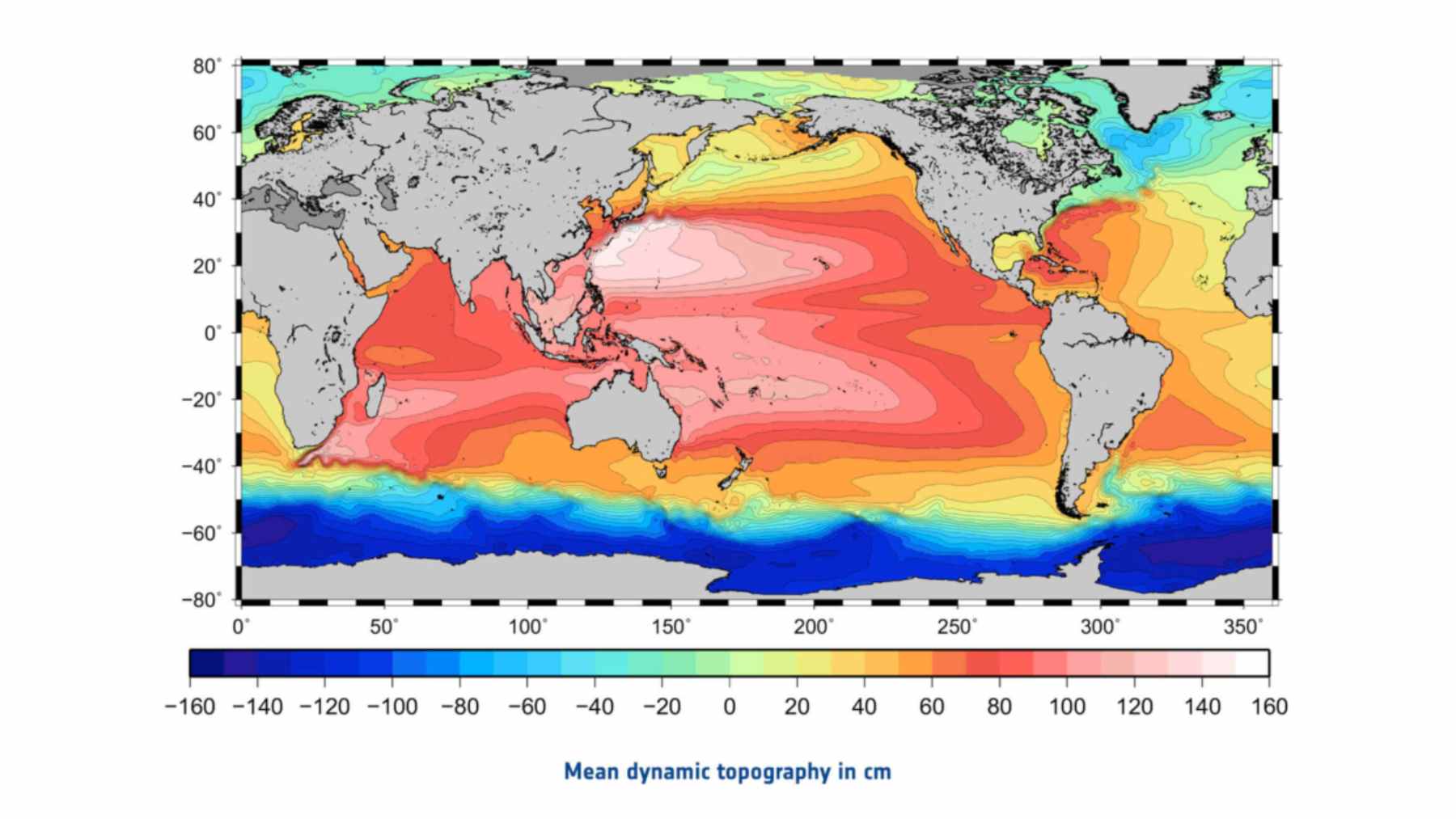
A key term in the paper is the “geoid,” a gravity-based model that approximates mean sea level. You can picture it as the surface the ocean would settle into if there were no currents or winds, just gravity and Earth’s rotation shaping a lumpy baseline.
Real oceans are pushed around by currents, prevailing winds, tides, and the way warm and salty water floats differently than cold and fresh water.
Those forces can keep the sea surface higher in some regions and lower in others for years at a time. To capture that, the researchers used a satellite-based dataset called Hybrid Mean Dynamic Topography, which maps the long-term difference between the geoid and the observed sea surface.
A close look at 385 studies
The review focused on studies that combine sea level information with digital elevation models, or DEMs, which are essentially 3D maps of land height. These datasets are the backbone of many estimates of who and what is exposed to sea level rise, storm surge, or other coastal hazards.
Documentation was a major weak point. In 73% of the papers, information on sea level, land elevation, and the reference frames used was incomplete or missing.
Only about 1% clearly described and correctly carried out the steps needed to align land elevation with local sea level, and only one study in the full set fully documented and avoided alignment errors.
The average gap is about 10 inches
When the team compared measured coastal sea level with two commonly used global geoid models, the global average mismatch was roughly 9 to 11 inches. In other words, the observed sea surface was typically higher than what many assessments implicitly assumed as their baseline.
But the global average hides the hotspots. In many parts of the Global South, measured mean sea level can sit more than 3 feet above a geoid-based assumption, with the largest differences highlighted in Southeast Asia and the Pacific.
In a smaller number of places where geoid performance is poorest, the baseline mismatch reached roughly 18 to 25 feet, which is a reference problem rather than an abrupt ocean jump.
More people could be below sea level
To show why a baseline offset matters, the researchers ran global tests using several modern elevation datasets, including CoastalDEM from Climate Central and FABDEM from the University of Bristol.
They used a hypothetical scenario of 3.3 feet of relative sea level rise, meaning the ocean gets higher compared with the land, whether the water rises, the ground sinks, or both.
With coastal elevations properly tied to measured sea level, the estimated land area below sea level increased by 31 to 37%, moving from about 114,000 to 166,000 square miles to about 178,000 to 259,000 square miles.
The population estimates jumped even more. Under the same scenario, the number of people on land that would sit below sea level rose by 48 to 68%, reaching about 77 million to 132 million people worldwide.
The biggest relative increases were concentrated in Southeast Asia, where the paper reports that proper sea level referencing can nearly double some exposure estimates.
There is a nuance that is easy to miss in headlines. The study is not predicting where floodwater will flow block by block, and it does not account for levees, pumps, or future population growth. It is showing that many assessments may be feeding their models a sea level baseline that is too low, which can understate exposure before any local defenses are considered.
A call for better standards
The authors argue that this is a fixable problem. They want studies to clearly document what sea level reference is being used, what elevation model is being used, and how both are aligned to the same vertical frame. They also suggest journals add practical checklists during peer review, so these steps are not treated as optional details.
To make the workflow easier to repeat, the team released processed global elevation products tied to measured mean sea level through Zenodo. Supporting code is also available, which could help other groups recheck older results instead of rebuilding the method from scratch.
This work does not replace projections of future sea level rise, but it does change how some numbers should be read.
The Climate Change 2023 Synthesis Report from the Intergovernmental Panel on Climate Change projects that sea level will keep rising this century, from about 11 inches to 3.3 feet depending on emissions.
If the local baseline is already higher than many models assumed, especially in data-scarce coastal regions, some risk thresholds could be reached sooner than expected.
The main study has been published in Nature.