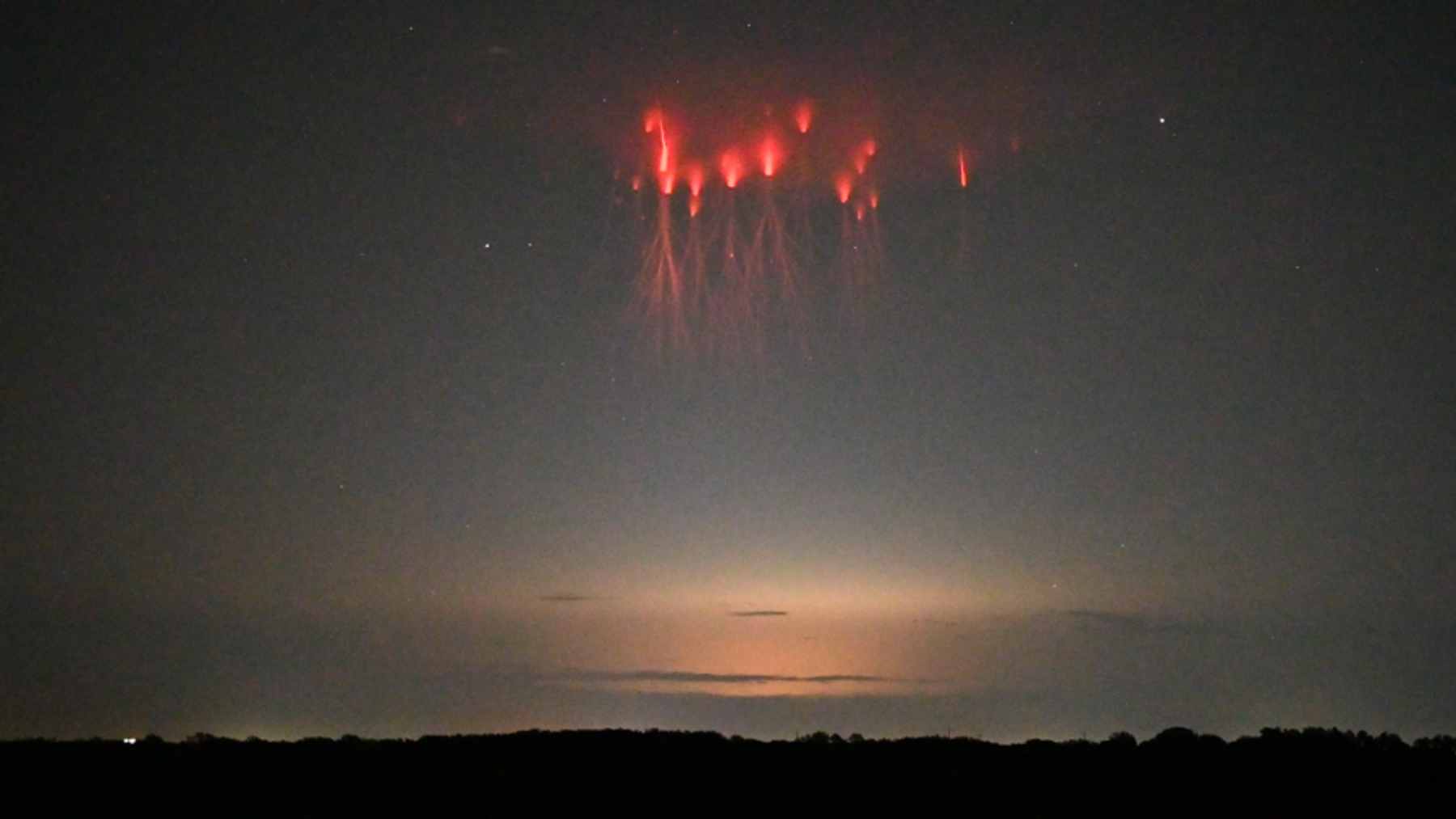
Most of us know storms from the ground. The flash, the thunder, the rain on a window, and maybe a power flicker just when dinner is going in the microwave. But above the clouds, thunderstorms can also fire strange bursts of light toward space.
NASA has highlighted rare images taken from the International Space Station that show these events from orbit. One photo taken by NASA astronaut Nichole Ayers on July 3, 2025, was first thought to show a sprite, but NASA later said it was an even rarer transient luminous event called a gigantic jet.
A hidden storm show
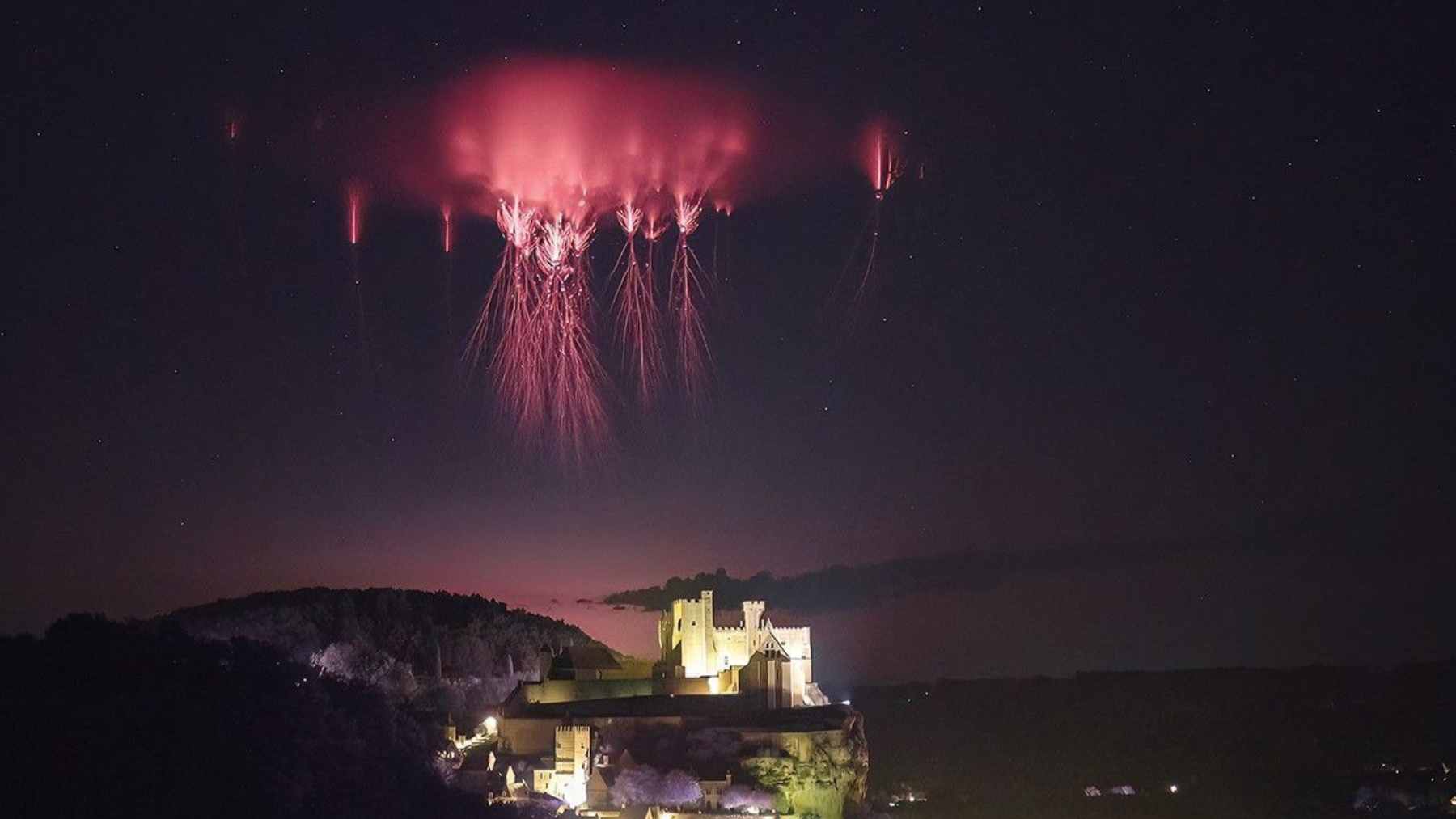
Transient luminous events, often shortened to TLEs, are brief flashes that appear above thunderstorms instead of below them. They include red sprites, blue jets, halos, ELVES, and gigantic jets, names that sound almost mythical but describe real electrical activity high in the atmosphere.
Sprites usually appear as red, jellyfish-like flashes in the mesosphere, about 31 to 53 miles above Earth. Gigantic jets are different because they can rise from the top of a storm cloud toward the upper atmosphere, forming a temporary electrical bridge between the storm and near-space.
Why space matters
From the ground, these flashes are hard to catch. Clouds block the view, the events last only fractions of a second, and the sky must be clear above a distant storm.
The International Space Station changes the game. Orbiting about 250 miles above Earth, it gives astronauts and instruments a clean view of storm tops, where the usual weather map stops and the strange electrical story begins.
The ISS storm lab
A key instrument is the Atmosphere-Space Interactions Monitor, known as ASIM. Built for the European Space Agency and mounted outside the station’s Columbus module in 2018, it studies lightning, TLEs, and terrestrial gamma-ray flashes.
ASIM uses cameras, photometers, and X-ray and gamma-ray sensors to catch flashes too quick for many ground instruments. In practical terms, it is a storm lab bolted to the outside of the space station.
Blue jets and ELVES
One ASIM study caught five intense blue flashes in the top of a storm cloud, including one that produced a blue jet. ESA said blue jets can shoot upward from thunderstorms and reach about 31 miles into the stratosphere in less than a second.
That same event also produced ELVES, which are fast-growing rings of optical and ultraviolet light near the lower ionosphere. That layer helps carry some radio signals, so a flash most people never see may still matter for communication on Earth.
Red sprites caught on camera
Astronaut photography has become part of the science toolkit, too. NASA Earth Observatory reported that one station timelapse from June 26, 2024, captured a large sprite over a storm system as the ISS passed over northern Mexico and parts of the United States.
ESA astronaut Andreas Mogensen also photographed a red sprite through the station’s Cupola during the Thor-Davis experiment. ESA said the Davis camera can capture the equivalent of 100,000 pictures per second, which is the kind of speed needed when the sky blinks and the moment is gone.
A clue for lightning
Why chase these flashes at all? One reason is that they may help scientists understand how lightning begins, a surprisingly stubborn mystery for something so familiar.
NASA says ASIM data has helped show how lightning-like discharges at storm tops can create ELVES and influence the ionosphere. Other ASIM work has examined corona discharges, which are brief electrical bursts near the tops of clouds that may help set the stage for ordinary lightning.
What it means for aircraft
Some thunderstorms also produce terrestrial gamma-ray flashes, bursts of high-energy radiation linked to lightning. NASA notes that these flashes can expose aircraft, aircraft electronics, and passengers to excessive radiation, which is why mapping them matters.
That does not mean every thunderstorm is a hidden radiation emergency. But it does mean pilots, aircraft designers, and weather agencies have a reason to care about events happening far above the cloud tops, especially near powerful storms.
Small satellites join in
The Japan Aerospace Exploration Agency’s Light-1 CubeSat was deployed from the space station to test a compact system for detecting terrestrial gamma-ray flashes. Because these flashes are absorbed by the atmosphere, they are hard to detect from the ground.
NASA says researchers plan to compare Light-1 data with ground observations and lightning maps. Over time, small satellites could help build a better three-dimensional picture of where these invisible bursts happen most often.
More than pretty pictures
NASA’s Spritacular project, led by Dr. Burcu Kosar, invites photographers to share images of sprites and other TLEs. After Ayers captured the July 2025 event, Kosar said she had caught “a rare and spectacular form of a TLE” from the station.
At the end of the day, these images are not just space-station eye candy. They help connect the storm you hear from your porch with radio signals, aviation safety, atmospheric chemistry, and the still-unfinished science of lightning.
The main official work on the ASIM mission has been published in Space Science Reviews.