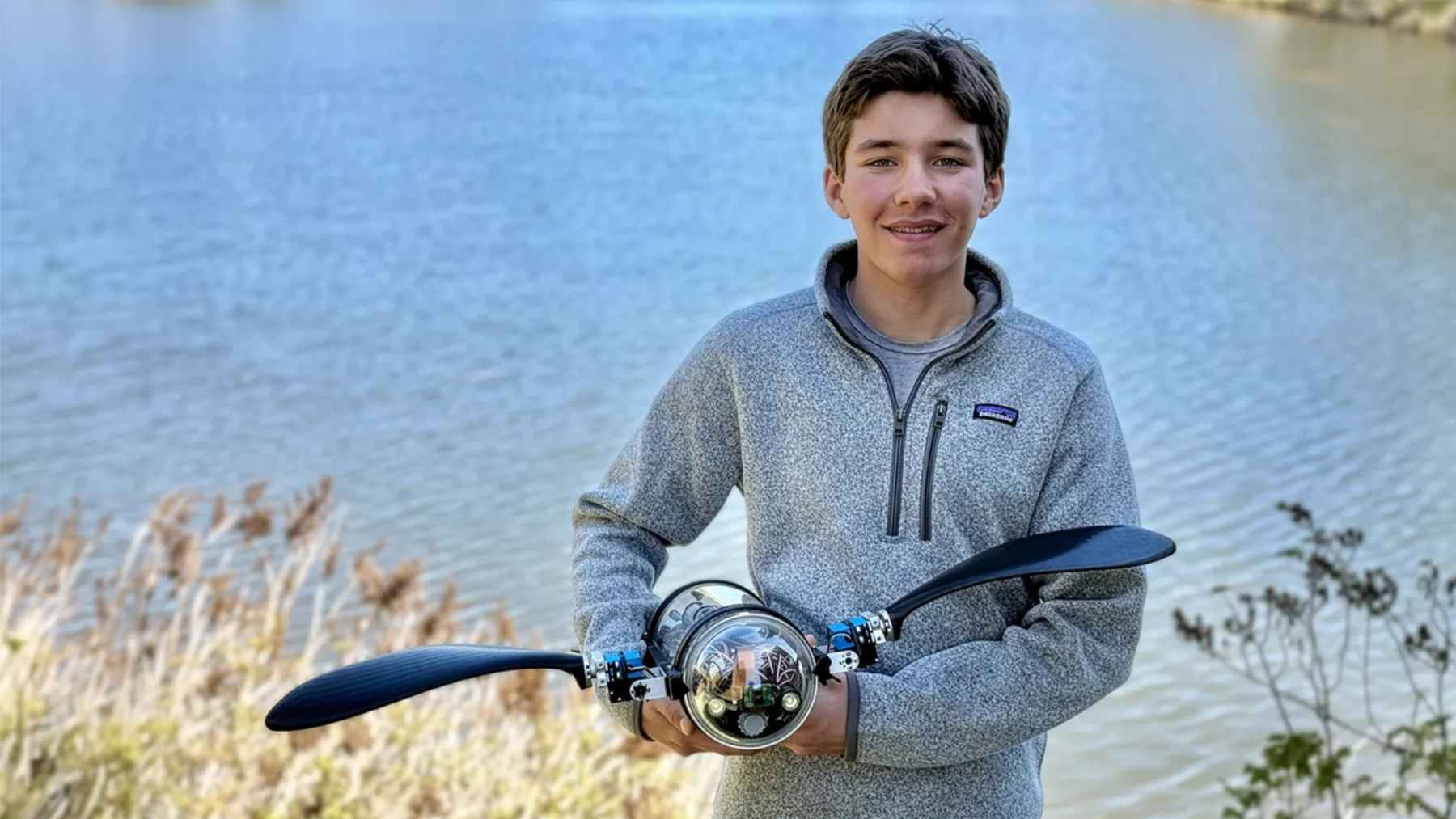
A 15-year-old Canadian student has built a robotic turtle that may point to a quieter, gentler way of watching over underwater ecosystems. The device, known as BURT (Bionic Underwater Robotic Turtle), was created by Evan Budz, a high school student from Ontario, and is designed to move through water by copying the swimming motion of turtles rather than relying on noisy propellers.
The headline number is striking, but it needs a little context. In Budz’s own testing, BURT detected replicated coral bleaching with 96 percent accuracy, using a front-mounted camera, a Raspberry Pi microcomputer, and AI models trained to recognize environmental warning signs.
That does not mean the robot has already solved ocean monitoring, but it does suggest something important. A science fair project can sometimes become a real conservation tool.
A turtle inspired the robot
Budz said the idea began during a camping trip, when he noticed the smooth movement of a snapping turtle in the water. Instead of building another propeller-powered underwater drone, he wanted to copy the animal’s natural motion and reduce disruption in the places scientists are trying to protect.
“When I saw the snapping turtle, it was so graceful, fluidic, and generally non-disruptive,” Budz told Popular Science. That observation became the basis for a robot that uses four flippers, with the front pair providing propulsion and the smaller rear pair helping with stability and steering.
It is a simple idea on the surface. Look at how nature already solved a movement problem, then build around it. In practical terms, that means BURT can glide more like an animal than a machine.
Why quieter monitoring matters
Many underwater drones are useful, but they can also bring noise, propellers, and turbulence into sensitive habitats. That can be a problem in coral reefs, lakes, and shallow freshwater systems, where small disturbances may scare animals or stir up delicate environments.
Budz’s robot is built around biomimicry, which is the practice of designing technology based on living systems. By copying turtle kinematics, BURT tries to collect data without becoming part of the threat. That is the real promise here.
Think of it like walking quietly into a forest instead of driving through it with a loud engine. The goal is not just to see more, but to leave less behind.
How BURT spots danger
BURT uses a camera and AI-based imaging to look for signs of ecological stress, including bleached coral and invasive species. The robot is also set up to follow a predetermined search pattern, so it does not need the kind of tether often used with traditional underwater drones.
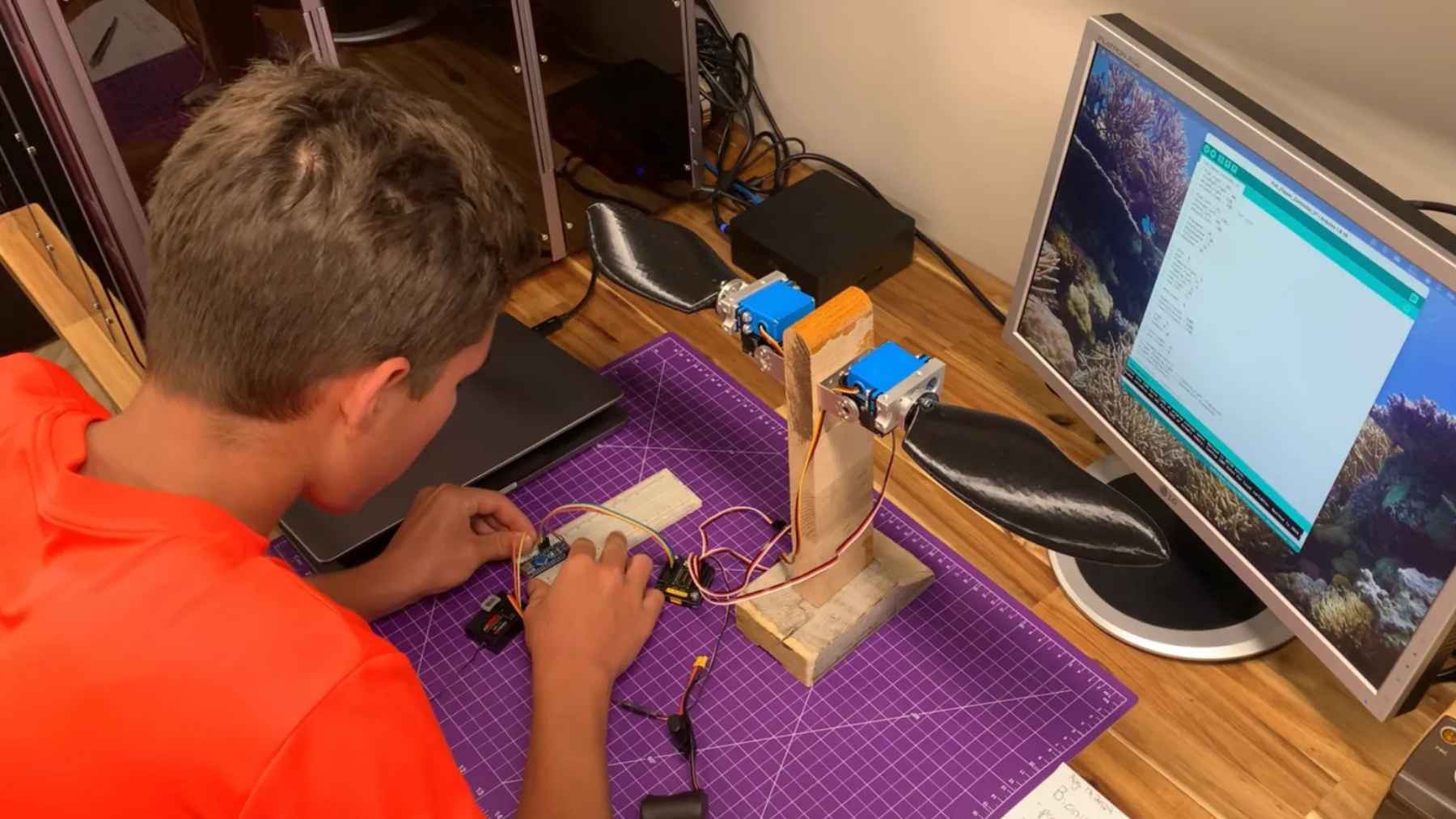
During testing, Budz created simulated coral reef models and taught the robot to recognize what coral bleaching and other threats look like. Most of that testing took place in his grandparents’ backyard pool, which is just over 8 feet deep, before the robot was also tested in Lake Ontario.
That detail matters. A backyard pool is not the open ocean, and real habitats are murkier, messier, and far less predictable. Still, a 96 percent result in simulated coral bleaching tests is a strong starting point, especially for a prototype built by a teenager.
Small robot, big potential
BURT weighs about 11 pounds and can swim for up to eight hours on a lithium battery. It also has a solar panel that could extend its operation, and Budz has set its current pace at about 0.5 miles per hour, which is close to the natural swimming speed of turtles.
That slower movement may sound modest, but for environmental monitoring it can be a strength. Conservation is often less about speed and more about steady observation, especially when researchers need to detect changes before they become widespread damage.
There is also an accessibility angle. Budz used off-the-shelf components and accessible materials, showing that meaningful environmental technology does not always have to begin inside a multimillion-dollar lab.
From coral bleaching to microplastics
The project has already moved beyond its original form. Youth Science Canada reported in May 2026 that Budz received the $50,000 Gordon E. Moore Award for Positive Outcomes for Future Generations at the Regeneron International Science and Engineering Fair.
His newer work transformed the sea turtle robot into a real-time microplastics detection platform using a 3D holographic camera system powered by AI.
Microplastics are a natural next target. They are tiny, widespread, and difficult to track in real time, yet they increasingly shape conversations about water quality, marine life, and human health. A robot that can move quietly and collect visual data could help researchers follow those particles more closely.
Budz has also added front lights for murky waters and an ultrasonic transducer to help detect obstacles. That’s where the project starts to look less like a clever school build and more like a platform that can keep improving.
Awards and next steps
BURT has already earned major recognition, including first prize at the European Union Contest for Young Scientists in Latvia in 2025 and recognition through Canada’s national STEM fair network. Youth Science Canada also highlighted Budz as a Grade 10 student from Burlington, Ontario, in connection with his 2026 ISEF project.
Still, the next challenge is the hardest one. BURT needs more testing in real aquatic environments, where currents, debris, changing light, and wildlife can complicate even the best lab or pool results.
For now, the robotic turtle offers a hopeful glimpse of what low-impact environmental monitoring could look like. Not louder. Not bigger. Just smarter, quieter, and inspired by an animal that already knows how to move through water.
The official statement was published on Youth Science Canada.