Have you ever wondered how a narrow strip of sea can affect fuel prices, shipping routes, and even the electric bill? That is exactly what is happening around the Strait of Hormuz, where rising tension has pushed Saudi Arabia and Egypt to look harder at old infrastructure with new urgency.
Saudi Aramco says its East-West Pipeline reached its maximum capacity of 7 million barrels per day in the first quarter of 2026, sending more crude toward Saudi Arabia’s Red Sea coast instead of relying only on Gulf export routes.
Now, attention is shifting to Egypt’s SUMED pipeline, a 199-mile corridor that can move crude from the Red Sea to the Mediterranean and give Europe another way to receive oil without putting every tanker through the same chokepoints.
Why Hormuz matters so much
The Strait of Hormuz sits between Iran and Oman, linking the Persian Gulf with the Gulf of Oman and the Arabian Sea. The U.S. Energy Information Administration (EIA) has repeatedly called it one of the world’s most important oil chokepoints because so much petroleum has to pass through it.
In 2024, about 20 million barrels per day moved through Hormuz, equal to roughly 20% of global petroleum liquids consumption. In the first quarter of 2026, EIA data put total oil flows through the strait at 14.6 million barrels per day, showing how quickly disruption can change the global map.
That sounds distant, but it is not. When oil routes tighten, the effects can show up in freight costs, fuel prices, and the price of moving almost everything people buy.
Saudi Arabia turns west
Saudi Arabia’s East-West Pipeline, also known as Petroline, stretches about 746 miles from the kingdom’s oil-producing east to Yanbu on the Red Sea. Aramco’s latest results said the line had been sharply ramped up to its 7 million barrel-per-day maximum in Q1, supporting exports from Saudi Arabia’s west coast.
Aramco President and CEO Amin H. Nasser called the pipeline a “critical supply artery” in a complex geopolitical environment. That short phrase says a lot, because the line is no longer just a backup route on a map.
Getting oil to Yanbu, however, is only part of the story. From there, Saudi crude still needs a safe and efficient path toward buyers, especially in Europe.
Why SUMED is suddenly central
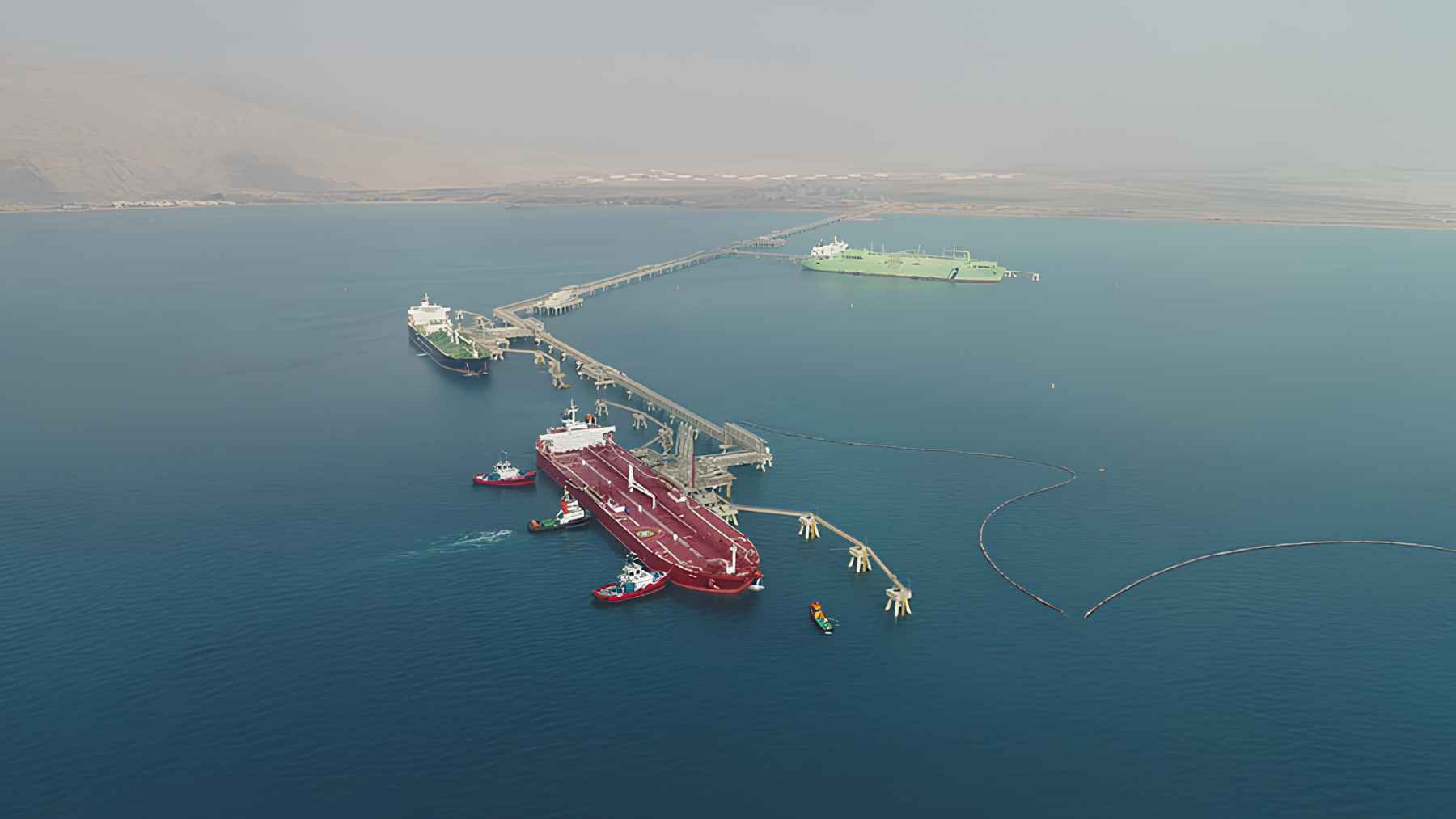
This is where Egypt’s SUMED pipeline comes in. Egypt’s petroleum minister, Karim Badawi, said Cairo has the capacity to move Saudi crude loaded at Yanbu across the Red Sea and onward through the SUMED pipeline and its terminals to the Mediterranean.
SUMED’s own facilities page describes two 42-inch pipelines running 199 miles from Ain Sukhna on the Red Sea to Sidi Kerir near Alexandria on the Mediterranean. The system also includes major storage at both ends, with about 18.4 million barrels of capacity at Ain Sukhna and about 19.5 million barrels at Sidi Kerir.
The EIA says the SUMED pipeline can move 2.5 million barrels per day. That does not replace Hormuz, not even close, but it can act like a pressure valve when shipping lanes are strained.
The route changes the risk
The key advantage is simple. Crude can travel across Saudi Arabia by pipeline, move by tanker over a shorter northern Red Sea leg, enter SUMED at Ain Sukhna, and reach the Mediterranean without needing the full sea journey through more exposed routes.
That matters because the Red Sea has already shown how fragile shipping can be. The EIA reported that oil flows through Bab el-Mandeb fell sharply in 2024 after Houthi attacks on commercial ships, with some vessels choosing the longer and costlier route around Africa.
Still, there is no magic pipe that removes all danger. A pipeline can reduce exposure to certain sea lanes, but it cannot erase geopolitical risk, port risk, or the larger climate issue tied to moving millions of barrels of crude every day.
A strategic hub, not just a pipeline
SUMED is also more than a buried line through Egypt. Its official history shows how the company has expanded from crude transfer into storage, petroleum products handling, LNG-related infrastructure, and other energy hub activities over several decades.
Saudi Aramco owns 15% of SUMED, while Egypt’s EGPC owns 50%, with Kuwait, the UAE, and QatarEnergy also listed among shareholders. That ownership mix gives the project a regional weight that goes beyond one country’s export problem.
SUMED is effectively becoming a piece of energy insurance. Not perfect insurance, but insurance all the same.
The environmental lesson
For an environmental audience, the uncomfortable truth is that this story has two layers. On one hand, rerouting oil through pipelines can reduce some long shipping detours, lower some immediate security exposure, and help prevent sudden energy shocks.
On the other hand, building resilience around oil routes still means protecting fossil fuel flows. That is useful for short-term stability, but it does not solve the deeper problem of dependence on fuels that add carbon dioxide to the atmosphere.
At the end of the day, the cleanest way to reduce pressure on Hormuz, Bab el-Mandeb, or SUMED is not only to build more backup routes. It is to need fewer emergency oil routes in the first place, through efficiency, renewables, cleaner transport, and less fuel wasted in traffic jams, shipping delays, and overheated power grids.
What happens next
SUMED is unlikely to steal Hormuz’s global role. The numbers are too different, with Hormuz historically moving around 20 million barrels per day and SUMED able to handle 2.5 million barrels per day.
Yet it may steal some attention. In a world where one blocked sea lane can ripple through markets, a 199-mile pipeline across Egypt suddenly looks less like old infrastructure and more like a strategic bridge.
The official report was published on the U.S. Energy Information Administration’s website.