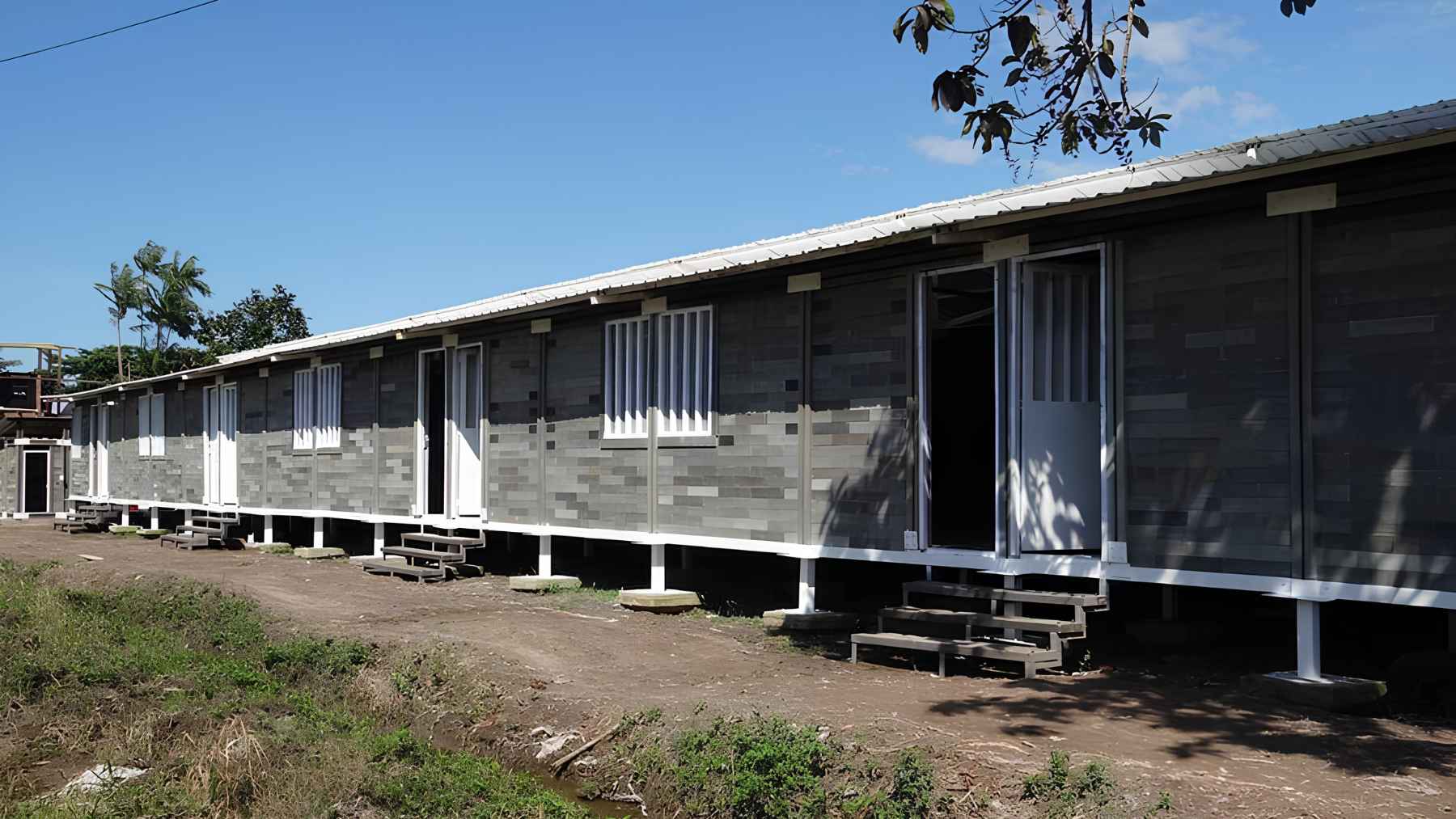
house built in five days sounds like one of those construction promises that belongs in a sales brochure. Yet the recycled plastic brick system developed by Colombia’s Conceptos Plásticos has already moved beyond the idea stage, using modular blocks that fit together quickly and turn discarded plastic into walls, classrooms, shelters, and homes.
The twist is important. Recent coverage has presented the technology as a 2026 construction trend, but the official record shows a longer story. This is less about a brand-new invention and more about a building method getting a second wave of attention at a time when housing costs, plastic pollution, and faster construction are all pressing at once.
Not quite a 2026 invention
Conceptos Plásticos says it was born in Colombia in 2010 with the goal of proving that plastic waste could become more than a problem. Today, the company describes its work as turning recycled plastic into sustainable, durable building materials for housing systems and other construction elements.
That matters because it changes the headline slightly. The real news is not that plastic bricks suddenly appeared in 2026, but that a modular idea once seen as unusual is now being discussed as a practical tool for cheaper and faster building.
How the plastic bricks work
The system uses recovered plastic that is processed into blocks and construction pieces. In UNICEF’s Côte d’Ivoire project, the bricks are made from non-PVC plastic, and the organization says the material is easy to assemble, durable, waterproof, insulated, and designed to resist heavy wind.
Think of it less like laying a traditional brick wall and more like putting together a very serious set of interlocking blocks. That simple fit is why the method can reduce labor and speed up assembly, especially in places where hauling cement, bricks, and heavy tools is expensive or slow.
Why five days matters
UNICEF’s official press release says a family house can be built by four people in five days, even without construction experience. That is a striking claim, especially for communities where waiting months for a safe roof is not just inconvenient, but dangerous.
In practical terms, that means speed becomes part of the value. A small home, a shelter, or a classroom can go up quickly, with fewer specialized workers and less disruption than a conventional job site full of dust, noise, trucks, and piles of wasted material.
The environmental math
Plastic waste is the other half of the story. UNICEF said Abidjan alone produces more than 280 metric tons of plastic waste each day, which is about 309 U.S. tons, and only around 5 percent of it is recycled.
The factory supported by UNICEF and Conceptos Plásticos was designed to recycle 9,600 metric tons of plastic waste per year, or roughly 10,580 U.S. tons. That plastic would otherwise risk ending up in landfills, waterways, streets, or drainage systems, where it can make flooding and sanitation problems worse.
Cheaper, lighter, faster
UNICEF reported that the bricks are 40 percent cheaper and 20 percent lighter than conventional building materials. Lighter walls can make transportation easier, and cheaper materials can make a real difference when families, schools, or local governments are counting every dollar.
Still, “cheaper” does not mean “simple everywhere.” Building codes, permits, insurance rules, fire standards, and local engineering requirements can decide whether a plastic brick home is approved or stuck on paper.
What buyers should check
Before anyone imagines ordering a plastic house the way they order furniture, there are questions to ask. Does the system meet local building codes? Has it been tested for fire safety, UV exposure, heat, storms, and long-term structural performance in that specific climate?
Comfort matters too. A wall may be waterproof and quick to assemble, but homeowners still need good ventilation, safe wiring, acoustic comfort, and insulation that works during sticky summer heat or cold winter nights. At the end of the day, a home has to feel livable, not just innovative.
From shelters to schools
The strongest proof so far may be in classrooms. UNICEF partnered with Conceptos Plásticos to build recycled plastic brick classrooms in Côte d’Ivoire, where a shortage of school space left many children in overcrowded rooms.
UNICEF Côte d’Ivoire now lists 262 classrooms built, about 1,441 metric tons of plastic recycled, or roughly 1,589 U.S. tons, and 13,100 children in school through the project. That is not a small pilot anymore.
Plastic homes and the next test
There is real promise here, but there is also a fair warning. Recycled plastic bricks can help lock waste into useful infrastructure, but they do not solve plastic overproduction by themselves.
The best version of this idea is not a magic replacement for every brick, beam, or concrete foundation. It is a tool. Used carefully, tested properly, and matched to the right setting, it could turn part of the plastic problem into walls that people actually need.
The official press release was published on UNICEF.