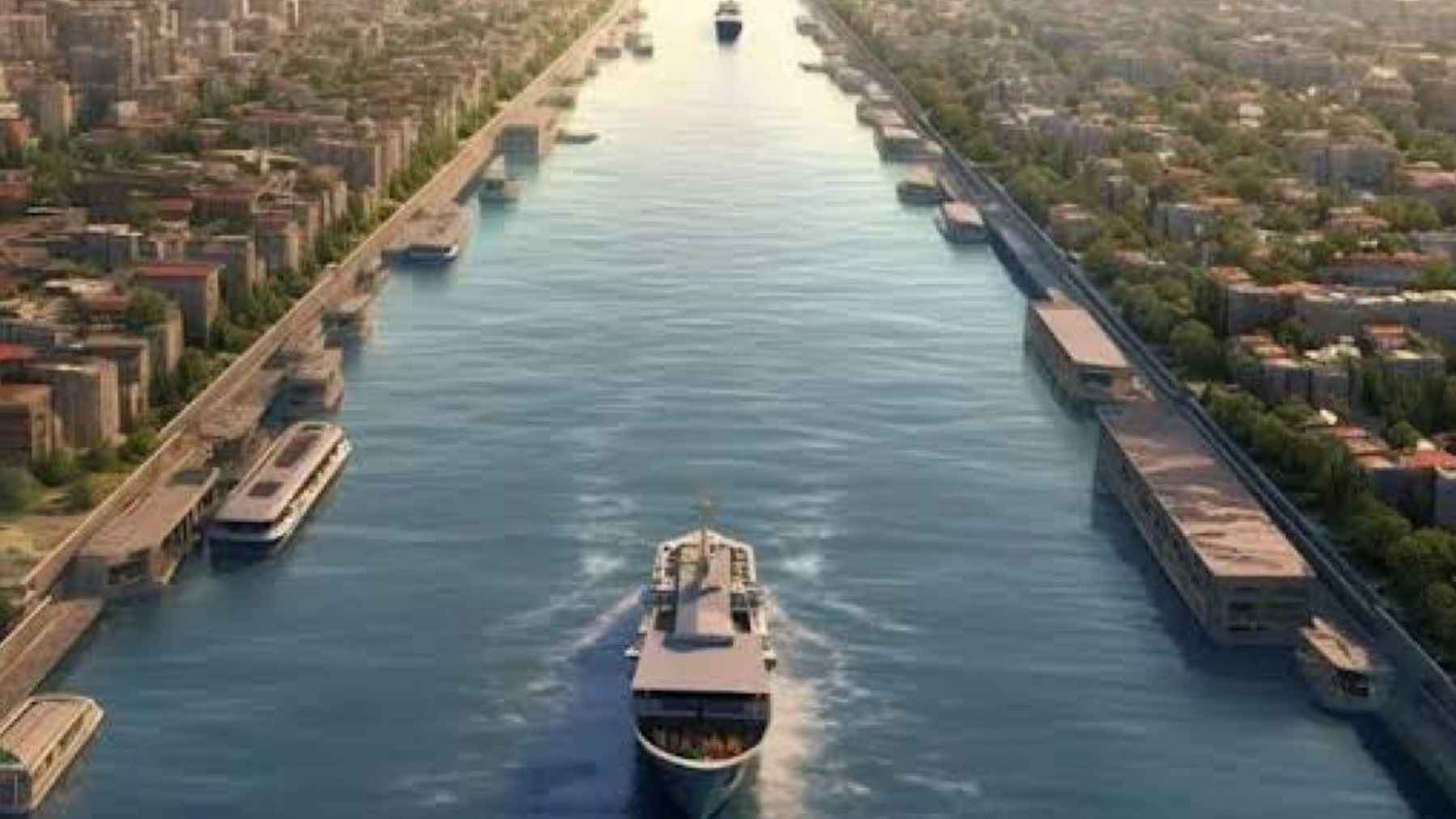
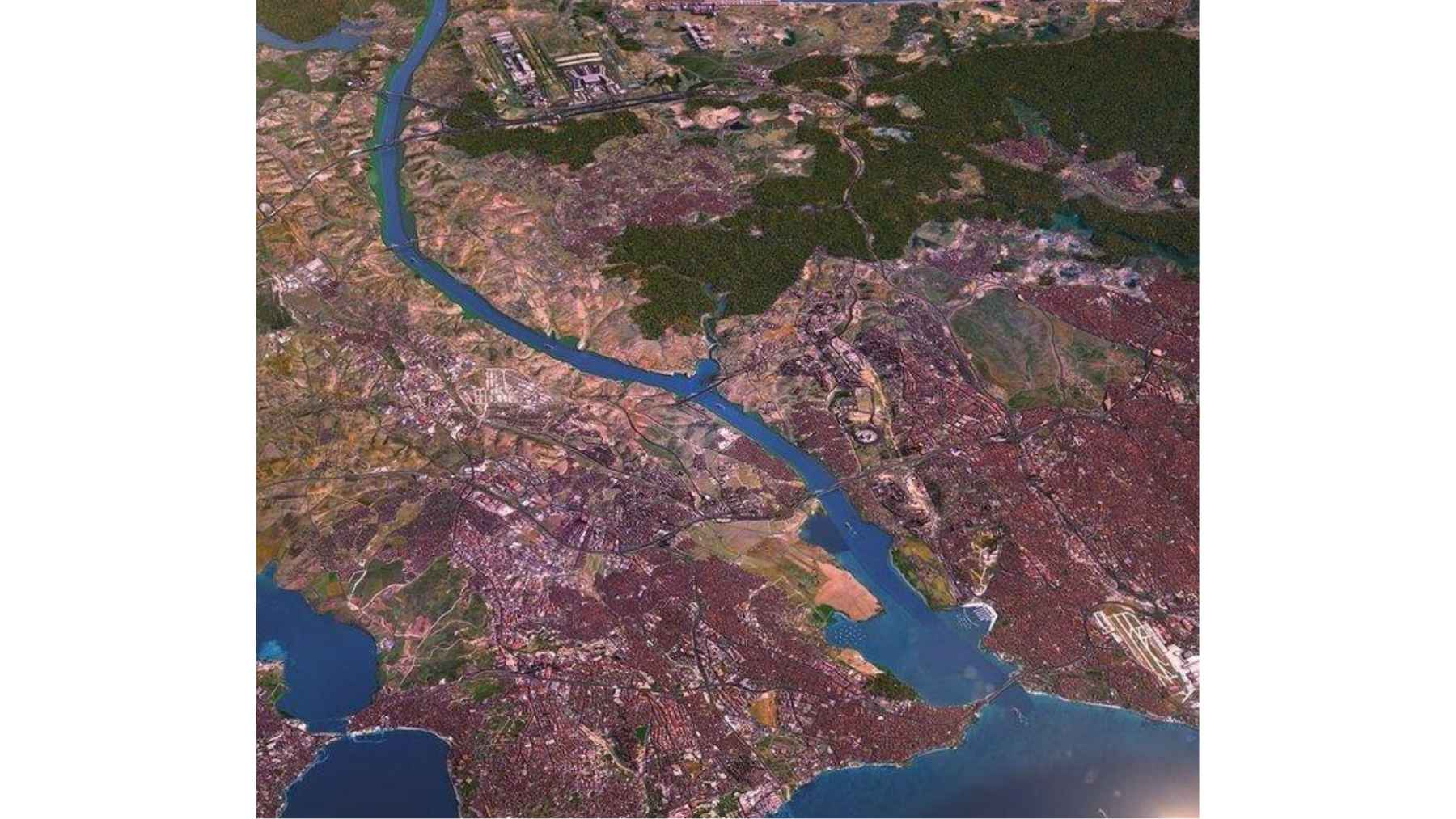
Istanbul could one day have a second major waterway beside the Bosphorus, the natural strait that already carries ships between the Black Sea and the Sea of Marmara. The proposed Canal Istanbul would be a man-made route about 28 miles long, roughly 68 feet deep, and at least 902 feet wide at its base.
On paper, it sounds simple. Dig a new channel, move some ships away from the crowded Bosphorus, and reduce the danger of a tanker accident near millions of people. Still, the project has become something much bigger than a traffic fix, with questions over money, water supplies, marine life, and the political future of Turkey’s largest city.
A second route for ships
Canal Istanbul, also known as Kanal Istanbul, would run through the European side of the city. Its planned route follows the Küçükçekmece Lake, Sazlıdere Dam, and the eastern side of Terkos before reaching the Black Sea.
A canal is different from a strait. A strait is a narrow natural passage between two larger bodies of water, while a canal is dug by people, like a giant water road built into the land. This one would let ships move between the Black Sea and the Sea of Marmara without using the Bosphorus.
Why Ankara wants it
The Turkish government says the Bosphorus is under heavy pressure from modern shipping. Its official project site says about 43,000 ships pass through the strait each year, while its narrowest point is about 2,290 feet across and large vessels can wait an average of 14.5 hours.
Think of it as a traffic jam, but with tankers instead of cars. There are sharp turns, strong currents, city ferries crossing the route, and neighborhoods sitting right next to the water. A serious crash there would not just delay cargo, it could threaten homes, historic sites, and the sea itself.
The price is blurry
The money question is where the story gets messy. The official Canal Istanbul site lists total project cost at $15 billion, while Reuters reported in May 2025 that the initiative was estimated at 75 billion Turkish lira, or about $1.95 billion at the exchange rate cited at the time.
That wide gap matters. Big infrastructure projects often grow beyond the first number, especially when they include roads, bridges, ports, and new urban zones. For ordinary people, that means a simple question. What else could the same money pay for?
Work has moved slowly
The project was formally pushed forward with a first bridge foundation in 2021, but the canal itself has not advanced at a steady pace. Reuters reported that the plan had been shelved in recent years because of economic turmoil, lack of financing, and public opposition.
Transport Minister Abdulkadir Uraloğlu gave the clearest recent signal when he said, “We have not abandoned the Kanal Istanbul project.” He also tied its future to finding the right financing. That is not exactly a green light. It is more like a door left open.
More than a waterway
The project is not just about ships. Government materials list additional features, including a yacht marina, container ports, a recreation area, a logistics center, breakwaters, emergency mooring areas, tugboat facilities, and vessel traffic systems.
That turns Canal Istanbul into a plan for a new economic corridor, not just a channel full of seawater. At the end of the day, what it is trying to do is reshape part of Istanbul’s northern edge around transport, trade, and real estate. That is why the debate has become so intense.
Black Sea stakes
The canal would sit near one of the world’s most sensitive maritime neighborhoods. Ships moving from Black Sea ports toward the Mediterranean already depend on the Turkish Straits system, and that route has become even more important since Russia’s full-scale invasion of Ukraine in 2022.
There is also a legal backdrop. Turkey says Canal Istanbul would not damage the Montreux Convention of 1936, which regulates passage through the Turkish Straits and sets special rules for warships. Still, the fact that this question keeps coming up shows how a local construction project can quickly become a foreign-policy issue.
Environmental concerns
The biggest fear is not only what happens above the water, but what changes underneath it. A 2026 peer-reviewed study by Seval Sözen and Derin Orhon of Istanbul Technical University examined possible effects on the Sea of Marmara, including wastewater pollution, dredging, water source damage, and salinization, which means saltier water moving where it should not.
The government rejects the claim that the canal would leave Istanbul thirsty. Its official explanation says Canal Istanbul would reduce the city’s total water reserve by about three percent, and argues that other dam projects could offset the loss.
Critics are not convinced. They warn that Istanbul is already under pressure from population growth, urban sprawl, hotter summers, and rising demand for water. Anyone who has lived through a dry season knows the feeling. Water security is not an abstract issue when taps, gardens, and bills are involved.
Erdoğan’s political bet
President Recep Tayyip Erdoğan first announced the canal idea in 2011, when he was prime minister. At the 2021 bridge ceremony, he described the project as a way to protect life, property, and the historic fabric of the Bosphorus, while also strengthening Turkey’s role in global trade.
Opponents see a different picture. They argue that Turkey should put money first into safer housing, earthquake-resistant infrastructure, and water protection, especially in a city facing serious seismic risk. The official environmental impact assessment was approved in 2019, but public concern has never really gone away.
What happens next
For now, Canal Istanbul remains a project with a huge political profile and an uncertain construction timeline. Some related bridge, housing, and infrastructure works may continue around the route, but the core question is still financing.
If the canal is built, it could change shipping, land use, and daily life across northern Istanbul for generations. If it stalls, it will remain a symbol of a bigger argument over how modern cities balance growth, safety, water, and nature.
The main study has been published in the Journal of Waterway, Port, Coastal and Ocean Engineering