What if the next major source of materials for batteries, vehicles, electronics, and clean-energy equipment is not buried beneath a mountain, but already moving past nearly every coastline? Researchers at Pacific Northwest National Laboratory (PNNL) estimate that just 0.1% of Earth’s seawater contains enough critical minerals such as magnesium and lithium to meet humanity’s needs for 50,000 years or more, assuming those materials could be fully extracted.
That assumption is the heart of the story. The ocean holds an enormous mineral inventory, but most valuable elements are so diluted that processing the necessary water would consume too much energy and money to make it profitable. This is why the Pacific Northwest National Laboratory (PNNL) is testing three connected approaches involving magnesium recovery, desalination brine, and mineral-accumulating seaweed.
The ocean’s hidden inventory
A pool of seawater large enough for the Olympics, holding roughly 600,000 gallons, would contain about 2,980 kg. of magnesium. The same water would hold only 0.42 kg. of lithium and 0.00095 kg. of nickel–less nickel than the weight of a typical paper clip.
That contrast explains both the promise and the problem. Seawater chemistry is relatively consistent around the world, but low concentrations mean researchers must recover several useful products from the same flow of water rather than pump vast volumes for a single trace metal.
A simpler magnesium route
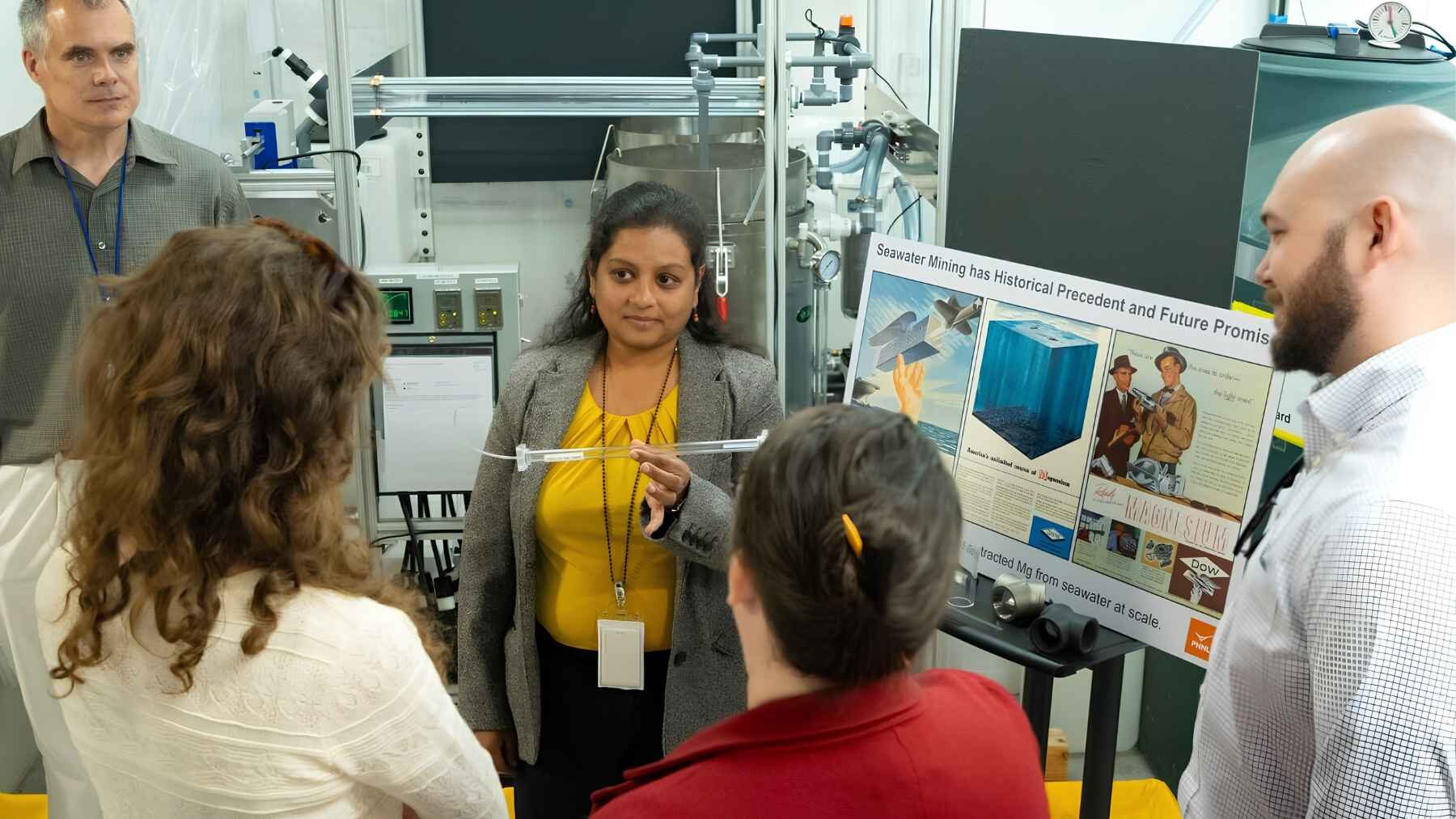
PNNL’s first approach targets magnesium, the easiest prize in this watery mineral bank. In a peer-reviewed study, researchers flowed seawater beside sodium hydroxide, creating a narrow reaction boundary where high-purity magnesium hydroxide formed while a thin, solid layer limited calcium contamination.
The method avoids several purification stages used in the traditional Dow process, and PNNL says it can remove at least four steps. Instead of continuing all the way to magnesium metal, the team stops at magnesium hydroxide, a commercially useful material that the United States primarily imports.
Desalination plants could do double duty
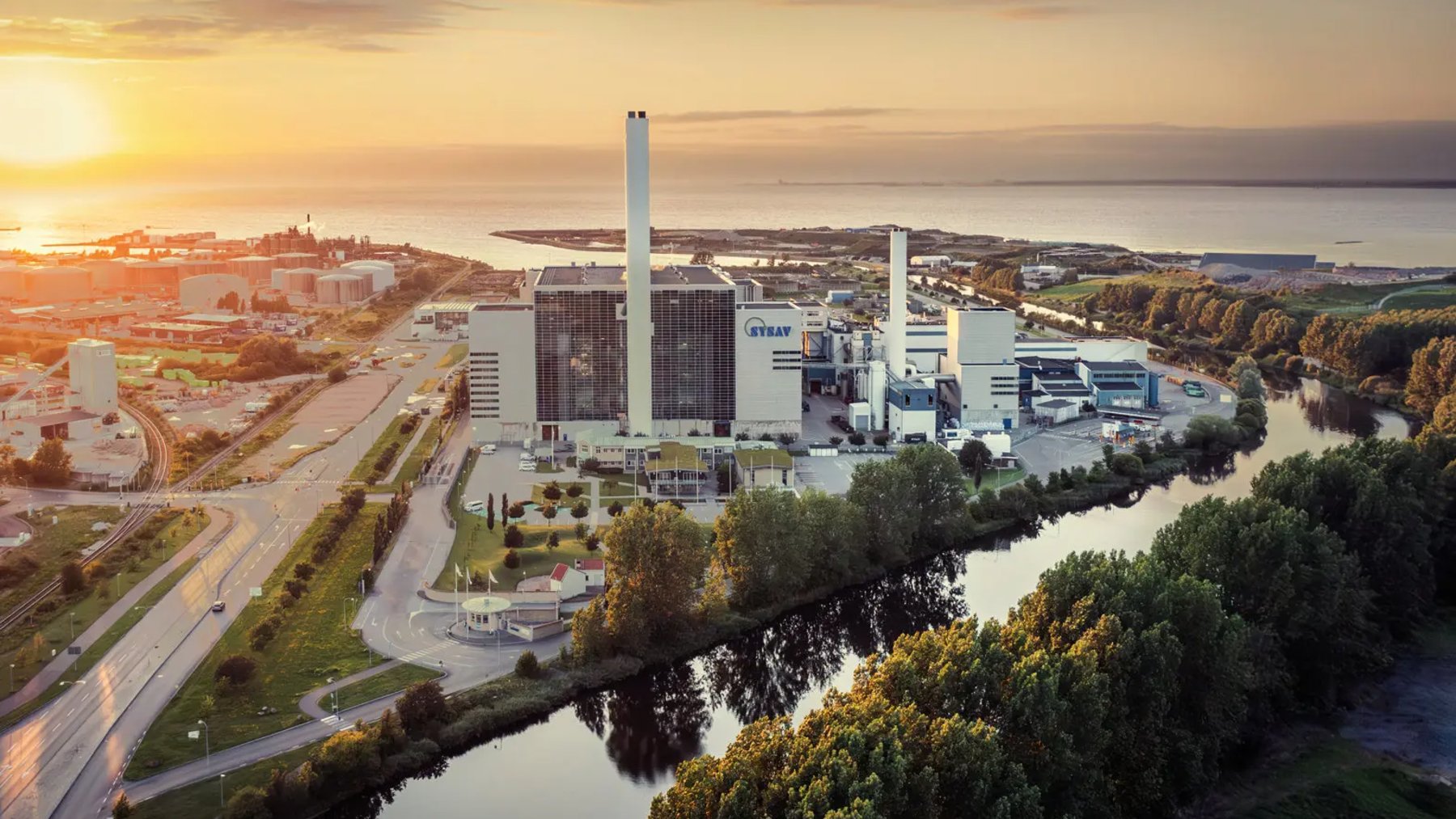
The most practical place for these modular reactors may be beside coastal desalination plants, where enormous quantities of seawater are already being moved. PNNL modeled California’s Carlsbad plant and calculated that its daily flow of 108 million gallons could theoretically yield 524,000 kg. of magnesium hydroxide at a perfect 100% recovery rate, more than three times current U.S. use.
That number is an upper limit, not a production forecast. Real output would depend on recovery efficiency, electricity and chemical costs, and equipment performance. Chemist Chinmayee Subban acknowledged that “the challenge will be to scale up these technologies so they can be economically feasible.”
Brine becomes a chemical tool
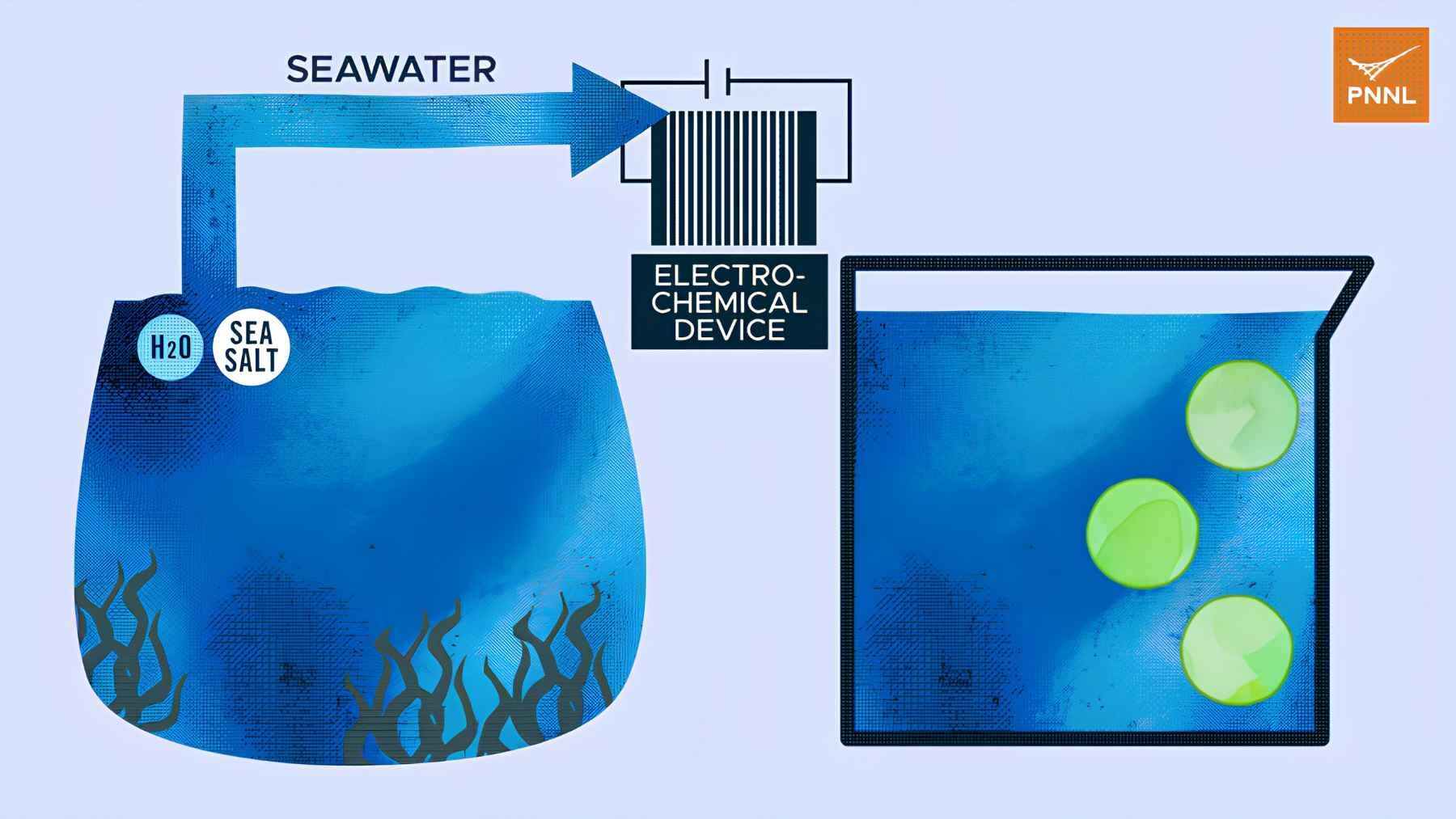
After magnesium removal, the water could continue through reverse-osmosis desalination, producing freshwater and concentrated brine. Bipolar membrane electrodialysis, known as BPMED, can then use electricity and specialized membranes to split that brine into acidic and alkaline streams rather than disposing of it.
The acidic stream has already shown value beyond the ocean. In a 2026 study, it leached 37% more nickel from olivine containing just 0.27% nickel than equal-strength commercial hydrochloric acid at room temperature, and the researchers later recovered a nickel-iron alloy through electroplating.
Seaweed as a living concentrator
The third approach hands part of the separation work to biology. PNNL researchers report that some critical materials appear in seaweed tissues at concentrations up to one million times higher than in the surrounding seawater, although different seaweed varieties can accumulate very different mineral mixtures.
The team is studying how to cultivate promising seaweeds, release their minerals, and turn the remaining biomass into fuels, chemicals, or fertilizer. Its initial benchmark is to recover at least half of the mineral content efficiently, but that goal remains difficult, and PNNL’s own life-cycle modeling found that pumping seawater was the largest contributor to the climate footprint of its algae pathway.
The promise and the reality
PNNL has recovered magnesium, lithium, nickel, platinum-group metals, and rare-earth metals at research scale using seawater or chemicals derived from it. The projects have not yet become one commercially operating system, and PNNL’s reports still identify important gaps in economics, energy demand, cultivation, processing, and environmental performance.
So, the real breakthrough is not that a tiny slice of the ocean is ready to replace conventional mines tomorrow. The more realistic opportunity is to turn existing coastal water flows into several products, including magnesium hydroxide, freshwater, useful acids and bases, nickel from low-grade rock, and mineral-rich biomass.
The future of the research
Field deployment, realistic recovery rates, full life-cycle studies, and careful monitoring of brine, chemical discharge, seawater intake, and coastal ecosystems will determine whether the idea can move beyond the laboratory. The ocean may be a vast mineral bank, but opening an account responsibly will be much harder than proving the minerals are there.
The official press release was published on PNNL.