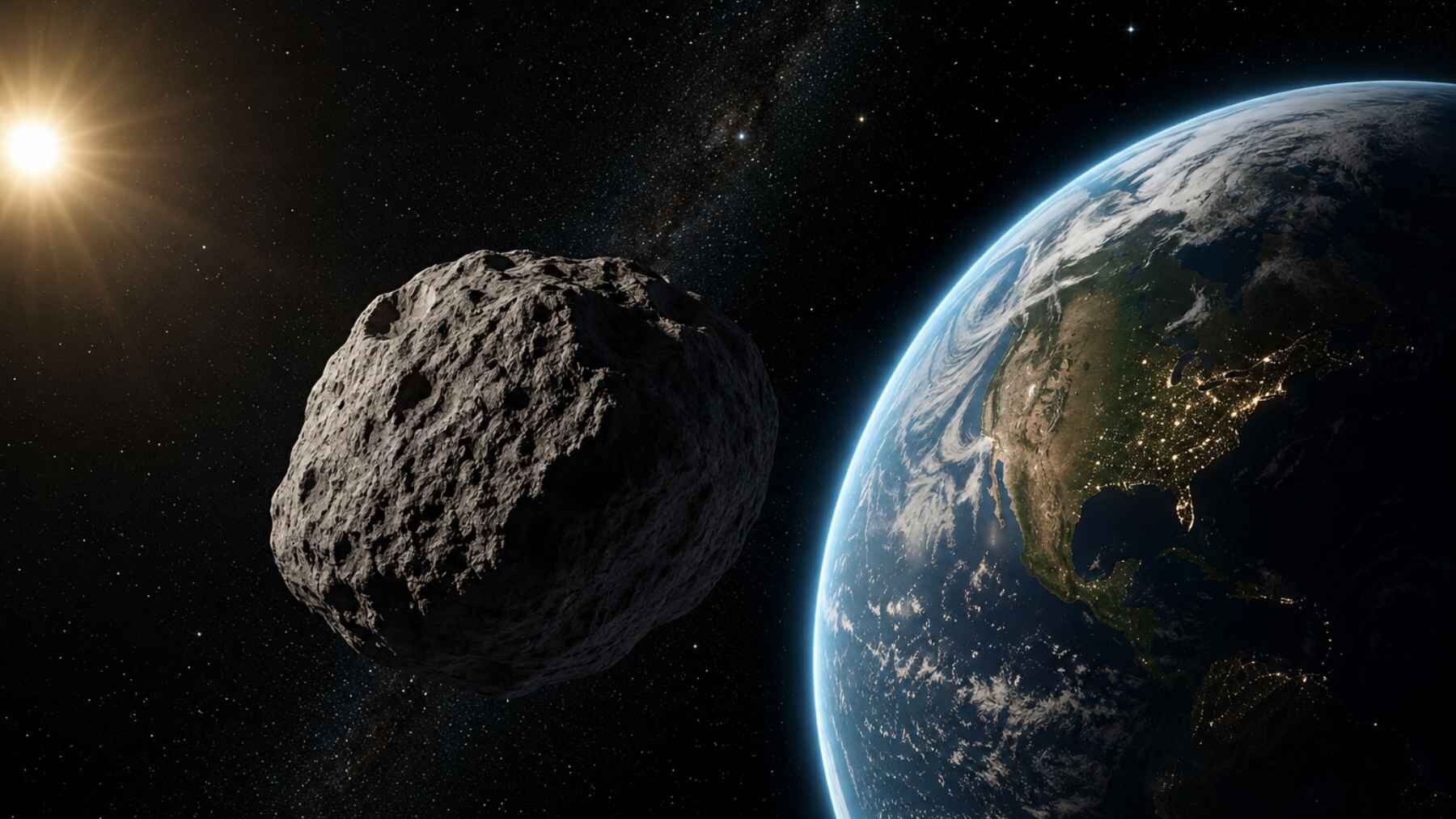
For the first time in history, a space rock crossing a critical impact threshold triggered international planetary defense procedures. Now, fresh observations from the James Webb Space Telescope have officially cleared asteroid 2024 YR4: the 200-foot object will hit neither Earth nor the Moon in 2032
That is the main takeaway after more than a year of changing percentages, tense headlines, and careful telescope work. The numbers moved sharply not because the asteroid suddenly swerved through space, but because scientists replaced a blurry forecast with a much clearer one.
Why 2024 YR4 drew attention
2024 YR4 was first reported on December 27, 2024, by the NASA-funded ATLAS survey in Río Hurtado, Chile. NASA’s Jet Propulsion Laboratory classifies it as an Apollo near-Earth asteroid, while Webb observations refined its estimated diameter to 174 to 220 feet (53 to 67 meters), roughly the height of a 15-story building.
Because an object this size could cause localized damage, the early calculations could not simply be brushed aside, and the probability rising above 1% triggered notifications by NASA and the International Asteroid Warning Network. It became IAWN’s first formal notification prompted by an asteroid crossing that threshold, with information sent through United Nations and space-mission planning channels.
The odds rose before collapsing
On February 18, 2025, NASA’s estimate reached 3.1%, the highest probability the agency had recorded for an object of this size or larger. A day later, new observations cut it to 1.5%, and by February 24 NASA concluded that 2024 YR4 posed no significant threat to Earth in 2032 or beyond.
Why would the risk climb and then disappear? Early tracking data creates an ‘uncertainty ellipse’—a cosmic zone of probability where the asteroid might end up. As telescopes gather more data, that zone shrinks like a camera lens focusing on a distant subject, eventually revealing whether Earth is in the line of fire.
Planetary defense protocols did their job
NASA did not launch a spacecraft or try to push the asteroid away. The response centered on faster observations, repeated orbit calculations, coordination among international analysis centers, and formal notifications to organizations that would need dependable information if the risk kept growing.
The asteroid reached Level 3 on the Torino Impact Hazard Scale, a public communication tool that runs from 0 to 10, before later falling to Level 0, where collision likelihood is zero or effectively zero. Think of it less as an evacuation siren—and more as every camera in the neighborhood switching on at once.
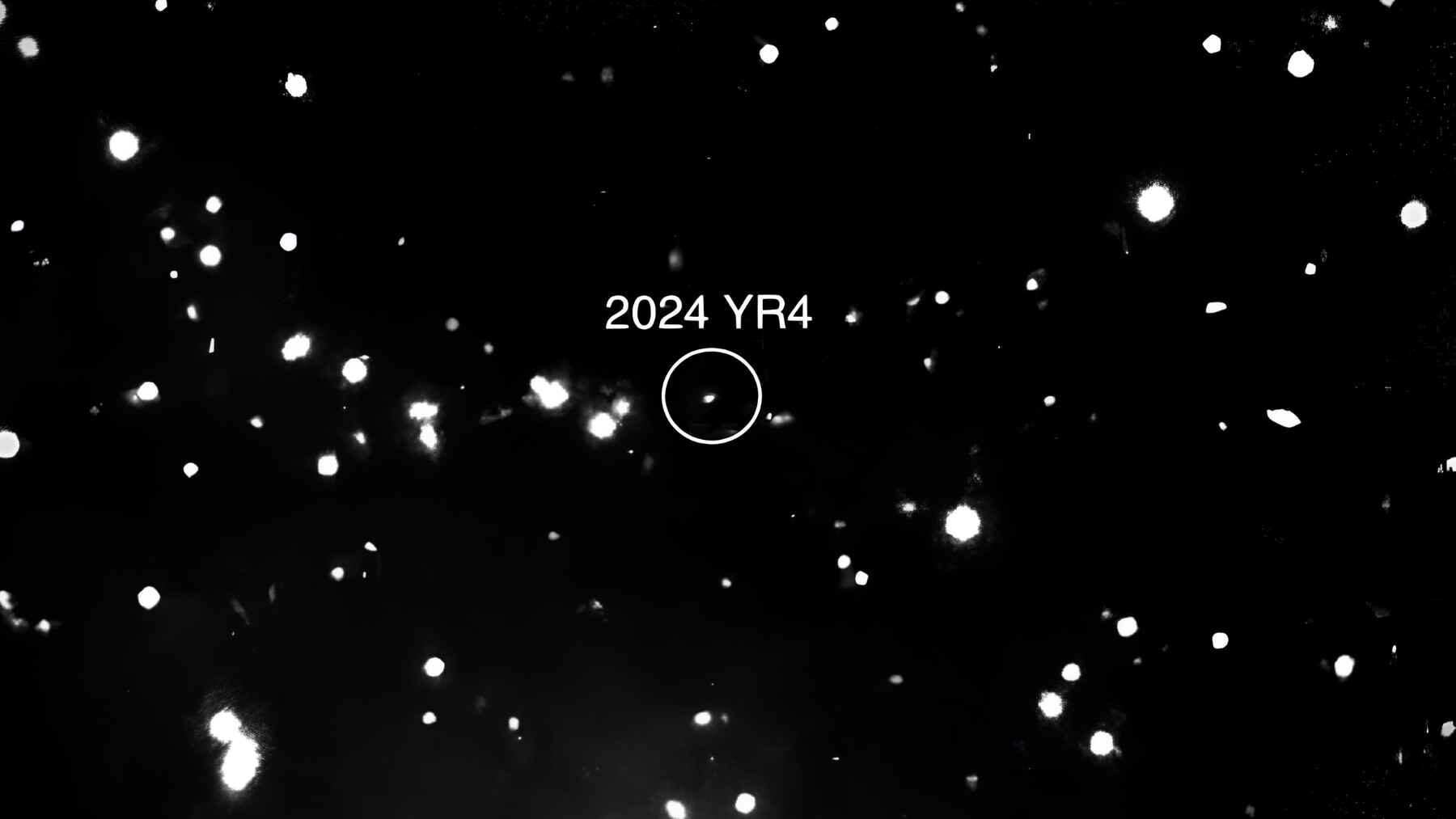
Webb settled the Moon question
After the Earth risk was ruled out, attention shifted to the Moon. Earlier Webb and ground-based observations left a 4.3% chance of a lunar impact on December 22, 2032, keeping the asteroid under close scientific scrutiny.
Webb observed the extremely faint object again on February 18 and 26, 2026. Those measurements narrowed its orbit enough for NASA and ESA to set the lunar-impact probability to zero, with 2024 YR4 now expected to pass about 13,200 miles (21,200 kilometers) from the lunar surface.
What an impact could have meant
Size matters, but so do an asteroid’s composition, speed, entry angle, and impact location. NASA says an airburst would have been a likely outcome for an object in this size range, with the potential for serious local damage rather than a planet-wide catastrophe.
NASA’s models also indicate that an ocean airburst by an object of this size would be unlikely to produce a significant tsunami, even nearer the coast. While 2024 YR4 warranted close attention, the scenario posed a risk of localized destruction rather than a global extinction event.
Why changing probabilities are not a failure
To the public, a probability moving from above 3% to zero can look like scientific confusion. For orbit specialists, it is the expected result of adding better data to a model, and NASA stresses that the 2026 update reflected improved precision rather than any change in the asteroid’s path.
NASA’s Sentry system continuously scans the latest asteroid catalog for possible Earth impacts over the next 100 years, and objects regularly disappear from its risk list as added observations rule out collision paths. Watching that process in real time can be unnerving, but it is also how early warning is supposed to work.
The all-clear and the lesson left behind
As of the latest official assessment, 2024 YR4 poses no significant Earth-impact risk on December 22, 2032, or through the next century, and it will also miss the Moon. NASA says it is premature to speculate about deflection techniques for this object because it poses no significant risk to the planet.
The larger lesson is simple. A planetary defense alert is not a prediction of disaster but a structured request for more evidence, and in this case, the evidence delivered a reassuring answer.
The official statement was published on NASA Science.