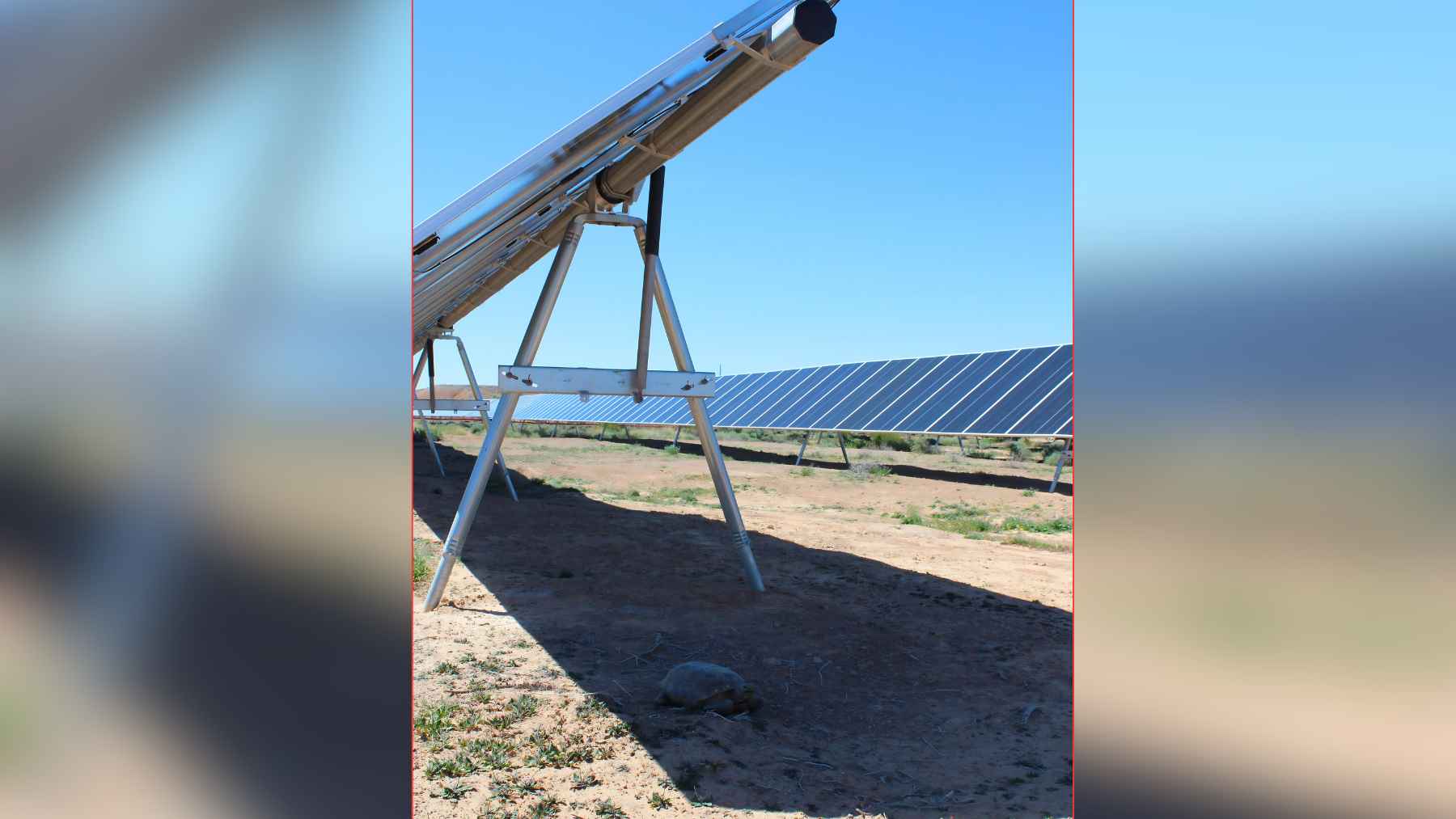
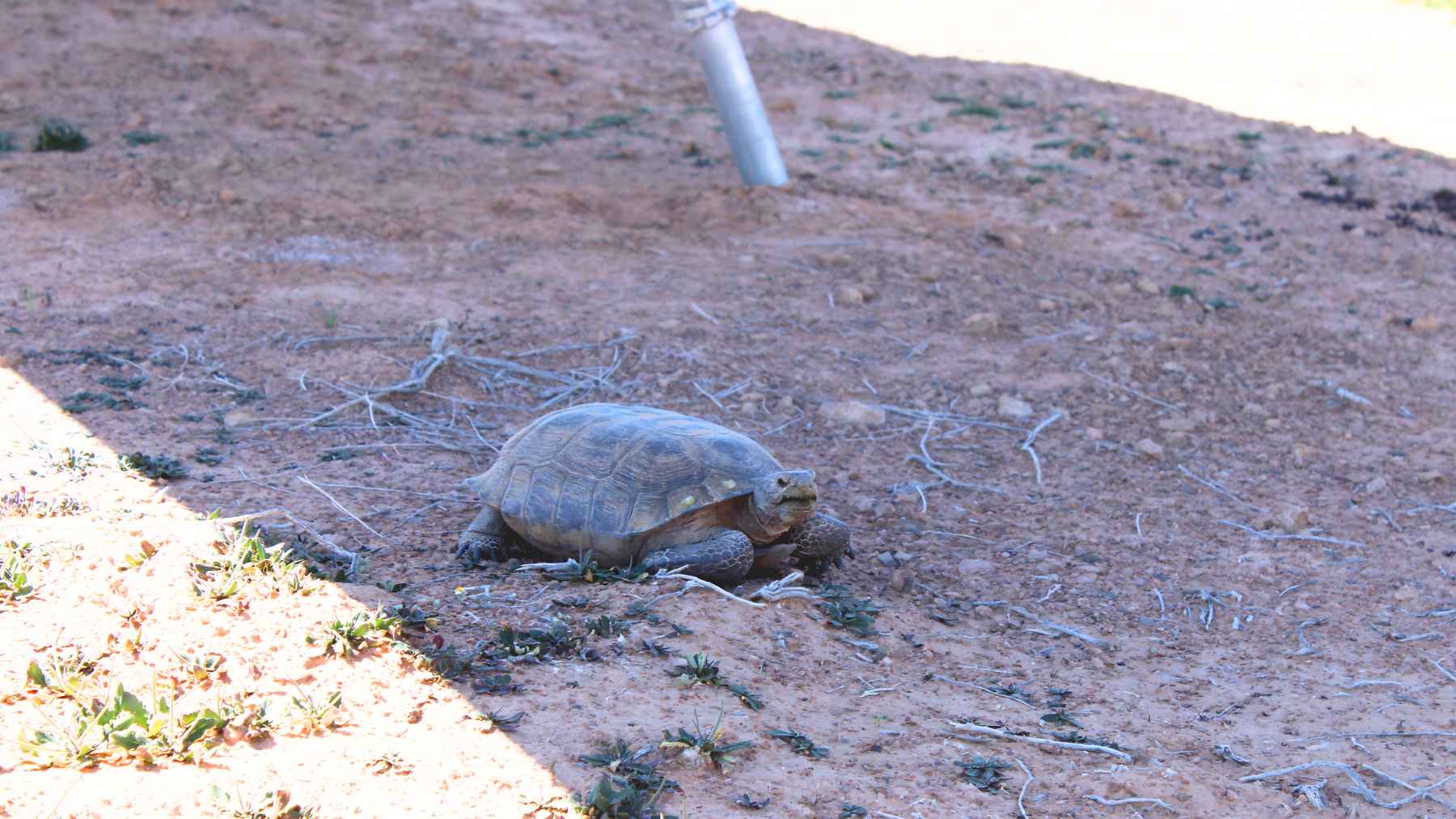
At Nevada’s Gemini Solar Project, some photos show a desert tortoise (animal in danger) resting under a solar panel. Additionally, a recent online report calculates that around 48 tortoises are living there, while the agency’s official project page documents the behavior without listing that total.
It may be that the panels offer a relief from the sun, but scientists are still studying whether tortoises and other species of the desert can thrive in the long term in a landscape that now is used for power production.
A solar giant in the Mojave
Gemini is about 25 miles northeast of Las Vegas on federal land in the Mojave Desert. Its solar array is connected to an enormous battery system that allows it to keep delivering electricity even after sunset.
According to Primergy, this makes it the largest operating solar energy and storage project in the United States.
Why the shade matters
In the desert, the number one priority of tortoises is not to die of heat. That is why, when the Nevada sun is difficult to tolerate, the solar panel’s shade is the perfect shelter.
The tortoises were moved and returned
There have been many versions circulating about what happened to the tortoises and how they were relocated. The authorities explained that the Agassiz tortoises were not left there while the workers were building the park. Actually, they were taken away at the very first moment, and they were put back after the construction was 100% finished.
Many people say that although resting under the panels is a good sign, that does not mean that the area is working the exact same way as it was before the construction was completed. The good news is that according to the Desert Research Institute, rare plants from Mojave, like the threecorner milkvetch could survive the impact of the big construction and have been reacting quite well to the protection measures.
Coexistence needs careful design
A group of researchers Claire Karban, Jeffrey Lovich, Steven Grodsky, and Seth Munson published in 2024 a study that leaves something very clear: if you build without destroying everything, the soil and roots suffer much less, and when you raise fences, smaller animals can keep on moving.
Researchers also put a lot of emphasis on how this type of enormous park still can ruin vegetation, distort temperatures and destroy habitats. Having a tortoise taking advantage of the shade can be a nice fact, but that does not mean that solar panels can be placed randomly anywhere now.
The official research on wildlife and plant responses to desert solar development was published in Renewable and Sustainable Energy Reviews.