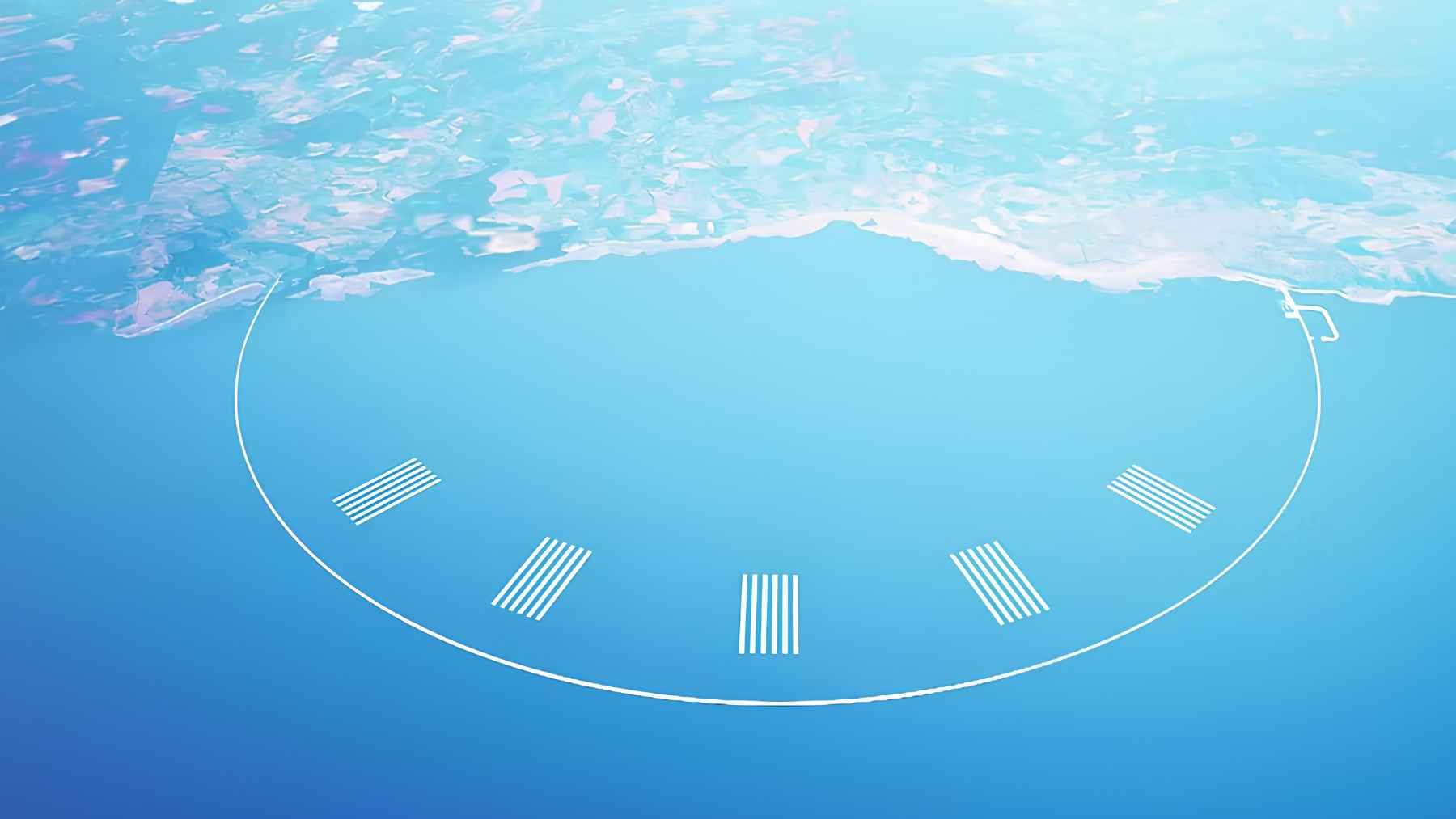
Let me ask you a question, what does the London Eye have in common with a 14-mile tidal power wall in the Bristol Channel? Both projects have the same mind behind them, the Marks Barfield Architects. The newest proposal does not intend to give the visitors a view over London though, it targets the world’s largest tidal ranges with the intention of transforming it into electricity.
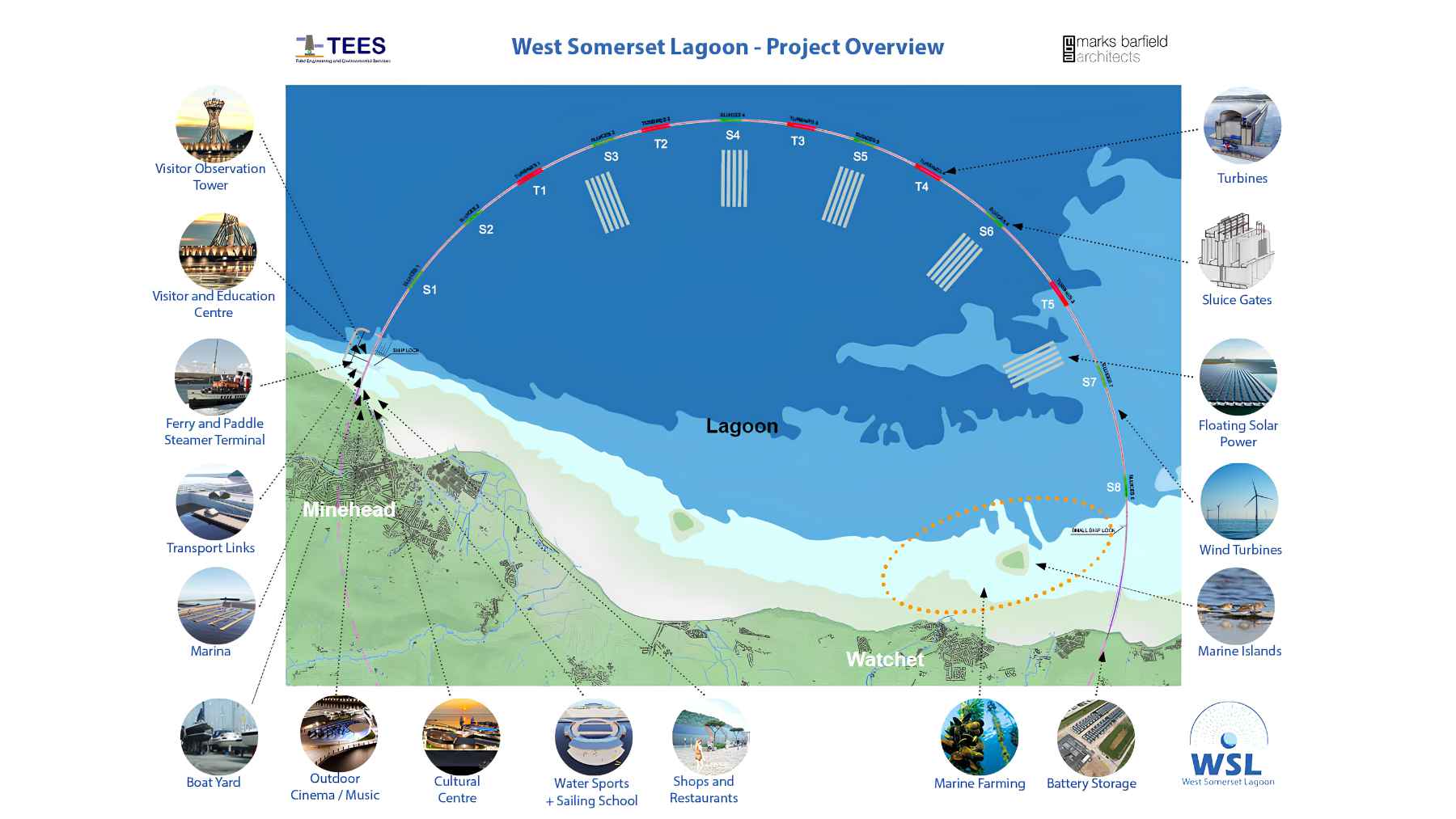
The West Somerset Lagoon (WSL) project proposes the use of 206 concrete caissons and 125 turbines that combined would create a 2,500 megawatts power station between the neighboring coastal towns of Minehead and Watchet. The developers of the project estimate it to produce about the whooping number of 6.5 terawatts of electricity per year, enough to power up around two million UK homes at median usage.
although the turbines would generate in four tidal bursts each day rather than continuously.
A power station built from floating concrete boxes
What is most unusual about the proposal may be how they intend to build the wall. Instead of constructing it like other similar projects that generally build most part of it offshore the WSL calls for 206 reinforced-concrete caissons to be cast onto already existing port facilities around the Severn Estuary and Bristol channel, that then would be towed into position to finally be sunk onto the seabed to be naturally mixed with water, sand and gravel. Quite the route!
The idea is that the mix will create solid structures that will house the turbines and sluice gates. The plan calls for 125 bulb turbines with a diameter of approximately 24 feet to be to be arranged together in five separate groups of 25, plus 160 sluiceways spread around the perimeter to help with the water flow, the sediment control and the fish routes management.
Why the project has so many different “14s”
In a lighter mood detail the proposal can get a bit confusing because of the several measurements that end up being described with the number 14. For that to happen we have to mix a bit our measurement system. The lagoon would have 14 kilometers of diameter, the curved wall would run around 14 miles and if we take a look at the developers scheme we would notice that 14 kilometers of coastline would be protected from sea-level rise and erosion.
Make no mistake though, the curved shape of the project is not just architectural flair nor the number 14 was chosen on a whim. A semicircle can enclose a large volume of water with less material being used, and in this case the barrier would surround 30 square miles of sea.
The turbines would run in four daily bursts
The Tidal-range power works by creating a gap between the water level of the lagoon and the open sea. That gap makes it so that the water moves through the turbines both during incoming and outcoming tides, which will produce four different periods during the days 24 hours, reducing the output to zero between those windows.
It works in bursts instead of continuously. That explains the difference between the lagoon’s 2,500 megawatts nameplate capacity and the projected annual production. If it ran at full power it would produce 22 terawatts per year, but instead the developers expect 6.5 yearly terawatts, which represents one fourth of it and around 2% of current UK electricity deman.
On a superficial level it looks like too much to give up on but the trade-off is that it gives more stability and longevity. The wind outputs become harder to forecast far into the future but the tide times can be calculated decades ahead, giving the grid operators a reliable huge window in the calendar, easing the work of predicting how often the lagoon should produce electricity.
Local support exists but traffic could be a sticking point
The team did the first public consultation from January 16 to April 2 of 2026, and received 625 responses. Of those, 63% of the people gave strong support for moving the project to its next stage, whereas around 30% were strongly opposed. Of the grand total 92% of the public identified at least one potential communitary benefit.
One concern did sound louder than the others though. About 44% of the respondents stated that they were concerned about how the construction would impact the traffic, particularly around the A39 between Bridgewater and Minehead and some other minor already strained local roads.
The chief executive of the West Somerset Lagoon Limited, Aidan Clegg, calmed the public down saying that the project is still in its “early days” and that the company would work together with the Somerset Council to come up with a solution regarding the transport concerns. It is no small issue: anyone who has sat in a summer traffic jam once in their lives knows infrastructure is judged by what happens on the road on your commute.
The biggest hurdle is not engineering
The lagoon has not been approved yet. It is listed by the UK Planning Inspectorate as a nationally significant infrastructure project still in pre-application state, and the developer’s timetable calls for four years of environmental studies and consent before the financing and construction can move forward.
The projected construction cost is about £10.5 billion in 2023 prices. The full development schedule is of around 11 years which include five years to build the enclosure and another year to reach full output. Caution ensues due to the gargantuan size of the endeavor: for a project this large, the real challenge may be earning permission to build it.
All the process makes the West Somerset Lagoon not only a tidal engineering project but also a test. It begs two questions: are the Brits willing to back up a predictable renewable power source that does not generate continuously? Can the government persuade local communities that the invisible benefits are worth years of disruption of their daily lives because of a new structure designed to remain off their coast for more than a century? We will have to wait and see.
The consultation results were published on West Somerset Lagoon.