It is always good to find innovative projects, but when they are about recycling and environmental restoration, even more. Inside a New Orleans local market, wine and beer bottles enter into a pulverizing machine and then what? The result is pale sand. The first reports of Glass Half Full documented more than 3 million pounds of discarded glass and about 20 tons of sand that was already destined for restoration work. And even the last update in February 2026 says that the total exceeded 12 million pounds!
But what is really impressive is that the idea is from two frustrated university students, who basically were tired of seeing that empty bottles did not have any useful destination at all. Of course, this project cannot solve the whole Louisiana coast alone. Still, that does not mean that it cannot transform a waste problem into one more material for rebuilding wetlands.
The bottles that found their way back to sand
Glass Half Full started in 2020 as a simple project with a small crusher and community donations because Franziska Trautmann and Max Steitz (the founders of the project) felt that New Orleans residents had really limited curbside recycling options, specifically for the glass. They really got frustrated with how empty bottles from houses, bars and events ended up directly in the landfill.
At that time, they were studying at Tula University and for sure they did not expect that later it would turn into a much bigger processing operation. The sand is really needed and this project is like a relief for the coastal restoration.
Why recyclable glass was being buried
As with every project of this kind, costs enter into discussion. Glass can be recycled repeatedly, but the problem comes with the collection. The bottles are super heavy and imagine transporting them hundreds of miles to a distant processor… Maybe that ends up being more expensive than recovering the glass.
This situation left New Orleans facing a strange contradiction. A bottle is essentially melted sand and also one of the most reusable materials that people make, but the local option used to be burying it in the ground.
Louisiana needs every useful grain it can get
What is very interesting about this glass project is that recycling it can help a lot in the area. Louisiana is still facing a big fight to achieve the level of restoration work the state needs..
The state is going through a big crisis in terms of marshlands… Its coast has been affected by erosion, violent storms, and sinking land. Over the past century, the state has lost an area comparable to Delaware, that once had been marshlands. And wetlands are very important for the functioning of the city. They absorb water from floods, reduce the force of the storms, and represent the habitat for many animals, like crabs, birds and shrimp.
How an old bottle becomes a living shoreline
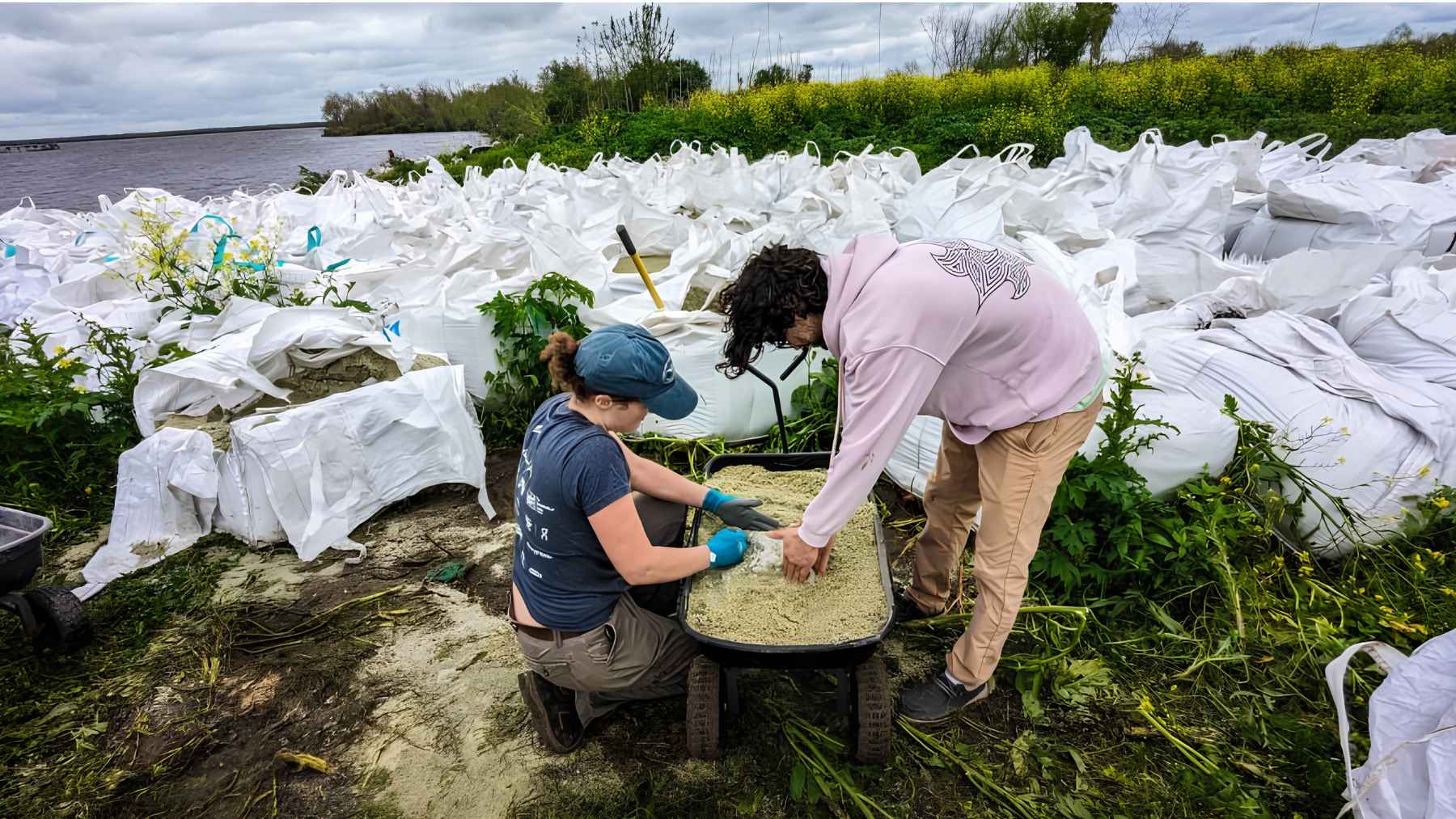
The machinery does an amazing job. Here the bottles are crushed, and then they are filtered into grain sizes that can go from very fine sand to very coarse gravel. The separation of caps, labels and any other unwanted material is also very important, while volunteers help to separate the incoming glass.
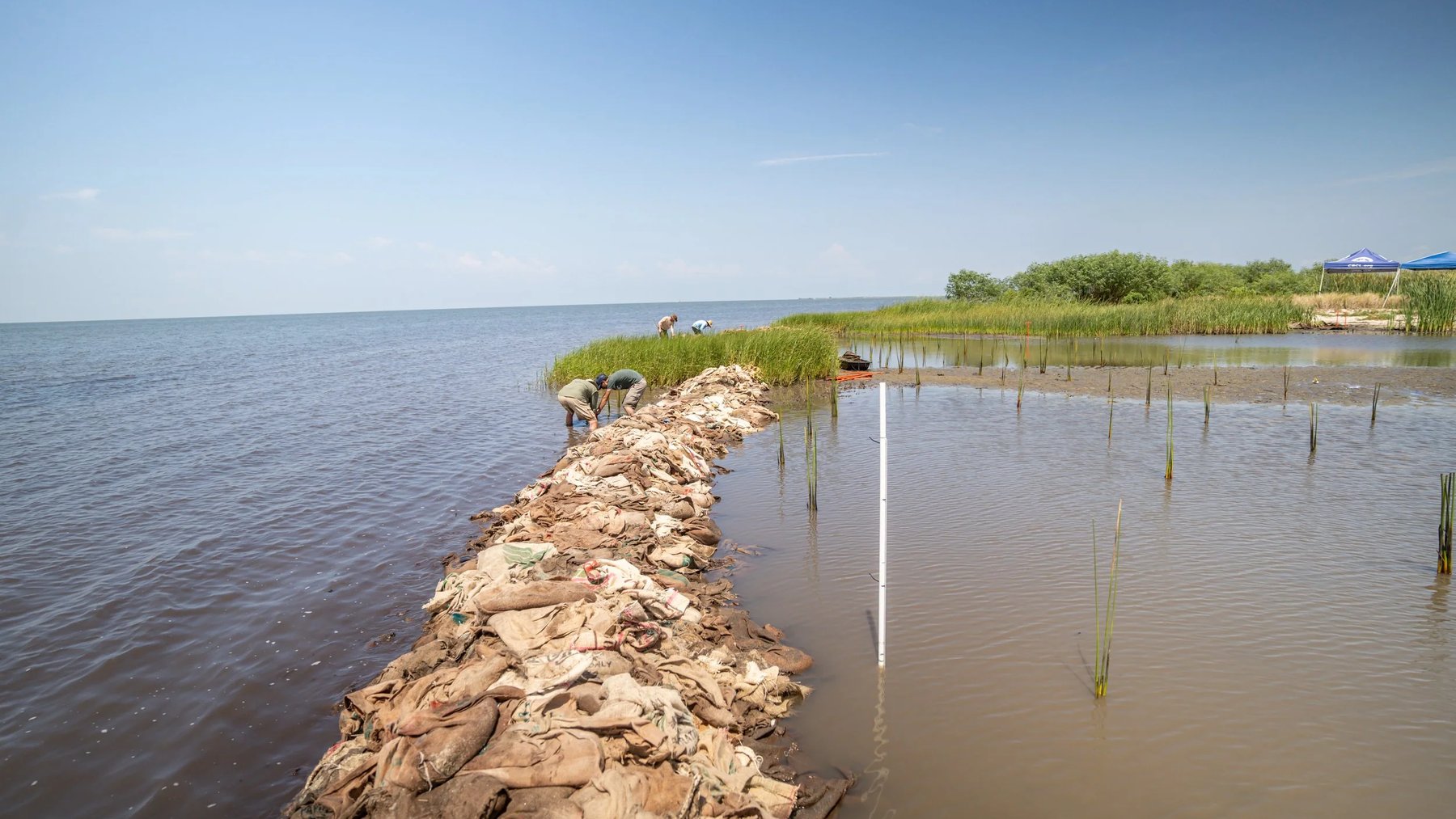
Many things can be done with the recycled glass. For example, the sand can be packed inside biodegradable bags and placed on top of eroded ground. That way, marsh grass roots grow in the new base, trap more sediment, and gradually help the edge behave more like a living shoreline.
It is also very practical for the neighbors in New Orleans. Instead of paying for a long truck trip to send the glass to be recycled, it can be processed nearby and come back, for example, as a sand bag, restoration substrate, or feedstock for new glass.
What scientists are finding in the glass sand
Really the recycled glass has amazing properties. There is a study that confirms how coastal wetland plants can grow in this recycled glass sand. Of course, the results were not the same for all the species, but still they pointed out that the mixes of glass together with dredged river sand are a great combination for a lot of vegetation.
Also, there is another study that was published in April 2026 that shows how many native species that were exposed to sediment treatments (in different percentages) survived or buried themselves without being injured or killed. Although this, they are still investigating the long-term effects.
One useful tool in a much bigger coastal fight
It is important to remember that, of course, no machine will be able to rebuild a coastline that has been affected for many generations. The long-term recovery will depend on many things, such as big restoration projects, public investment, and a big effort to address land loss.
Glass Half Full showed how an empty bottle after dinner, a festival, or an ordinary weekend does not need to have an end. It can become the beginning of a small piece of coast and the place where marsh plants return.