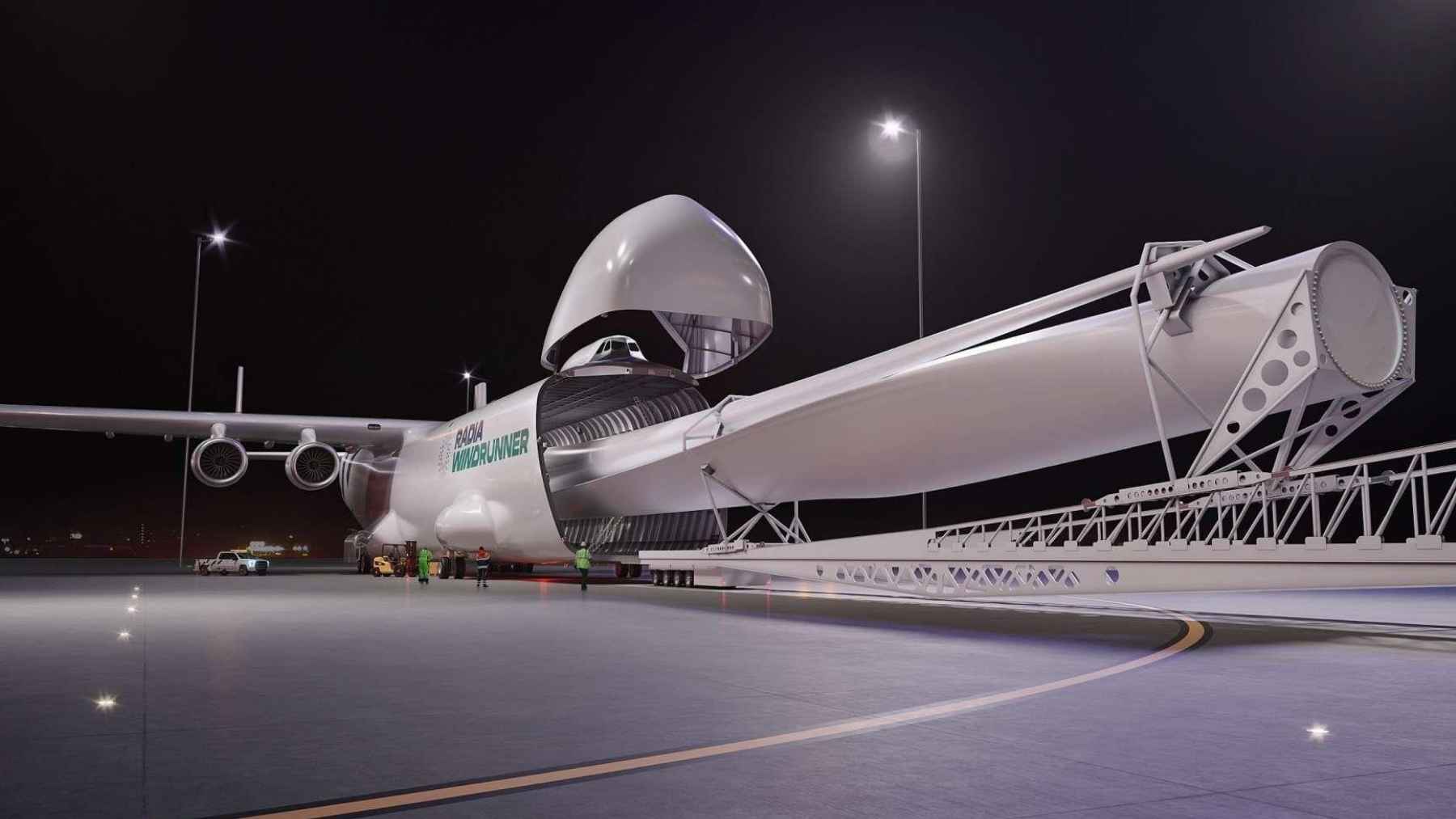
What happens when a wind turbine blade outgrows the roads to its destination? Colorado-based Radia is developing WindRunner, a 356-foot cargo aircraft designed to deliver enormous blades directly to wind farms. Its proposed destination is a compacted-dirt landing strip, not a conventional airport.
The company wants to remove a transport bottleneck that can restrict how large onshore turbines become. But WindRunner remains a development program, not a working delivery service, and its potential benefits depend on getting an enormous aircraft safely and economically into operation.
Why the road can dictate turbine size
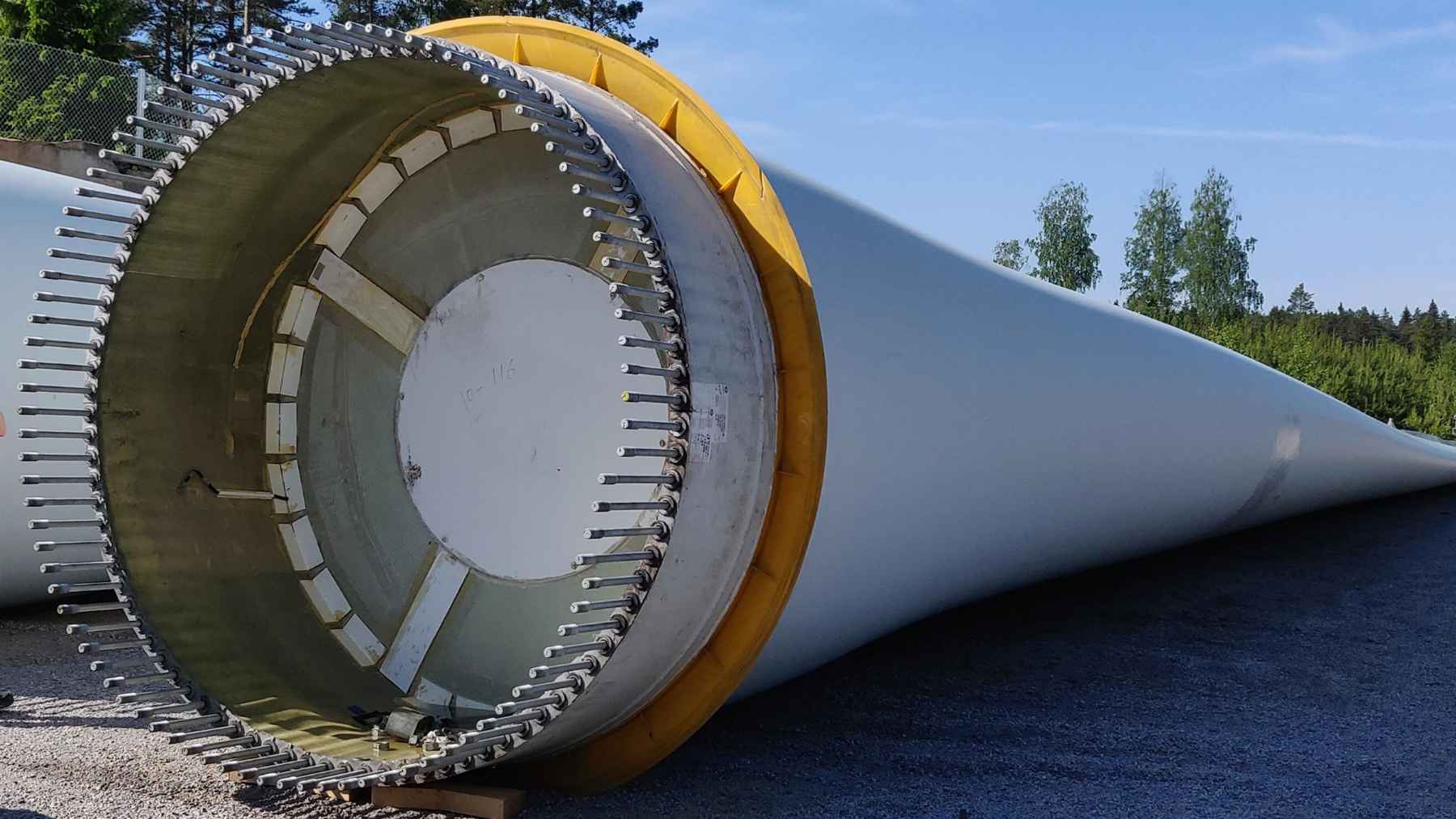
For a wind farm developer, good wind is only part of the equation. The Department of Energy notes that transporting very long blades can restrict truck routes and turning radii, sometimes forcing lengthy detours. Bridges, tunnels, and tight intersections can turn a straightforward-looking route into a costly logistics exercise.
Those trips may require route surveys, escort vehicles, and temporary changes to utility lines or roadside signs. In practical terms, a promising site can be limited by what fits around the final bend, not simply by how much wind blows there. For communities along the way, even one delivery can mean temporary traffic disruptions.
A cargo hold built around the blade
Radia’s current specifications describe a 261-foot wingspan and roughly 240,000 cubic feet of cargo space. That is about 11 times the cargo volume listed for a Boeing 747-400F, although volume is not the same thing as lifting capacity.
The design allows a maximum payload length of 344 feet (105 meters) and a maximum payload weight of 160,000 pounds. Radia lists a range of about 1,200 miles at maximum payload, figures that describe the planned aircraft rather than demonstrated performance.
The runway would be part of the wind farm
WindRunner is designed to use an unpaved runway about 6,000 feet long, a little over a mile. Bringing the aircraft to the project site could bypass the public-road journey that makes oversized blades so difficult to deliver.
But “unpaved” does not mean any empty field will do. Radia describes a semi-prepared landing strip, so a project would still need suitable land and preparation for aircraft operations. The proposal shifts the infrastructure challenge rather than eliminating it.
Why longer blades could matter for electricity costs
Longer blades sweep a larger circle through the air. Increase the rotor’s radius by one-third and its swept area grows by about 78%, based on the geometry of a circle, though electricity production does not automatically rise by the same percentage.
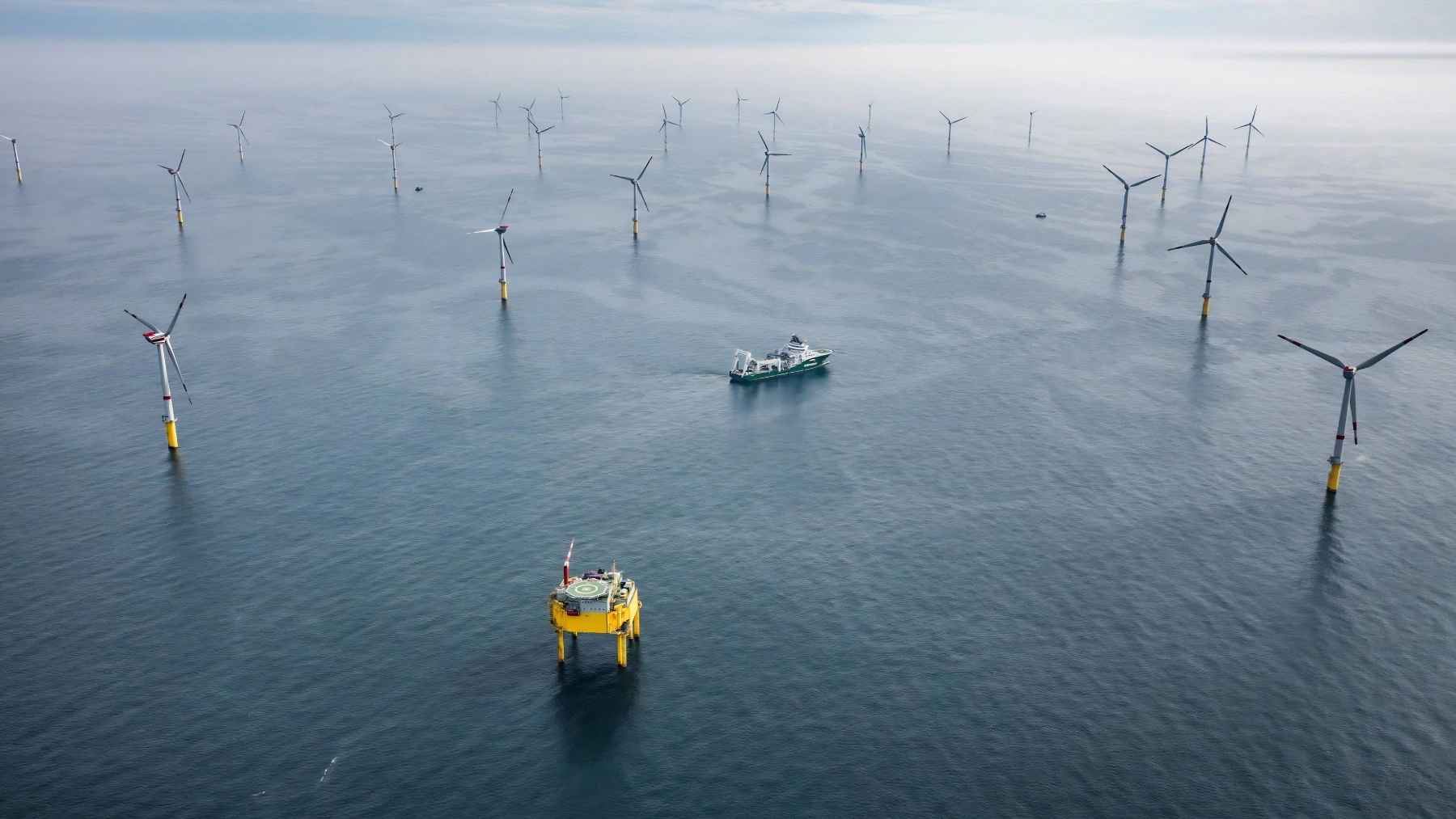
The Department of Energy explains that larger rotors can capture more wind, including at lower wind speeds, while taller towers can reach stronger winds. Higher-capacity turbines can also reduce the number of machines needed for a project’s energy output, helping lower costs. That is an economic opportunity, not a promise that any particular household’s electric bill will fall.
Radia calls its larger-turbine approach “GigaWind.” The company argues that using fewer turbines for comparable energy output could mean fewer foundations and less construction material overall, even though each individual machine would be bigger.
The timeline is still a target
Aviation International News reported on July 22, 2026, that assembly of the first aircraft was expected to start in 2029. Radia has separately promoted a 2030 takeoff target, which should not be confused with a guaranteed start of commercial deliveries.
In its July 14 update, Radia said its supplier network included 21 aerospace companies. “Two years ago, we came to Farnborough to introduce a bold idea,” said Mark Lundstrom, the company’s founder and CEO. Those partners cover work ranging from aircraft structures and systems to manufacturing and digital development.
Supplier agreements are meaningful progress, but they are not proof of flight performance. Building, testing, and certifying the aircraft remain essential steps between the design and routine blade deliveries.
The environmental payoff still needs to hold up
Flying renewable energy equipment is not automatically an environmental win. In its own carbon analysis, Radia acknowledges emissions from aircraft manufacturing and transportation, but argues that larger turbines would more than compensate for that footprint. That remains a company assessment rather than a result measured from commercial WindRunner operations.
There is also the cost of fuel, crews, and building the aircraft itself. The business case depends on whether extra electricity and project savings can outweigh those expenses, not just whether air delivery is faster than trucking.
Radia has a clear idea for getting past the last tight turn, but it still has to prove the aircraft can do the job.
The company’s July 14, 2026, press release was published on Radia.