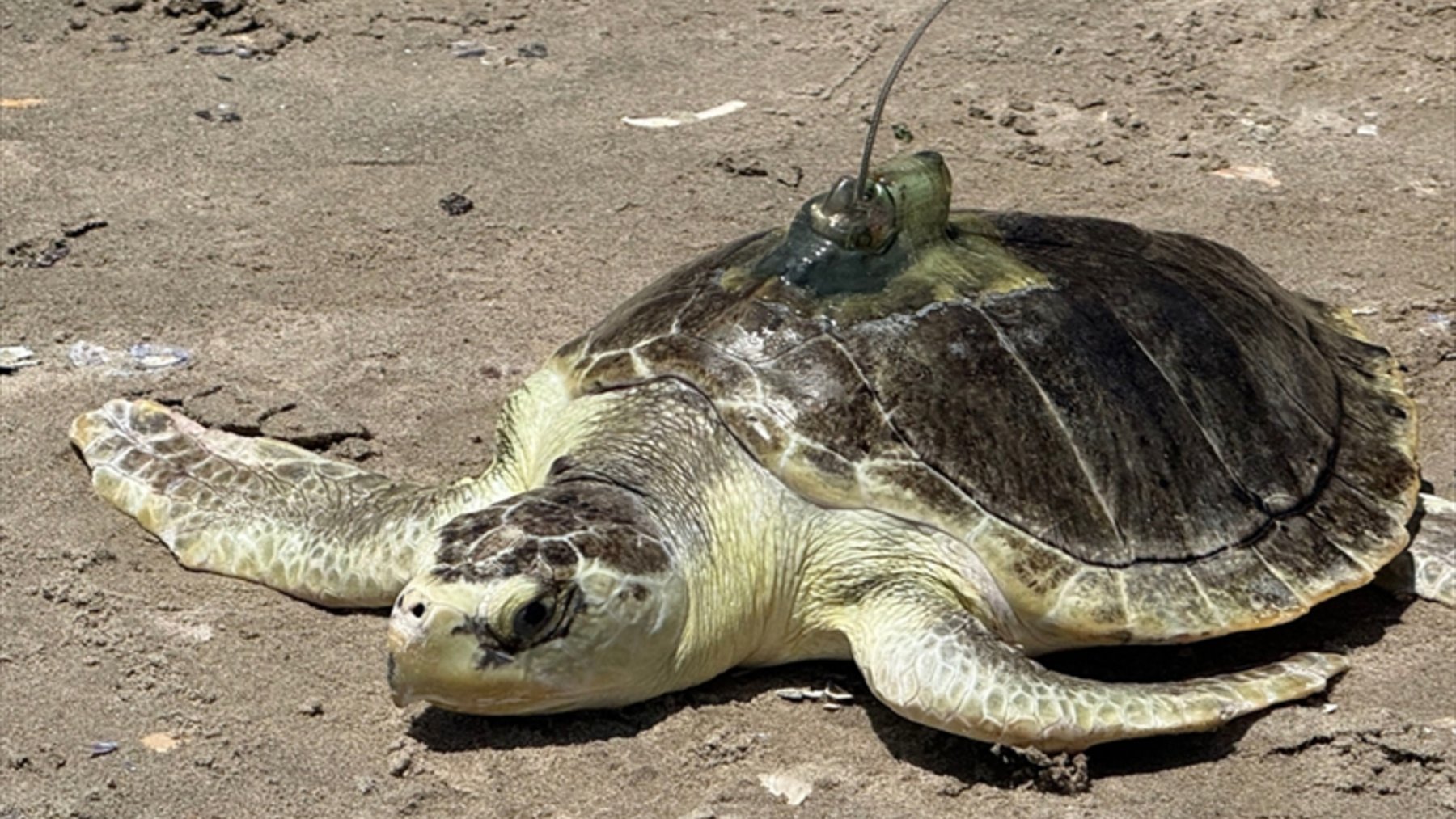
An 11-pound sea turtle became the center of attention at Coney Island when a crowd gathered to watch a return to the wild. Pancake, an endangered Kemp’s ridley, entered the Atlantic Ocean on July 23, 2026, after months of care following a cold-stunning rescue in Massachusetts.
The beachside celebration followed about seven months of rehabilitation, including a return to confident swimming and an appetite for shrimp and clams. But the work did not stop at the shoreline, where Pancake set off carrying a satellite tag that would help researchers follow the turtle’s movements.
A small turtle gets a big send-off
“Pancake, Pancake, Pancake!” the crowd chanted as the turtle made its way toward the water outside the New York Aquarium. Homemade signs added to the send-off, and aquarium campers joined conservation workers and elected officials on the sand.
The New York State Departments of Environmental Conservation and State joined the Atlantic Marine Conservation Society (AMSEAS) and Wildlife Conservation Society (WCS) at the event. According to WCS, the release also celebrated the New York State Environmental Protection Fund, which supports ocean conservation, wildlife rehabilitation, and coastal restoration.
A rescue that began on a cold Cape Cod beach
Massachusetts Audubon Society found Pancake at Duck Harbor Beach in Wellfleet on November 22, 2025. After emergency care at the New England Aquarium, the turtle was transferred on December 3 to AMSEAS in Westhampton Beach, New York. Twenty-four other Kemp’s ridleys made the same trip for treatment and rehabilitation.
Cold stunning is a potentially deadly response to water that becomes too cold for a sea turtle. As body temperature drops, circulation and other functions slow, leaving the animal weak and struggling to swim. NOAA Fisheries says turtles are especially vulnerable when water falls below 50 degrees Fahrenheit.
This is not simply a case of needing a few minutes to warm up. NOAA describes rehabilitation that can last from weeks to months, with gradual warming and treatment for any injuries, illnesses, or infections an animal may have developed.
Shrimp, clams, and stronger swimming
For Pancake, progress became visible in the rehabilitation tank. The turtle was swimming confidently and actively pursuing food, with shrimp and clams part of a healthy diet. Those behaviors helped demonstrate that Pancake was ready to move beyond supervised care and return to the ocean.
At an estimated two to five years old, Pancake was still a juvenile and weighed about 11 pounds. The turtle’s sex was unknown, and WCS said the blood testing needed to determine it was unnecessary for rehabilitation.
According to WCS, Pancake was among 125 sea turtles treated at the AMSEAS Sea Turtle Care Facility since 2020. The release offered a public glimpse of work that usually happens far from the beach crowd, through rescue calls, transfers between facilities, and months of rehabilitation.
Why every Kemp’s ridley rescue counts
Kemp’s ridleys are the world’s smallest sea turtles, but adults can still reach about two feet long and weigh 70 to 100 pounds. Juveniles use Atlantic coastal waters as far north as New England and beyond. Pancake had plenty of growing left to do.
The species’ history explains why one small survivor matters. NOAA Fisheries describes a severe population decline followed by gains from conservation efforts, while warning that nesting numbers have fluctuated since 2010. Accidental capture in fishing gear remains the greatest threat.
That distinction is important when watching an uplifting release video. Bringing one turtle back to health is a real achievement, but it does not mean the species is out of danger. Protecting turtles at sea and the places where they nest remains part of the larger job.
Following Pancake after the applause
Before the release, Dr. Maia Austin, a postdoctoral researcher with WCS’s New York Bight program, described what she hoped would happen next. Success included “feeding and then hopefully continuing its migration back to the Gulf later in the season,” she told Popular Science.
The satellite tag was fitted to help researchers follow that journey after Pancake disappeared from view. Its purpose was to track movement, not guarantee that every challenge ahead had been resolved. Returning to the habitat was a milestone, while longer-term survival remained the bigger test.
Cold-stunning rescues are a recurring need along Cape Cod, so the teams behind this release face work that extends well beyond one summer afternoon.
The official press release documenting Pancake’s return was published on the Wildlife Conservation Society’s WCS Newsroom on July 23, 2026.