Why did our ancestors develop bigger brains and smaller faces? A study published July 6, 2026, in Nature Communications suggests these familiar trends may owe less to a steady evolutionary push than researchers have often assumed. Instead, the findings highlight random change and long periods when anatomy remained relatively stable.
The research does not dispute that human skulls changed, or suggest natural selection was irrelevant. It raises a different possibility, that major changes became possible when biological and environmental constraints eased, rather than through continuous pressure toward larger brains and smaller faces.
What the researchers measured
Mark Hubbe of the University of Tennessee, Knoxville, and Katerina Harvati of the University of Tübingen’s Senckenberg Centre for Human Evolution and Palaeoenvironment compared three-dimensional skull measurements with six evolutionary models. The original paper specifies 63 fossil skulls and 24 recent human skulls, totaling 87 specimens.
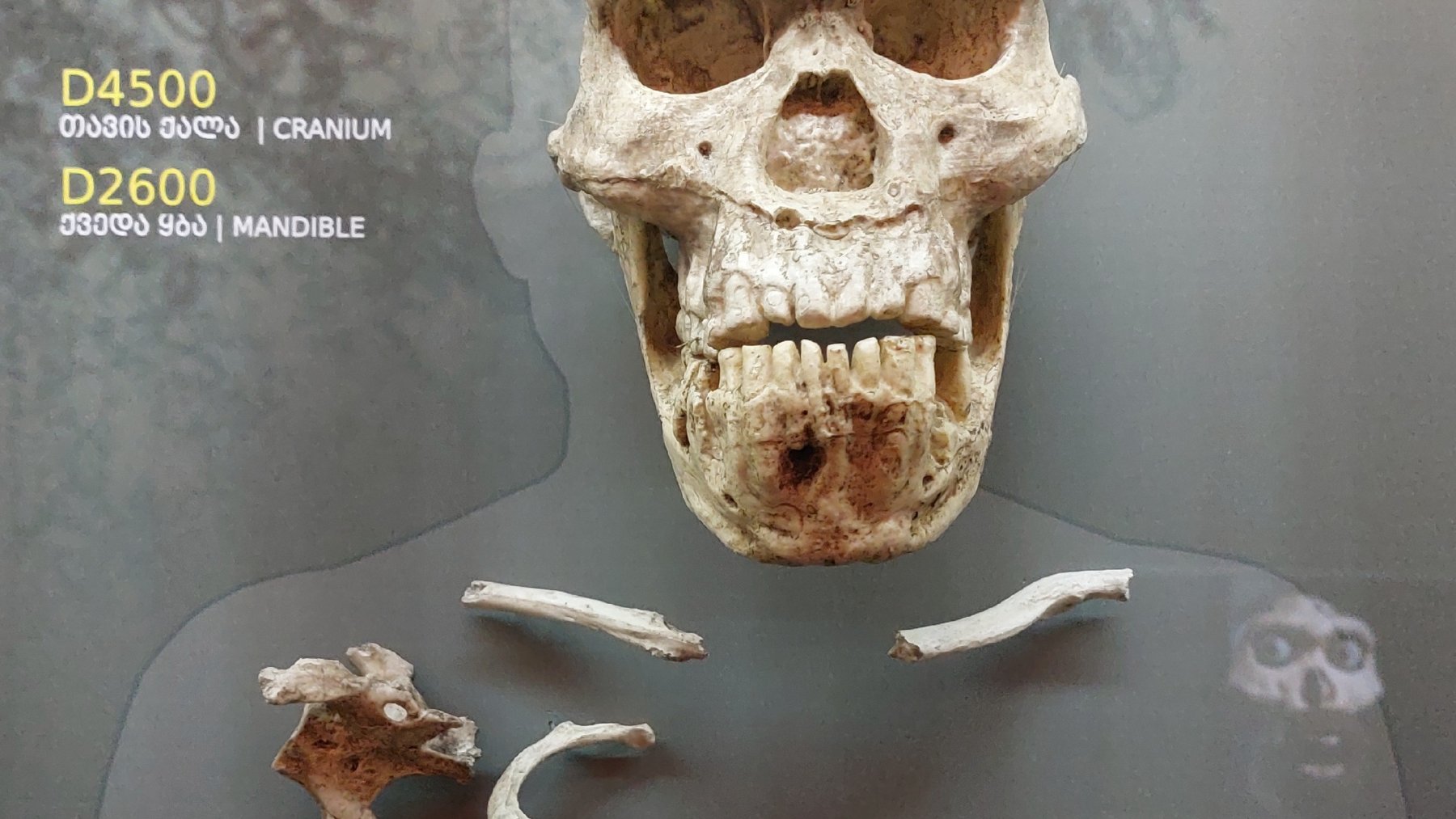
The sample included early Homo species, Homo erectus, Homo heidelbergensis, Neanderthals, and ancient and recent Homo sapiens. By examining the braincase and face, the researchers could investigate whether their changes followed the patterns expected under different evolutionary processes.
A familiar explanation meets a different result
For decades, a common explanation linked bigger brains with improved cognitive abilities and smaller faces with lower energy costs as food processing reduced chewing demands. Those ideas seemed consistent with greater reliance on stone tools, broader geographic expansion, and increasingly complex behavior.
But a long-term trend does not automatically reveal what caused it. The team compared sustained directional selection with alternatives including neutral evolution, prolonged stability, and “punctuated equilibrium,” in which long stable periods are interrupted by comparatively rapid changes.
Models involving neutral evolution and stasis generally explained the measured differences better than gradual directional selection. In other words, the skull record did not strongly support a constant evolutionary push toward the combination of traits we recognize in ourselves.
Stability does not mean evolution stopped
What could keep anatomy relatively unchanged for such long stretches? The researchers point to biological and ecological constraints, with developmental processes and energy availability among the possible limits on how much skulls could change.
Their interpretation also emphasizes stabilizing selection, which tends to maintain traits within an existing range rather than continually favoring movement in one direction. That distinction matters because stabilizing selection is still natural selection, not an alternative to it.
The findings therefore suggest a mixture of mechanisms, not a claim that everything about human evolution happened randomly. Nor do they establish that larger brains offered no advantages, a conclusion the researchers’ discussion of cognition and cultural innovation does not support.
Could culture have loosened the limits?
“In many ways, culture acts as a buffer,” Hubbe said in the accompanying press release. The researchers propose that technological and cultural innovations helped populations access resources and occupy new habitats, potentially easing some pressures on their bodies.
Think about the difference between processing food with a tool and leaving all that work to your teeth. The broader proposal is that changes in behavior could alter the conditions under which anatomy evolved, including whether populations could meet the nutritional demands associated with larger brains.
The team suggests that important phases of brain enlargement, including those associated with Homo heidelbergensis and later Homo sapiens and Neanderthals, may have coincided with weaker constraints. But the proposed connection with cultural innovation remains an explanation to investigate, not a cause directly established by the skull measurements.
Why faces deserve a closer look
The facial findings suggest that different lineages did not necessarily experience the same freedom to change. Neanderthal facial anatomy appears to have remained more constrained over long periods, while modern human faces became substantially smaller than those of other Homo lineages.
Harvati suggests that profound behavioral changes accompanying our species’ emergence could have contributed to that difference. It is a possibility, not a demonstration that any particular invention produced the face you see in the mirror.
What the study leaves unresolved
The measurements also come with an important limitation. The authors used skull shape and size as proxies for brain enlargement and facial reduction because body size, needed to assess relative changes directly, was unknown or poorly estimated for most fossils.
In practical terms, this is a comparison of evolutionary models against anatomical evidence, not a direct measurement of ancient intelligence. It challenges one explanation without supplying a complete replacement history.
“Our findings shift the focus,” Harvati said. The next challenge is determining when human populations could break free of existing constraints and what made those opportunities possible.
The study was published in Nature Communications.