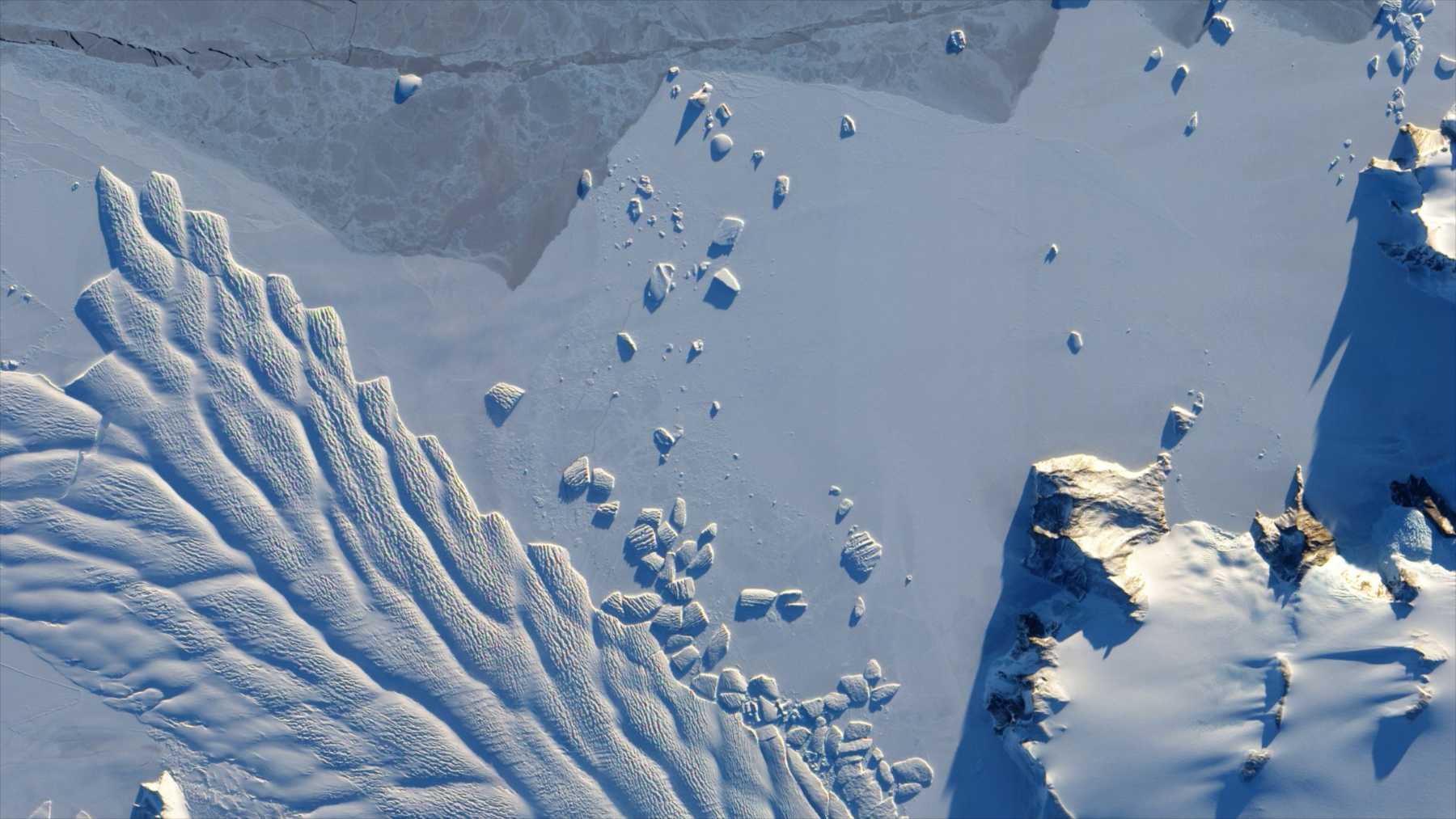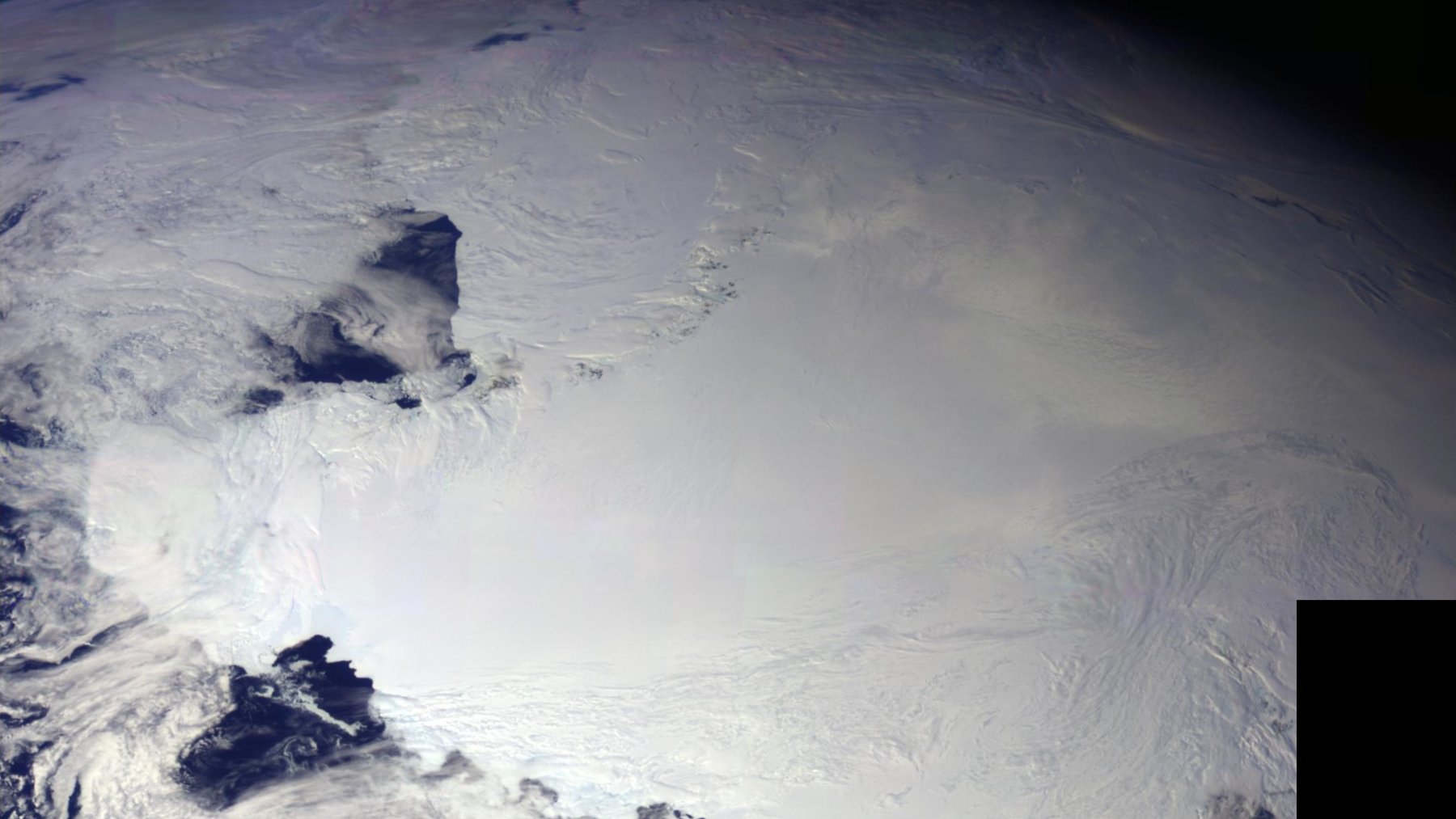
An enormous slab of floating ice in Antarctica is doing a job that matters far beyond the polar seas. The Ross Ice Shelf, roughly the size of Spain, slows the glaciers feeding into it, helping limit how quickly land-based ice reaches the ocean and contributes to rising seas.
But the shelf’s future is not written only in the cracks visible at its surface. Research beneath the ice has revealed localized summer melting and an ocean cavity that changes with the seasons, making the shelf’s underside a key place to watch for clues about its long-term stability. These findings do not establish that the shelf is approaching an immediate collapse.
Why floating ice matters to sea levels
How can ice that already floats affect the height of the ocean? The shelf acts like a brake on glaciers behind it, so weakening that support can allow more ice to move off land and into the sea. Melting the shelf itself does not produce the same sea-level effect because it is already displacing seawater.
The consequences of removing that brake are not just theoretical. After Antarctica’s Larsen B Ice Shelf disintegrated in 2002, research found that glaciers feeding the lost section flowed between two and six times faster.
The often-cited figure of 5 meters (about 16 feet) of potential sea-level rise needs context. The National Snow and Ice Data Center uses that figure for the West Antarctic Ice Sheet’s above-sea-level ice, not as a prediction that losing the Ross shelf alone would automatically cause that increase. It describes the scale of a broader ice reservoir, not a timetable for flooding.
A wall of ice about the size of Spain
Spread across roughly 193,000 square miles (500,000 square kilometers), the Ross Ice Shelf is the largest on Earth. It stretches about 500 miles (800 kilometers) across, while its seaward face rises roughly 50 to 165 feet (15 to 50 meters) above the water. Yet about 90% of its floating ice is submerged, hiding most of a structure several hundred meters thick.
British explorer James Clark Ross first sighted the shelf on January 28, 1841, while searching for the South Magnetic Pole. To ships confronting that towering wall, it was an obstacle rather than a climate safeguard, earning it the name “The Barrier.” The shelf later became a starting point for expeditions including Roald Amundsen’s successful journey to the South Pole in 1911.
A giant that never stands still
For something that looks like a frozen plain, the shelf is surprisingly restless. Ice flows seaward at roughly 300 to 1,000 meters per year, pushed along by the glaciers supplying it from Antarctica’s interior.
As the shelf advances, pieces periodically break away in a process called calving. In March 2000, it released B-15, a giant NASA described as nearly the size of Connecticut. Calving is part of an ice shelf’s natural cycle, so a dramatic iceberg birth is not, by itself, proof of collapse.
Warm water reaches beneath the ice
A 2019 study in Nature Geoscience identified a particularly important melt process near Ross Island. Surface water warmed by sunlight entered the cavity beneath the shelf, carrying heat into contact with the ice. During summer, that seasonal inflow nearly tripled local basal melt rates, meaning melting from below.
The word “local” matters here. The researchers were studying a thin, structurally important region, where melt rates were around 10 times the shelf-wide average. Neither result means the entire Ross Ice Shelf was melting at that pace.
“Melting driven by this frequently overlooked process is expected to increase with predicted surface warming,” the researchers wrote. Their finding highlights a vulnerability that a shelf-wide average can hide, particularly when faster melting affects ice important to the structure’s stability.
What scientists are learning beneath the shelf
More recent research, published January 2, 2026, examined 4.5 years of measurements collected beneath the central shelf from 2018 to 2022. Instruments recorded water temperature, salinity, and currents, giving scientists a longer view than brief field visits can provide. The paper also notes that Ross has some of the lowest average basal melt rates among Antarctica’s major shelves.
The team found seasonal changes and recurring intrusions of exceptionally cold water. Their analysis suggests that variations in sea-ice formation in a nearby open-water area can influence melting and refreezing beneath the shelf, but the observations do not yet prove exactly how that connection works.
For coastal communities, the important question is how long this natural brake can keep doing its job, not whether one iceberg has broken free.
The 2026 study was published in AGU’s JGR Oceans.